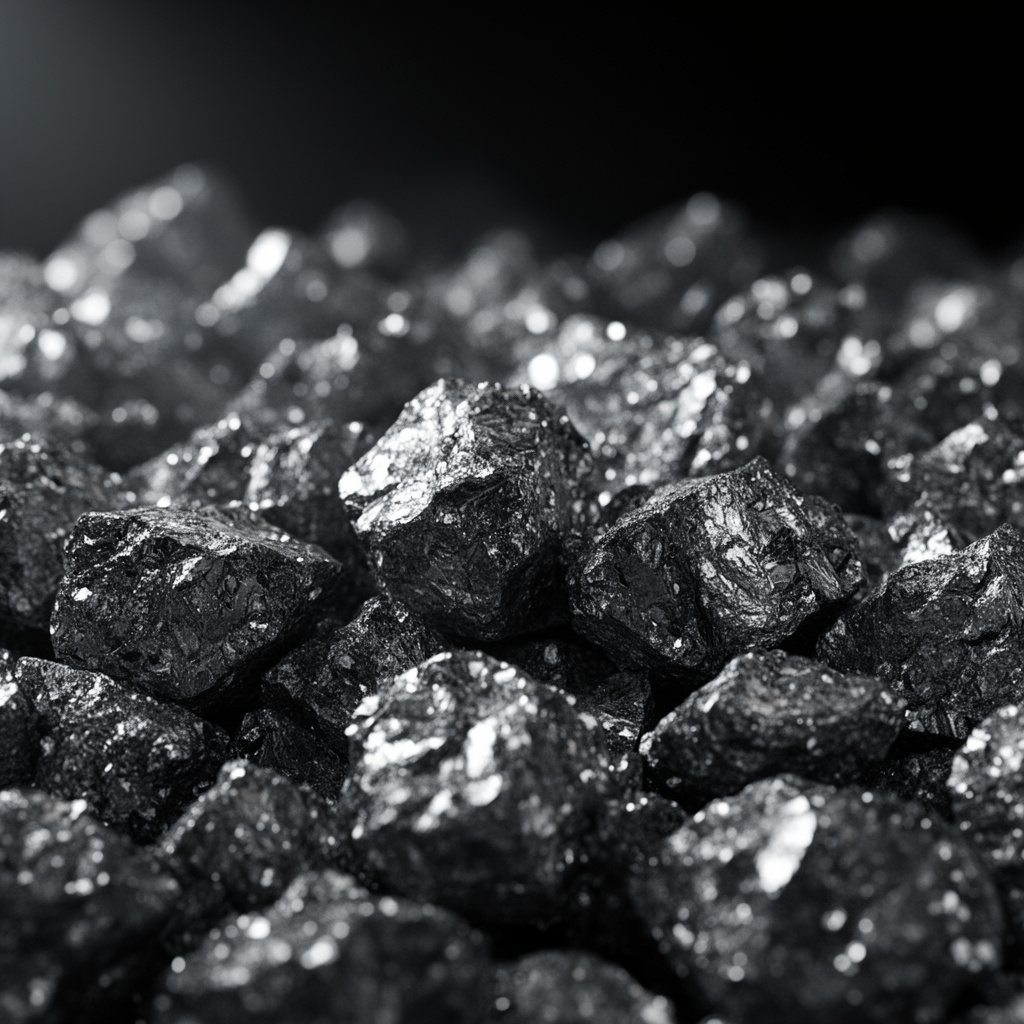
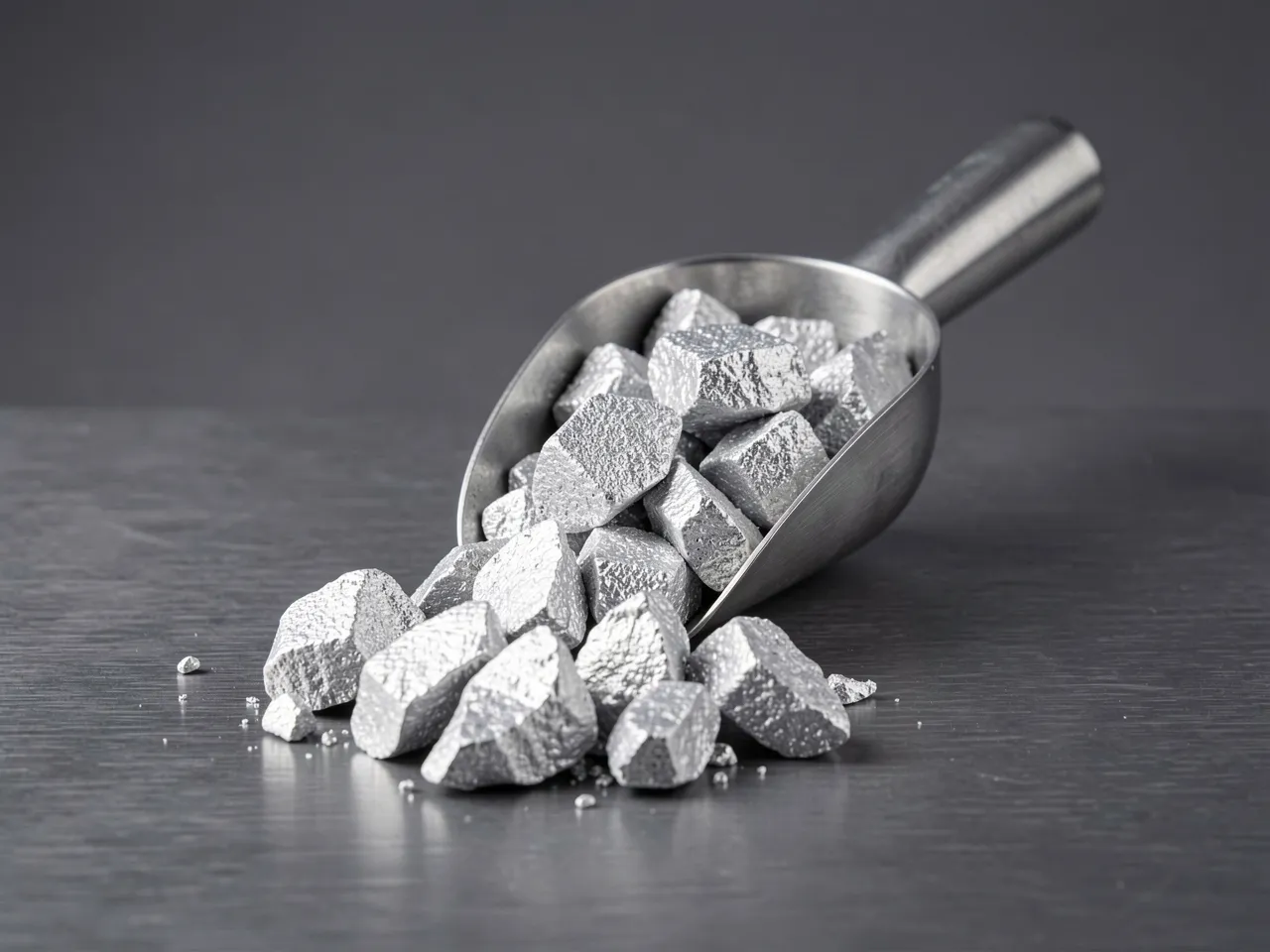
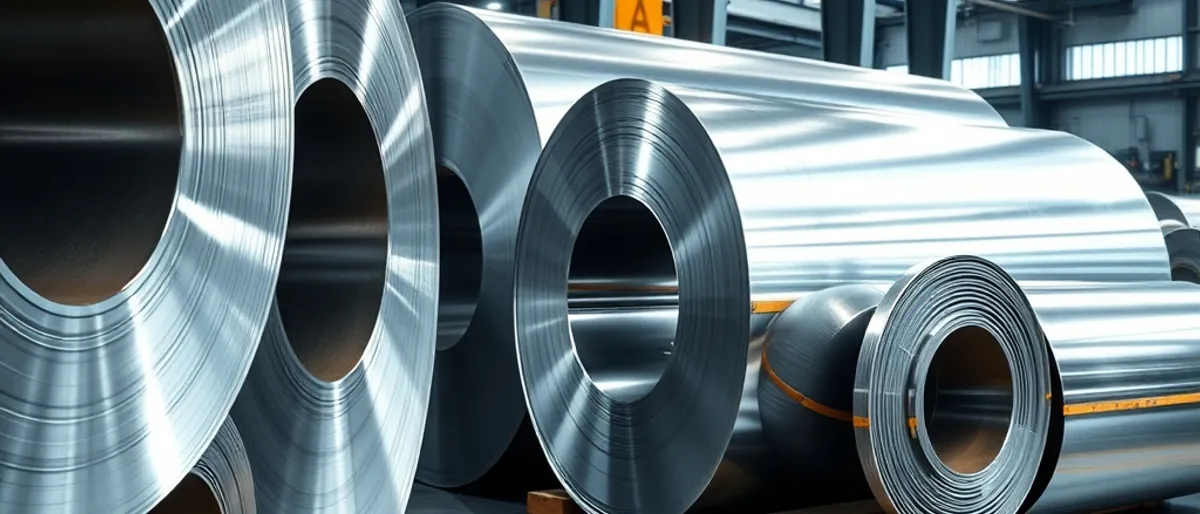
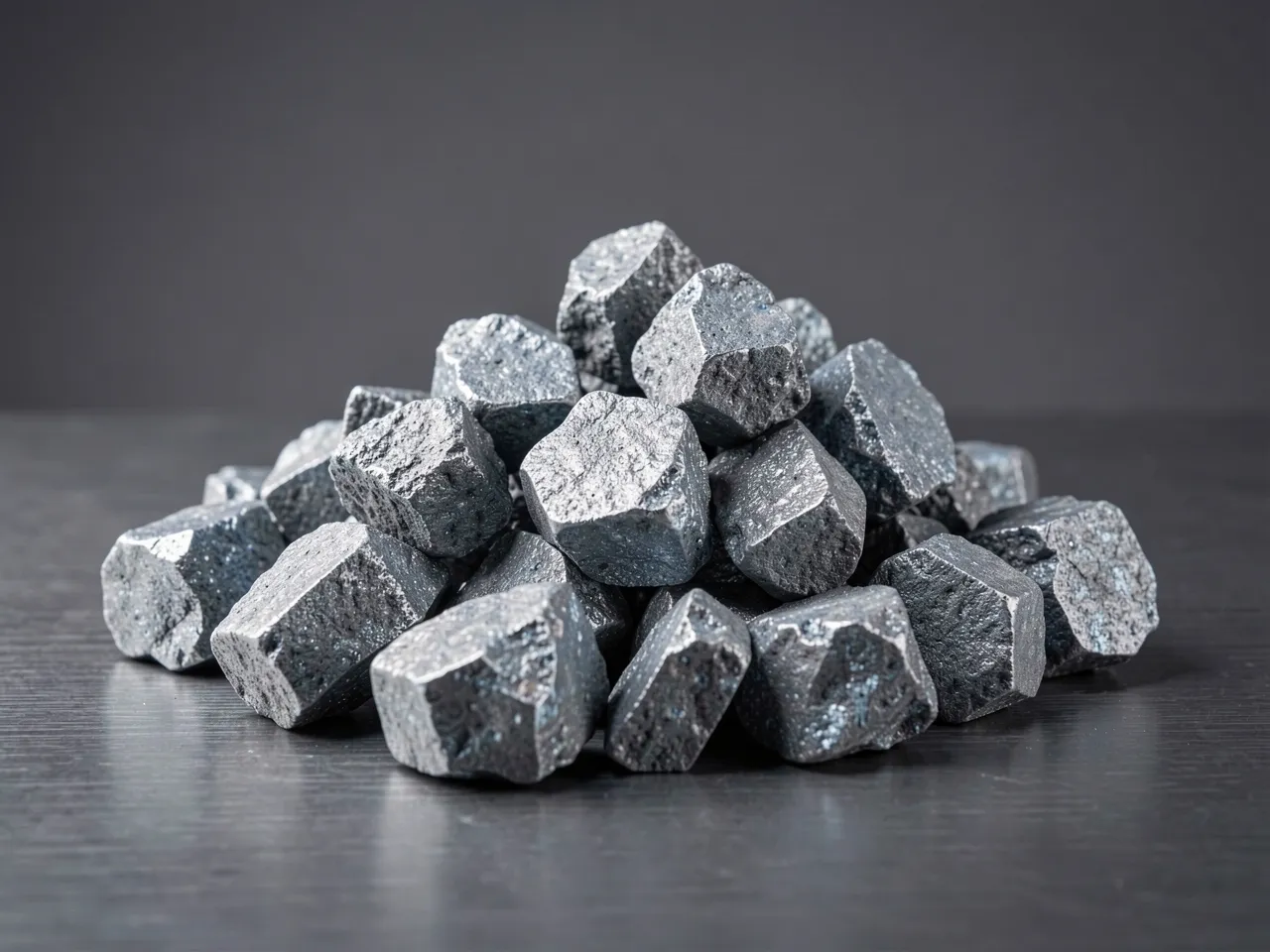
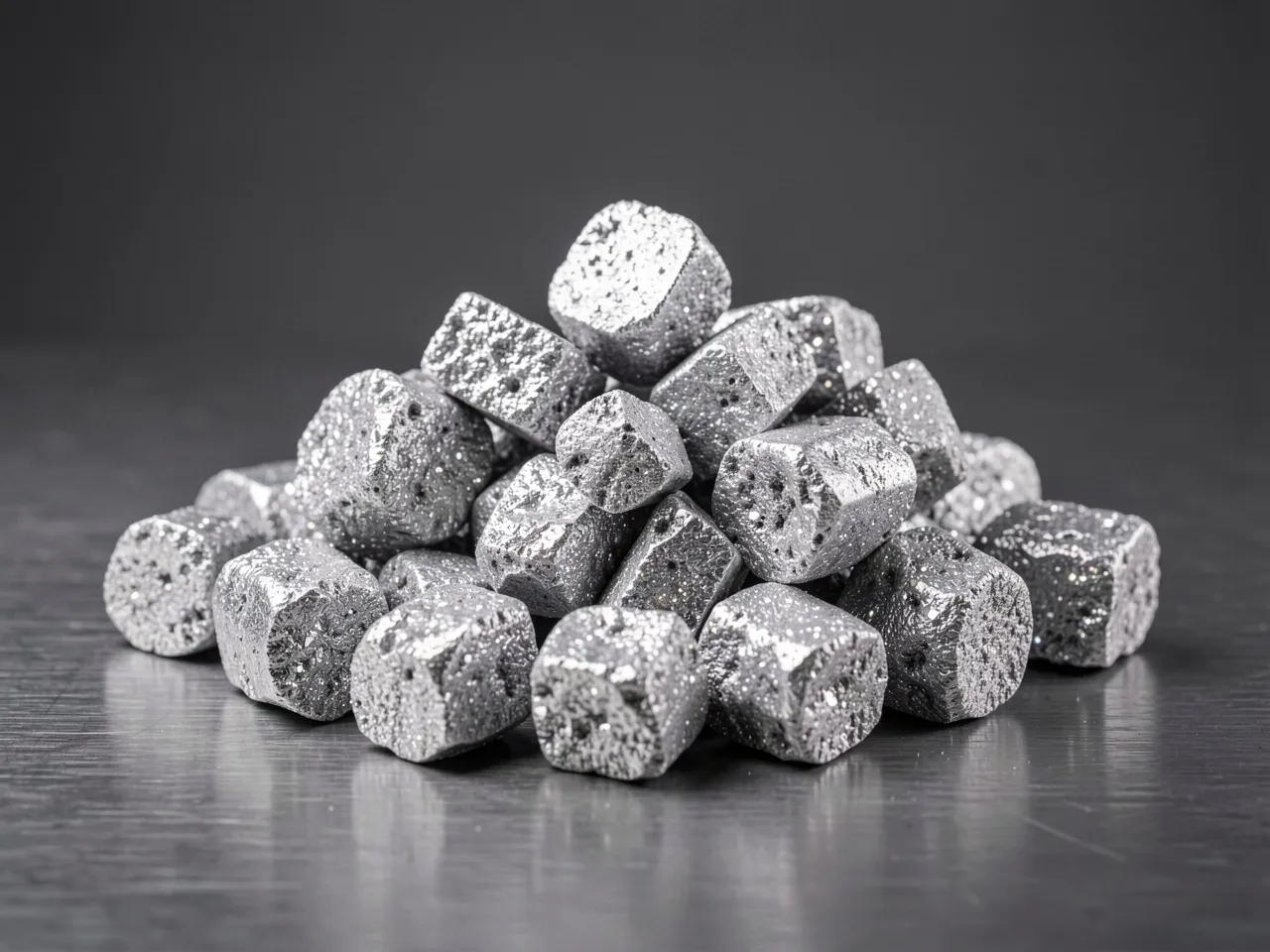
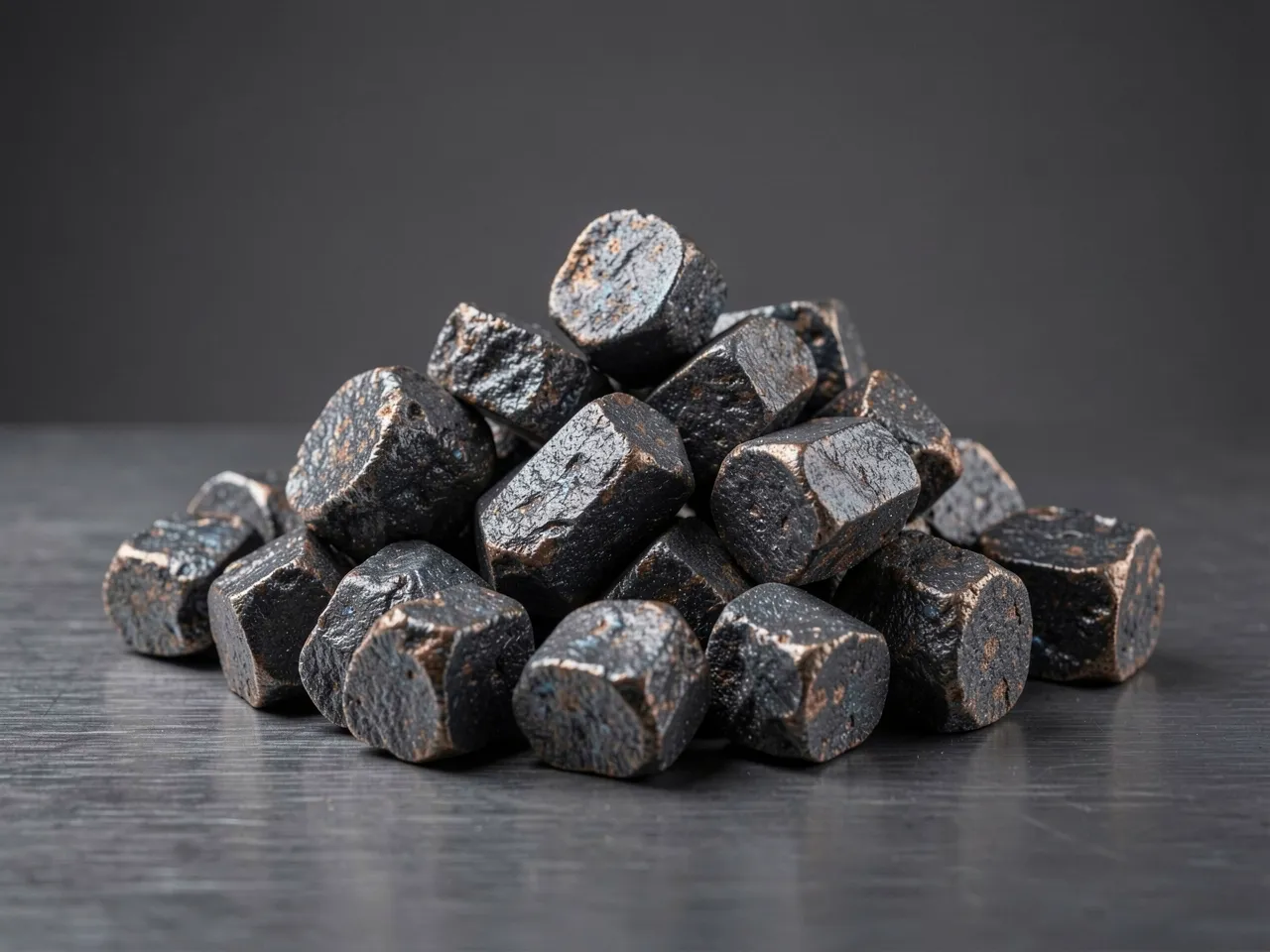
Ferro Titanium (FeTi70, DIN 17566 reference) is a master alloy carrying 65-70% Ti into liquid steel, where titanium's strong affinity for carbon, nitrogen and oxygen drives stabilization, deoxidation and grain refinement. In austenitic stainless grades it ties up free carbon as TiC, suppressing chromium-carbide precipitation at grain boundaries and the intergranular corrosion (sensitization) that follows welding. In interstitial-free (IF) and structural steels, TiN and TiC scavenge N and C from solid solution, sharpening deep-drawability and yield control; the fine nitrides also pin austenite grains for refinement. Typical additions run roughly 0.1-0.5 wt% depending on C+N to stabilize and the target Ti residual, with recovery sensitive to deoxidation practice and addition timing. Low Al (≤2.0%), Si (≤0.20%) and C (≤0.20%), with P ≤0.04% and S ≤0.03%, keep residuals predictable; 10-50mm lump suits ladle and EAF feeding. Each lot ships with COA and MTC. Multi-regional sourcing supports CIF Marmara delivery and Gebze bonded stock in FCL or LCL lots. Send your grade and tonnage for an RFQ.
Specifiche tecniche
Ti
65-70%
Al
≤ 2.0%
Si
≤ 0.20%
Mn
≤ 1.0%
C
≤ 0.20%
P
≤ 0.04%
S
≤ 0.03%
Granulometria
10-50mm
Applicazioni
Stainless steel stabilization
IF / structural steel
Grain refinement
Welding electrodes
Domande frequenti
Quale grado di FeTi specificare e cosa copre il FeTi70?
Il nostro grado standard è il FeTi70 (riferimento DIN 17566) a Ti 65-70%, con Al ≤ 2,0%, Si ≤ 0,20%, C ≤ 0,20%, P ≤ 0,04%, S ≤ 0,03%. Per gli acciai inox e IF dove il carbonio e l'azoto interstiziali devono essere legati, il basso C e N contano più di tutto. Se il Suo processo è sensibile all'assorbimento di alluminio o alla chimica della scoria, segnali il tetto di Al al momento dell'ordine così da confermare il lotto rispetto ai Suoi limiti COA.
Quale dosaggio e pratica di aggiunta si applicano al FeTi nella produzione di acciaio?
Il recupero del titanio determina il tasso, quindi le aggiunte sono fissate dal Ti residuo target, non da un wt% fisso. Nei gradi inox stabilizzati e IF, il FeTi si aggiunge dopo la disossidazione, tardi nel trattamento in siviera, per limitare la perdita di Ti verso la scoria e la ri-ossidazione. L'obiettivo tipico è Ti sufficiente a fissare stechiometricamente C e N (spesso un multiplo del loro contenuto combinato). Confermi il recupero sul Suo forno prima di fissare un dosaggio stabile; la pezzatura 10-50mm supporta una dissoluzione controllata.
Come viene imballato il FeTi e quali sono le condizioni di consegna e MOQ?
Il FeTi è fornito in blocchi 10-50mm, tipicamente confezionato in fusti in acciaio sigillati o big bag da 1 MT su pallet per limitare umidità e polveri (fini) durante il transito. Lavoriamo a container completo 20 MT FCL e break-bulk 5 MT LCL, con stock in deposito doganale a Gebze e consegna CIF Marmara disponibili. Il tempo di consegna dipende da grado, dimensione del lotto ed esigenze documentali; ci indichi la Sua finestra di consegna e confermeremo un programma alla conferma d'ordine.
Quale documentazione di qualità e quali prove accompagnano ogni spedizione?
Ogni lotto viene spedito con un COA / MTC che riporta l'analisi di colata o lotto rispetto alla specifica FeTi70, con Ti, Al, Si, C, P e S riportati. La chimica è determinata con metodi standard di chimica per via umida e strumentali; la pezzatura è verificata rispetto alla fascia 10-50mm. Se il Suo protocollo di accettazione richiede un riferimento di prova ASTM o DIN specifico, una verifica di terze parti o la rendicontazione di elementi aggiuntivi, lo specifichi al momento dell'ordine così da allineare la documentazione prima della spedizione.
Quando il FeTi ha senso rispetto ad altre aggiunte di titanio o affinanti del grano?
Il FeTi è la via pratica quando serve Ti in quantità per la stabilizzazione C/N, l'affinazione del grano o la disossidazione e si desidera una ferrolega che si dissolva in modo prevedibile nell'acciaio liquido. Dove serve solo Ti residuo in traccia, o dove Al, Nb o V si adattano meglio al Suo target di micro-alligazione, questi possono sostituirlo. Il FeTi è impiegato anche nelle formulazioni di elettrodi di saldatura e filo animato con flusso. Ci indichi l'obiettivo metallurgico e consiglieremo l'idoneità del grado rispetto alle alternative.