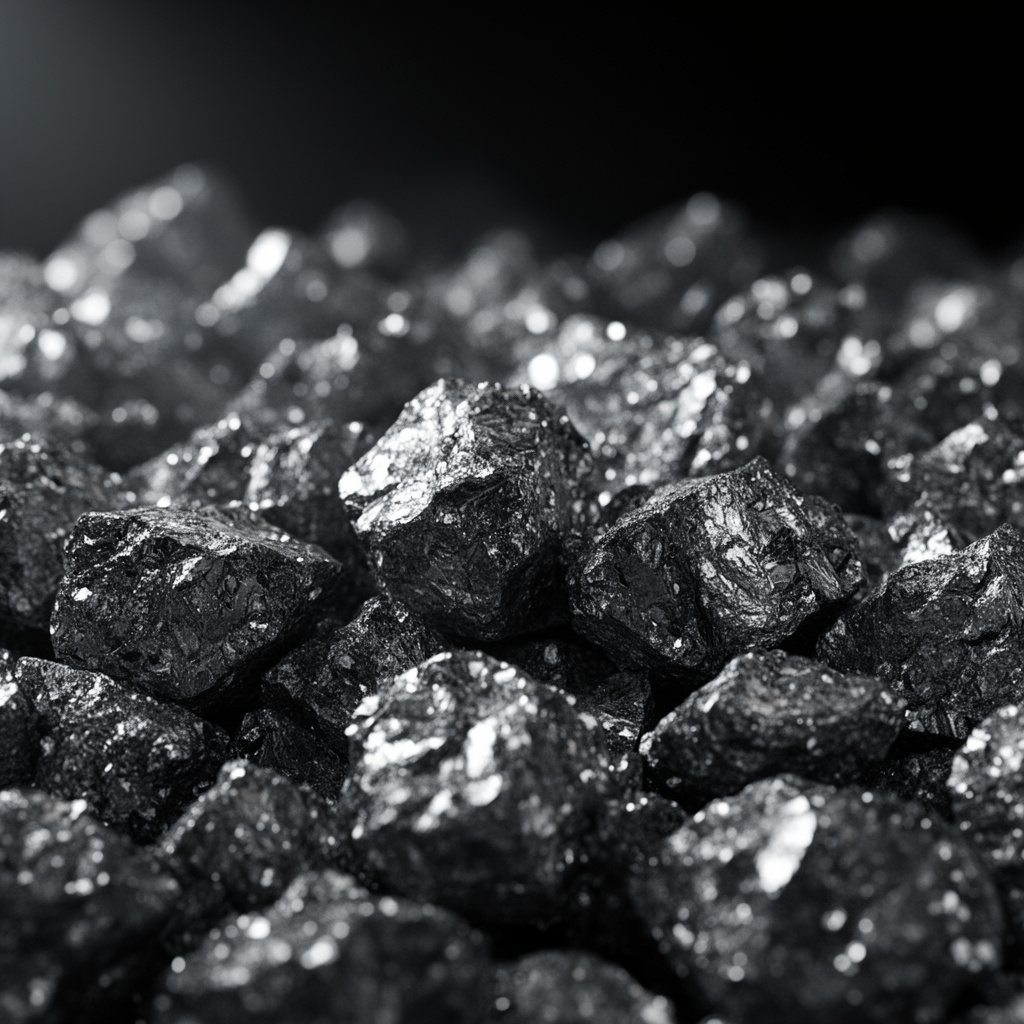
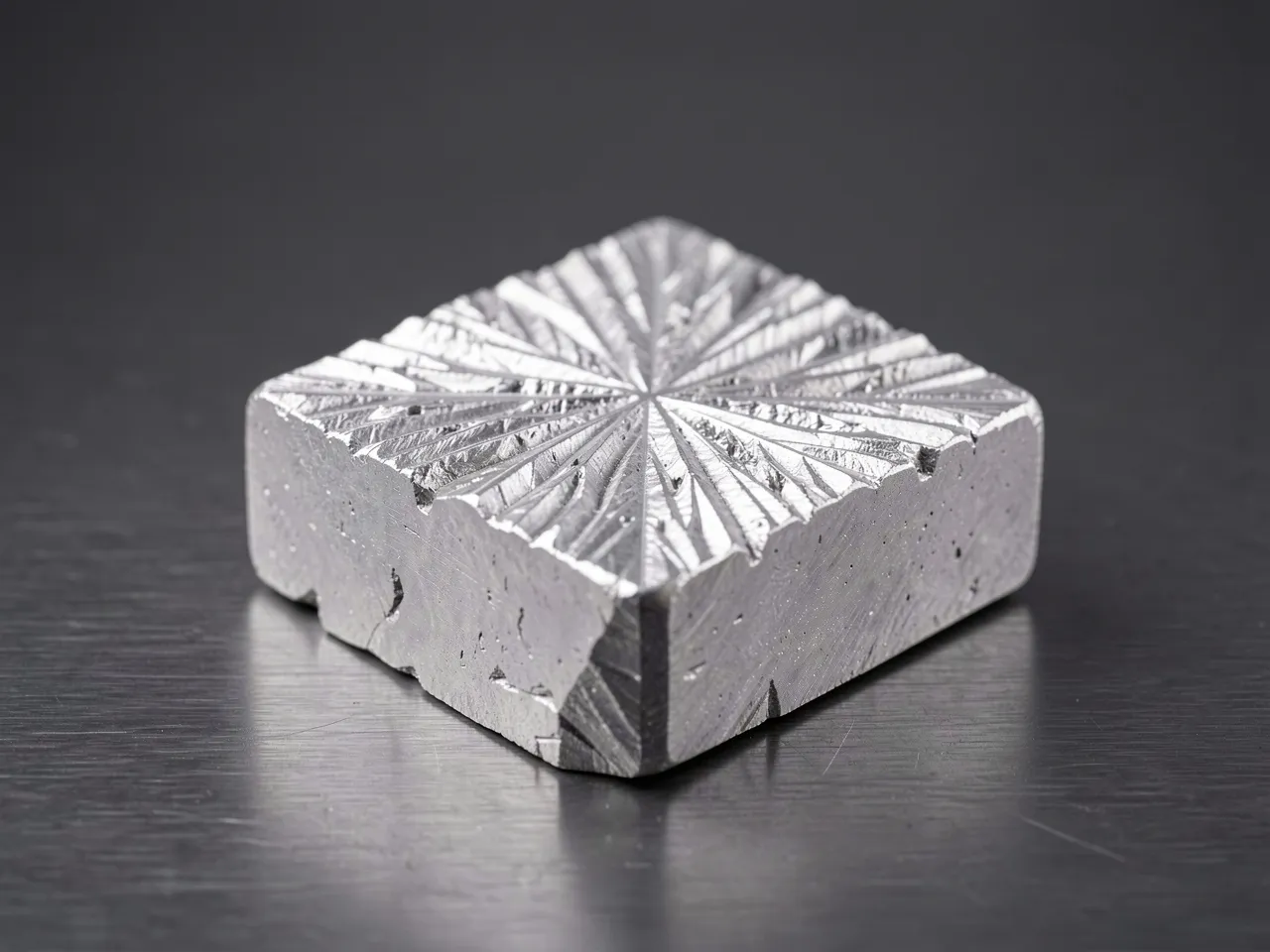
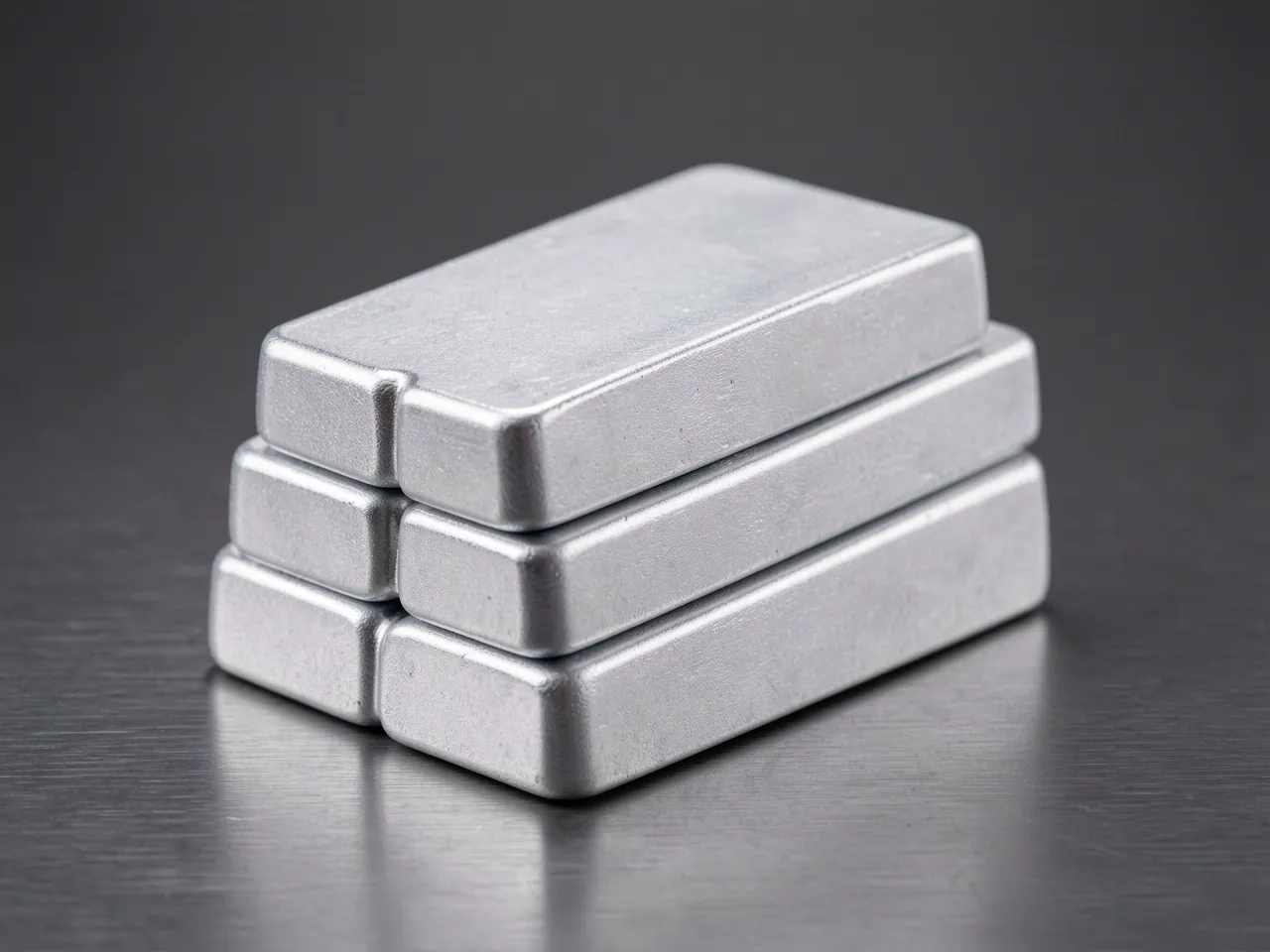
Antimony ingot at Sb ≥ 99.65% is a refined cast metal supplied in ~25 kg ingots for metallurgical and chemical conversion. Antimony hardens soft metals and acts as a flame-retardant synergist in halogenated systems: in lead alloys it raises strength and casting fluidity, while as a trioxide precursor it reacts with the halogen source to form antimony halides that scavenge H· and OH· radicals in the gas phase and interrupt flame propagation. Primary uses are antimony trioxide (Sb₂O₃) feedstock, lead-acid battery grid alloys, flame-retardant masterbatch chemistry, and bearing or pewter alloys. Lead-antimony grids typically run 1.5-3% Sb for cycling durability; bearing babbitts carry roughly 7-15% Sb for hardness and load capacity. The 99.65% grade with controlled residuals — As ≤ 0.10%, Fe ≤ 0.05%, Pb ≤ 0.10%, S ≤ 0.06% — keeps trioxide whiteness and battery-alloy behavior consistent by limiting elements that promote gassing or discolor the oxide. Each lot ships with COA and MTC, drawn from multi-regional sourcing into Gebze bonded stock with CIF Marmara delivery and 20 MT FCL options. Send your target grade and tonnage for an RFQ.
Specifiche tecniche
Sb
≥ 99.65%
As
≤ 0.10%
Fe
≤ 0.05%
Pb
≤ 0.10%
S
≤ 0.06%
Forma
ingot ~25 kg
Applicazioni
Antimony trioxide feedstock
Lead-acid battery alloys
Flame-retardant chemistry
Bearing / pewter alloys
Domande frequenti
Come si confronta l'Sb 99,65% con i gradi di antimonio a purezza superiore e quando è la scelta giusta?
L'Sb 99,65% è il grado metallurgico commerciale standard, con As ≤ 0,10%, Pb ≤ 0,10%, Fe ≤ 0,05% e S ≤ 0,06%. È adatto a materia prima per triossido, leghe per batterie e metalli antifrizione, dove la raffinazione o l'alligazione a valle tollera questi residui. Scelga gradi più stretti (99,85%+ o 4N) solo quando As e Pb devono essere più bassi, ad esempio ritardanti di fiamma a particella fine o usi prossimi al settore dei semiconduttori. Richieda il COA per confermare As e Pb rispetto alla Sua specifica.
Quali tassi di aggiunta si applicano usando questo antimonio nelle leghe?
I tassi dipendono dalla lega target, non da un singolo valore. Le griglie delle batterie al piombo-acido impiegano tipicamente circa 1,5-3% di Sb nelle leghe piombo-antimonio per l'indurimento della griglia e la colabilità; le leghe antifrizione e il peltro usano frazioni più elevate secondo la specifica di lega. Come materia prima per il triossido, il lingotto è interamente consumato nell'ossidazione, quindi non esiste un tasso di dosaggio. Imposti la Sua aggiunta dalla chimica della lega finita e dalla tolleranza per la perdita di fusione, poi verifichi con un campione di fusione.
Come viene imballato il lingotto e quali sono le quantità d'ordine e le condizioni di consegna tipiche?
La fornitura è in lingotti colati di circa 25 kg, raggruppati e reggiati su pallet per il carico in container. Le dimensioni d'ordine scalano da carichi parziali LCL fino a 20 MT FCL, attinte dall'approvvigionamento multi-regionale. Quotiamo CIF Marmara o franco stock in deposito doganale di Gebze, con il tempo di consegna fissato per quantità e incoterm all'ordine. Ci indichi destinazione, quantità e incoterm richiesto e confermeremo la packing list e la finestra di consegna rispetto alla posizione attuale.
Quale documentazione e quali prove supportano ogni lotto?
Ogni lotto viene spedito con un COA che riporta Sb, As, Fe, Pb e S rispetto alla specifica 99,65%, più un MTC dove l'applicazione richiede tracciabilità. Il titolo è determinato con metodi riconosciuti di chimica per via umida e strumentali (ICP-OES / AAS per gli elementi in traccia). Su richiesta organizziamo un'ispezione di terze parti o un campionamento al porto di carico. Indichi se necessita di documentazione a livello di lotto o di spedizione così che la documentazione corrisponda ai Suoi requisiti di importazione e QA.
Se ho bisogno dell'ossido o di una forma diversa, quali alternative esistono?
Per l'uso come ritardante di fiamma e catalizzatore PET, il triossido di antimonio (Sb₂O₃) è la via a ossido finito ed elimina l'ossidazione interna. Dove è specificato un As o Pb più basso, la sostituzione è un grado raffinato a purezza superiore anziché questo grado commerciale. Per esigenze di leghe madri, è possibile approvvigionare leghe piombo-antimonio o stagno-antimonio secondo il Suo rapporto. Ci indichi l'uso finale e la chimica target e mapperemo la forma lingotto, ossido o lega più adatta.