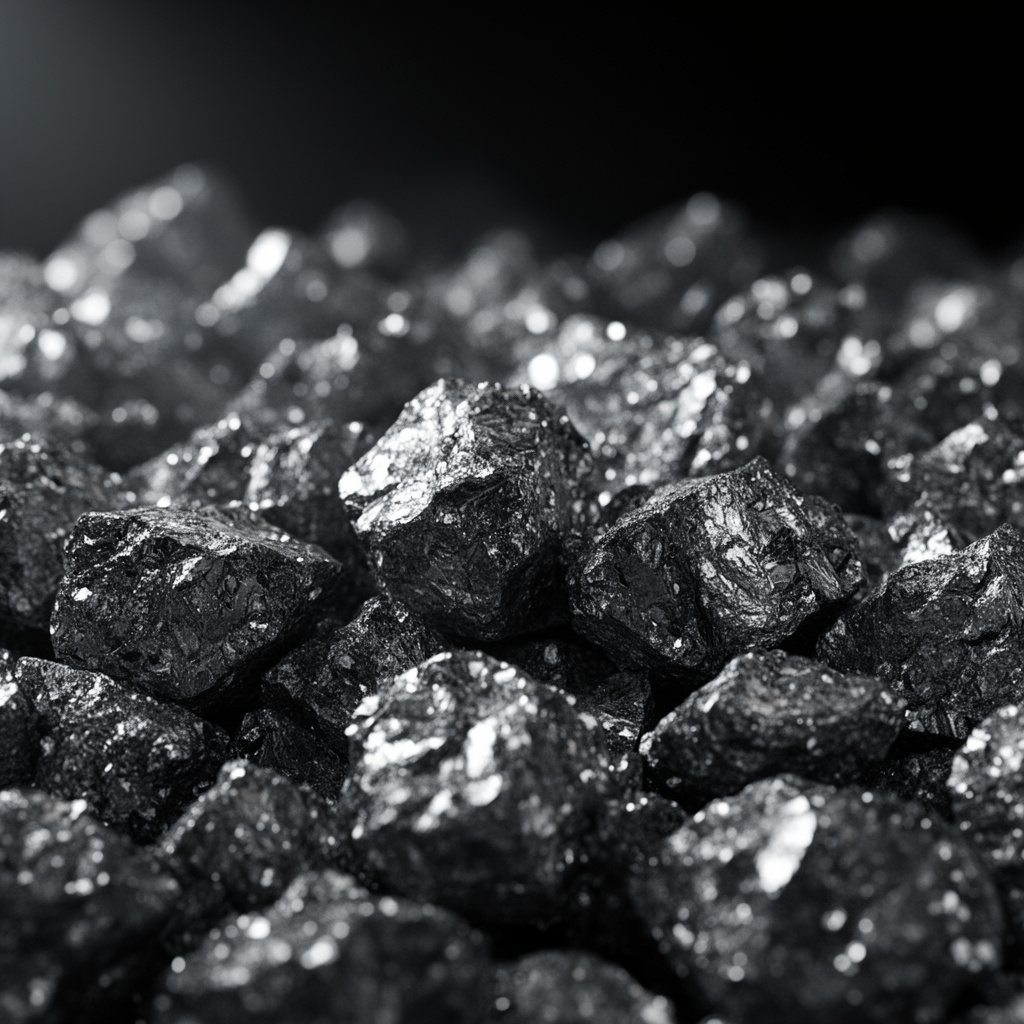
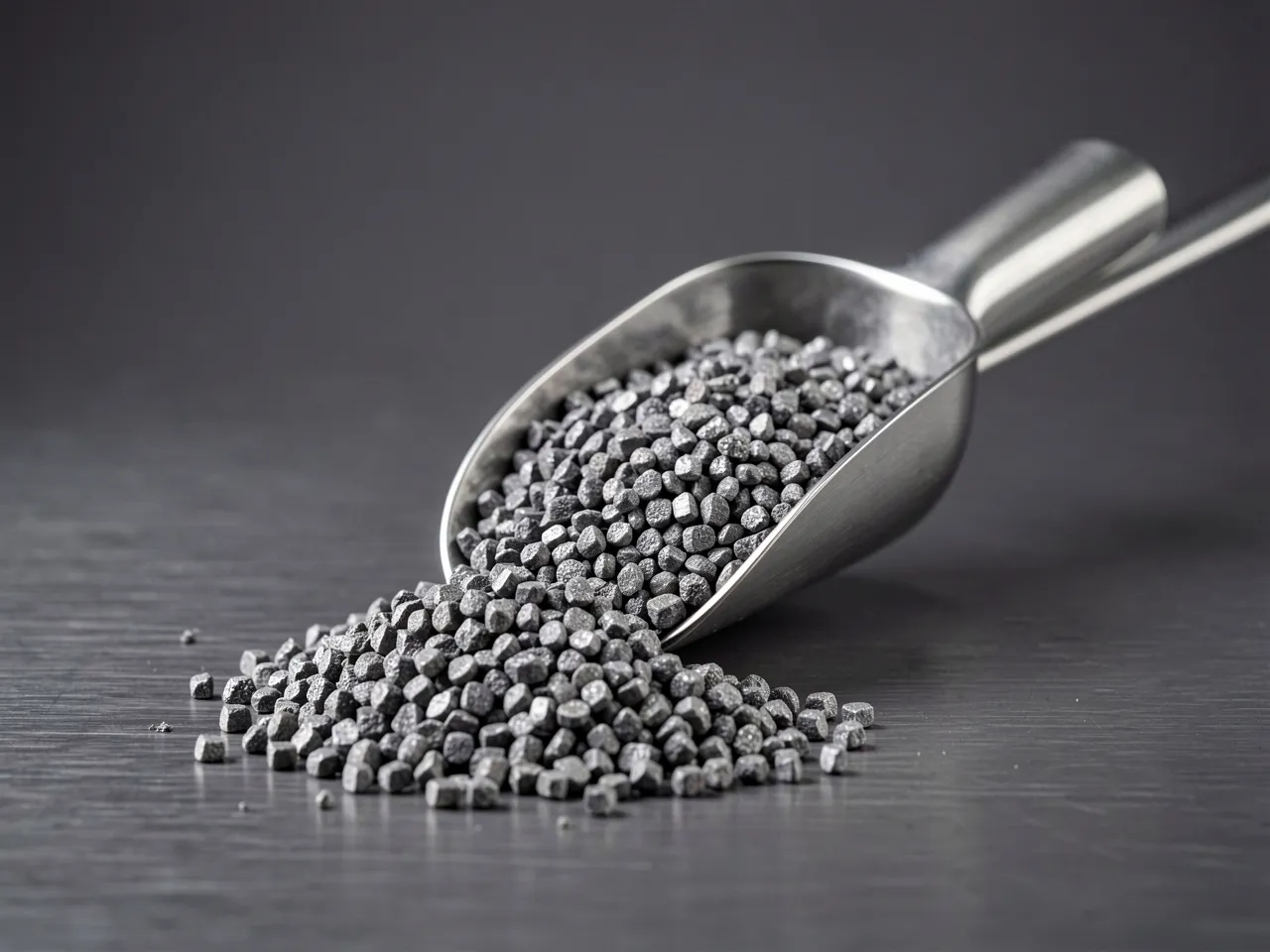
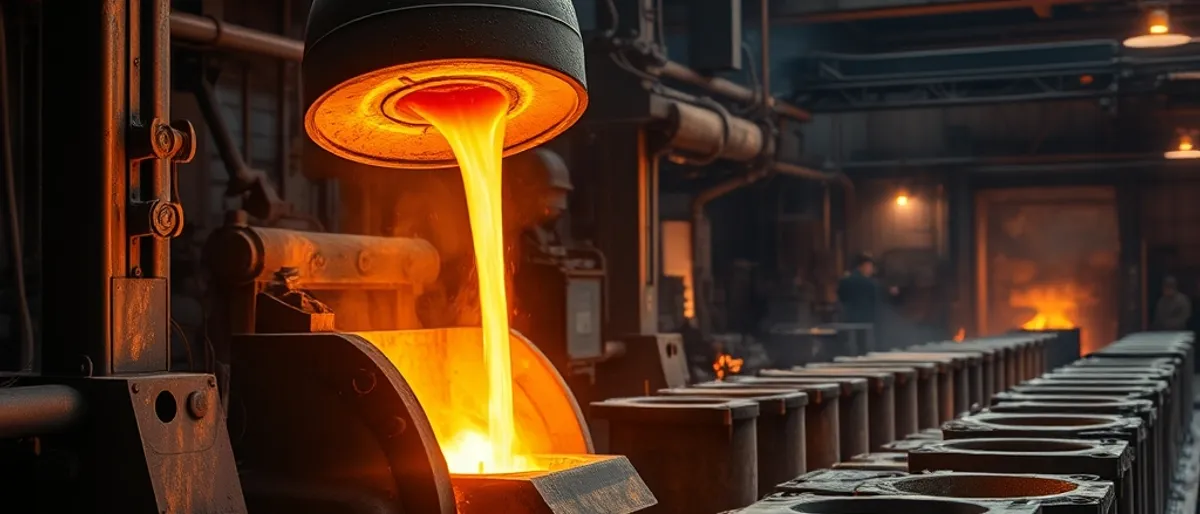
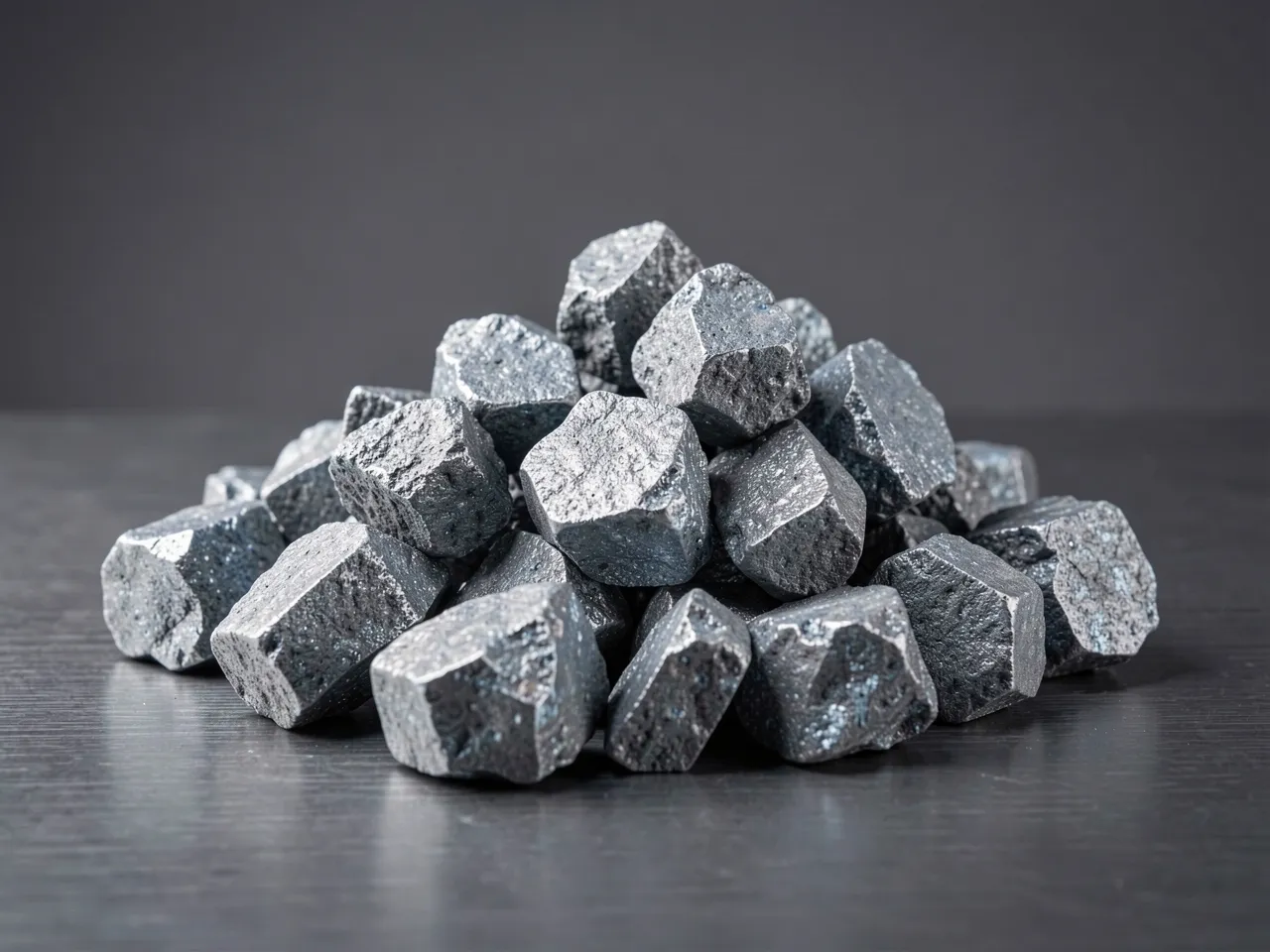
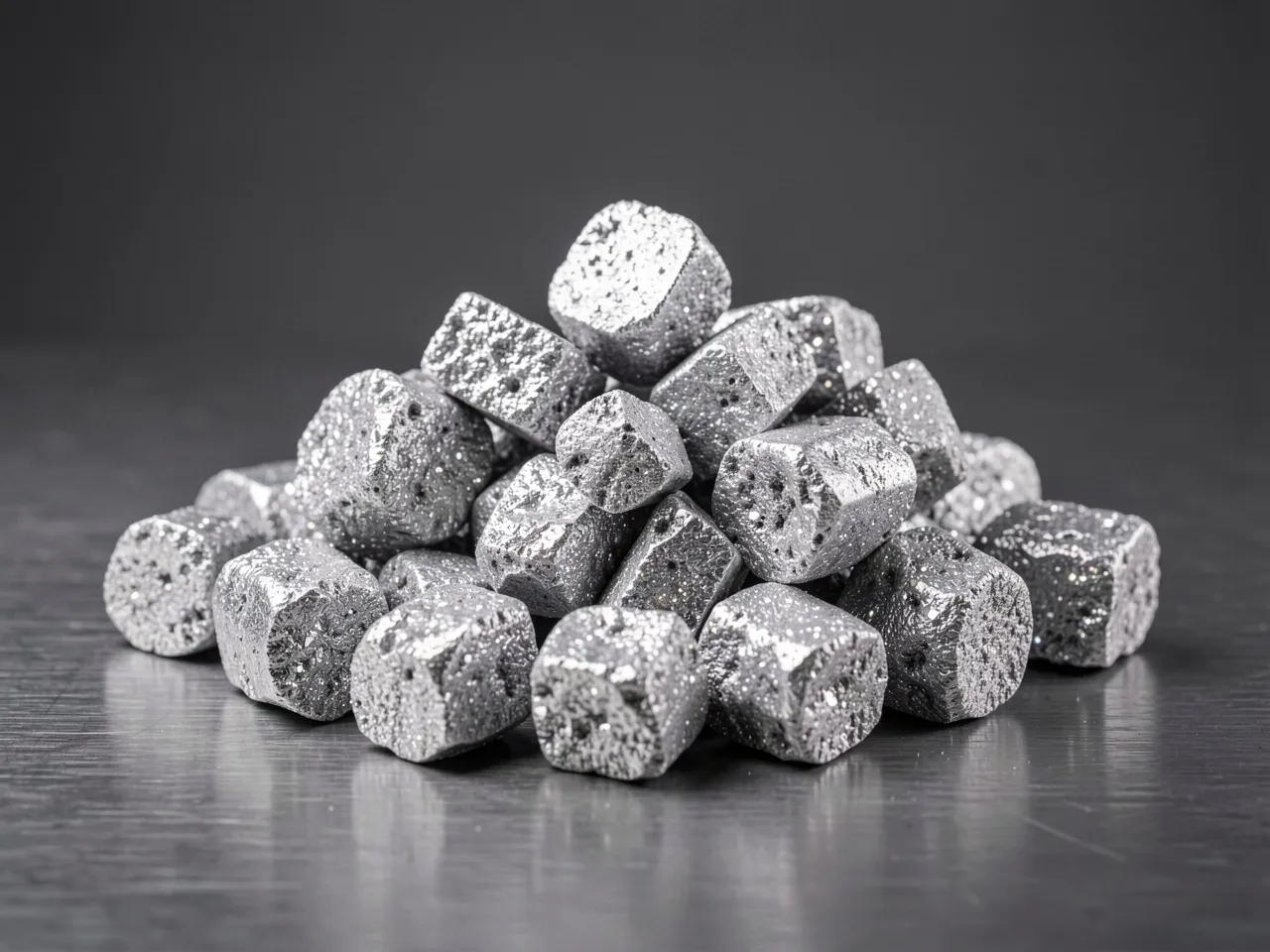
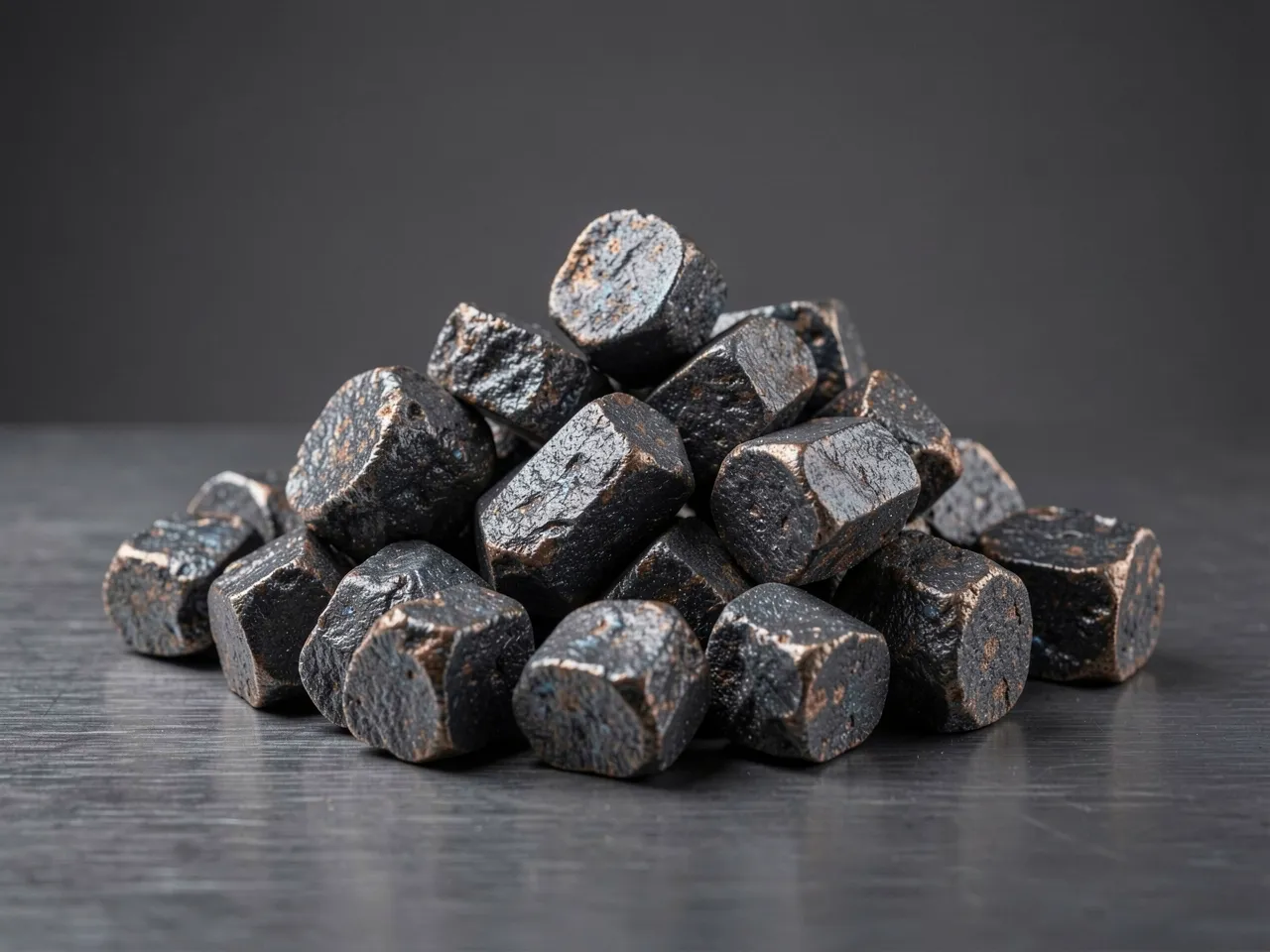
Foundry inoculant (FeSiBa) is a barium-bearing ferrosilicon added to molten grey and ductile iron just before or during pouring. The Si carrier and 1-3% Ba seed silicate-oxide nuclei in the melt, giving graphite a preferred site to precipitate as the iron solidifies. This suppresses undercooling, cuts the chill (white iron) tendency at thin sections and edges, and refines graphite morphology toward a fine, evenly distributed Type A flake in grey iron or a higher nodule count in ductile iron. The 1-2% Ca and ≤1.5% Al support deoxidation and keep nucleation active longer, reducing fade in held or transferred metal.
Used for grey iron inoculation, ductile iron inoculation, chill reduction and graphite refinement across automotive and machinery ductile-iron foundries and general jobbing shops. Typical late/ladle addition runs about 0.1-0.5 wt% (1-5 kg/t); finer 0.2-0.7 mm sizing suits in-stream or in-mould dosing, while 1-3 mm fits ladle treatment.
Supplied with COA and MTC against ISO/ASTM practice, multi-regional sourcing, CIF Marmara or Gebze bonded stock, 20 MT FCL. Send grade, size and tonnage for an RFQ.
Specifiche tecniche
Si
60-70%
Ba
1-3%
Ca
1-2%
Al
≤ 1.5%
Granulometria
0.2-0.7mm / 1-3mm
Applicazioni
Grey iron inoculation
Ductile iron inoculation
Chill reduction
Graphite refinement
Domande frequenti
Come si seleziona il grado di inoculante FeSiBa corretto per il mio getto?
Questo grado presenta Si 60-70%, Ba 1-3%, Ca 1-2% e Al ≤ 1,5%. L'aggiunta di bario prolunga la resistenza al decadimento (fade), rendendolo ben adatto alla ghisa grigia dove contano il controllo della tempra e una nucleazione stabile della grafite, e alla ghisa sferoidale come inoculante primario o secondario. Per sezioni più spesse o tempi di mantenimento più lunghi, il contenuto di Ba sostiene la nucleazione più a lungo del FeSi semplice. Abbini la granulometria al metodo di aggiunta: 0,2-0,7mm per aggiunta nel getto o in forma, 1-3mm per aggiunte in siviera.
Qual è il dosaggio tipico e come va aggiunto?
Le aggiunte di inoculante per ghisa grigia e sferoidale rientrano in genere nella fascia 0,1-0,6 wt%, con l'inoculazione in siviera spesso vicina a 0,3-0,5 wt% e l'inoculazione tardiva o nel getto anche solo di 0,05-0,15 wt% perché l'efficienza è maggiore. Aggiunga tardi per limitare il decadimento. Usi 0,2-0,7mm per l'alimentazione nel getto e in forma e 1-3mm per il lavoro in siviera. Confermi il tasso rispetto al livello di zolfo della ghisa base, allo spessore di sezione e alla finestra di colata tramite colate di prova.
Quali imballaggio, MOQ e tempi di consegna si applicano?
L'imballaggio standard è in sacchi resistenti all'umidità su pallet, con entrambe le frazioni fine (0,2-0,7mm) e grossolana (1-3mm) disponibili; i formati big bag sono adatti alle fonderie a volume più elevato. Le quantità d'ordine tipiche vanno da 5 MT LCL fino a 20 MT FCL. Le condizioni di consegna includono CIF Marmara e ritiro da stock in deposito doganale a Gebze. Il tempo di consegna dipende da grado, frazione granulometrica e quantità; ci contatti con il Suo tonnellaggio e la frazione richiesta per un programma aggiornato.
Quale documentazione di qualità e quali prove accompagnano il materiale?
Ogni lotto viene spedito con un COA / MTC che riporta Si, Ba, Ca e Al per analisi chimica, più i risultati di setacciatura che confermano la frazione 0,2-0,7mm o 1-3mm. La chimica è verificata con metodi spettrometrici e di chimica per via umida secondo la pratica riconosciuta ISO/ASTM. Se richiede tolleranze specifiche sugli elementi, limiti di distribuzione granulometrica o controllo dell'umidità oltre la scheda standard, li indichi all'ordine così che il lotto possa essere controllato e documentato prima della spedizione.
Quali sono le alternative o sostituzioni adatte al FeSiBa?
Dove la resistenza prolungata al decadimento non è la priorità, un inoculante FeSi semplice o al calcio può sostituirlo con dosaggio adeguato. Per una forte nucleazione e la riduzione della tempra nelle sezioni sottili, i gradi di FeSi alle terre rare o allo zirconio sono alternative; il FeSi allo stronzio è adatto a ghisa base a basso zolfo e a una minima formazione di carburi. La sostituzione modifica il comportamento di nucleazione e la velocità di decadimento, quindi rivalidi tasso di aggiunta e tempistica su getti di prova. Possiamo consigliare un grado comparabile in base al Suo tipo di ghisa e alla sezione.