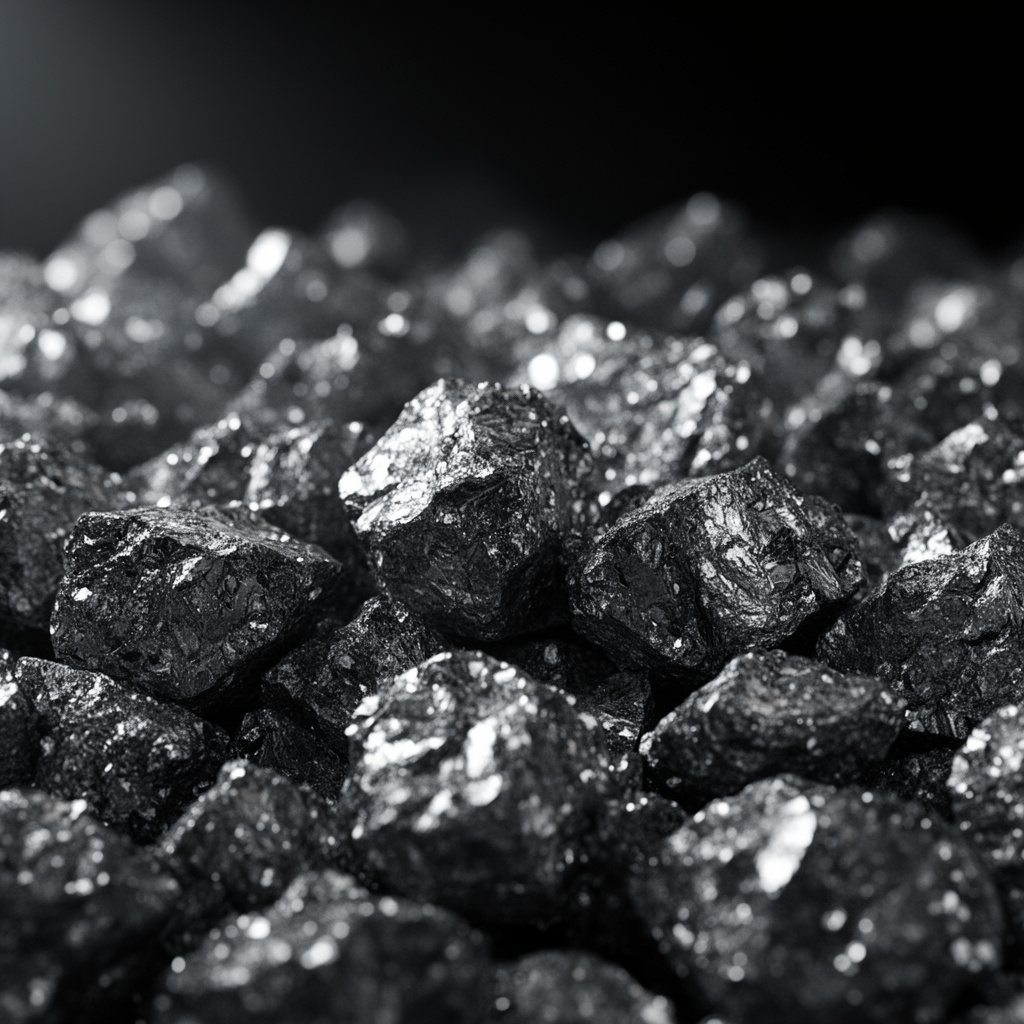
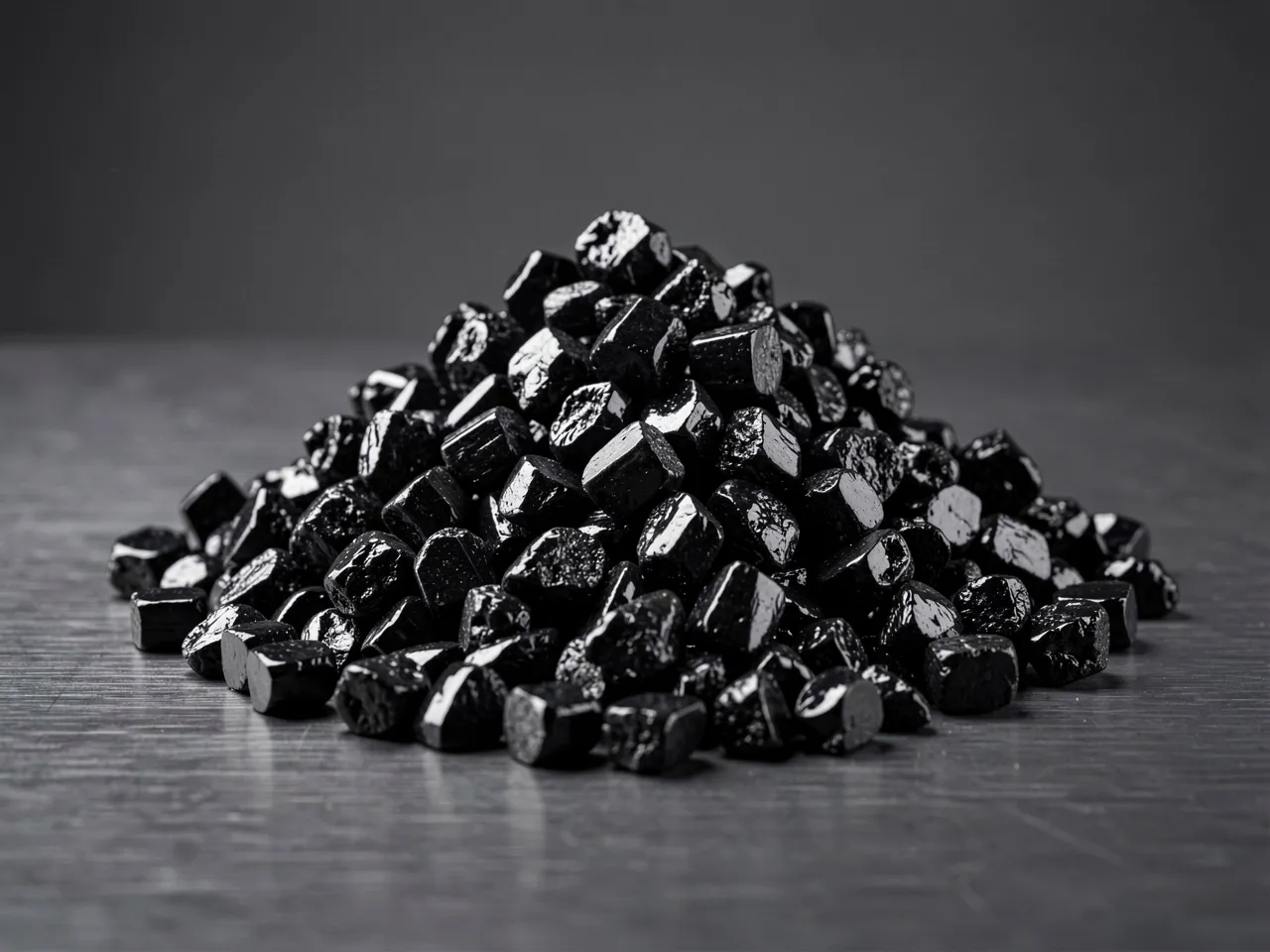
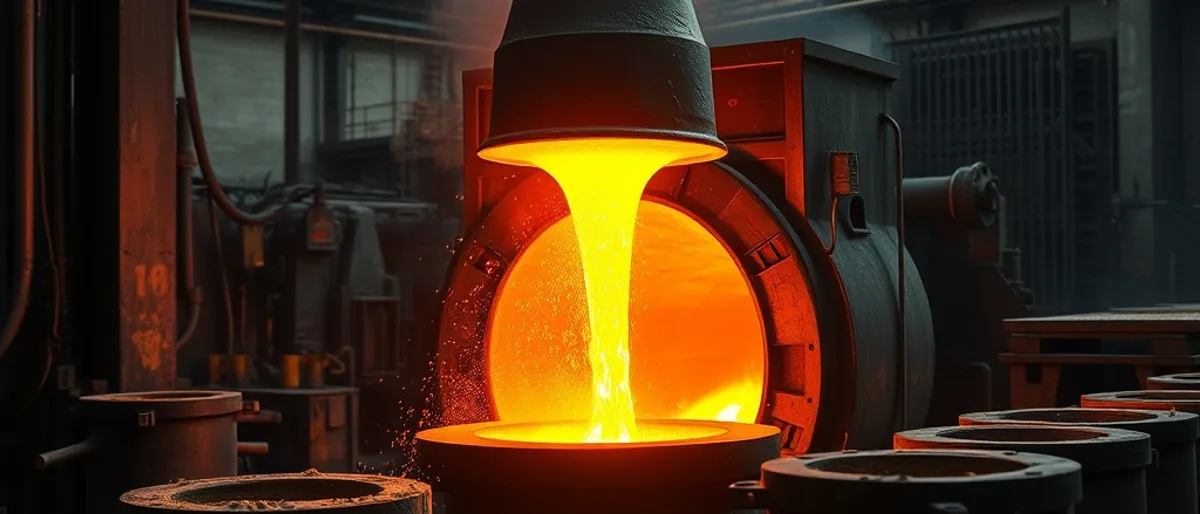
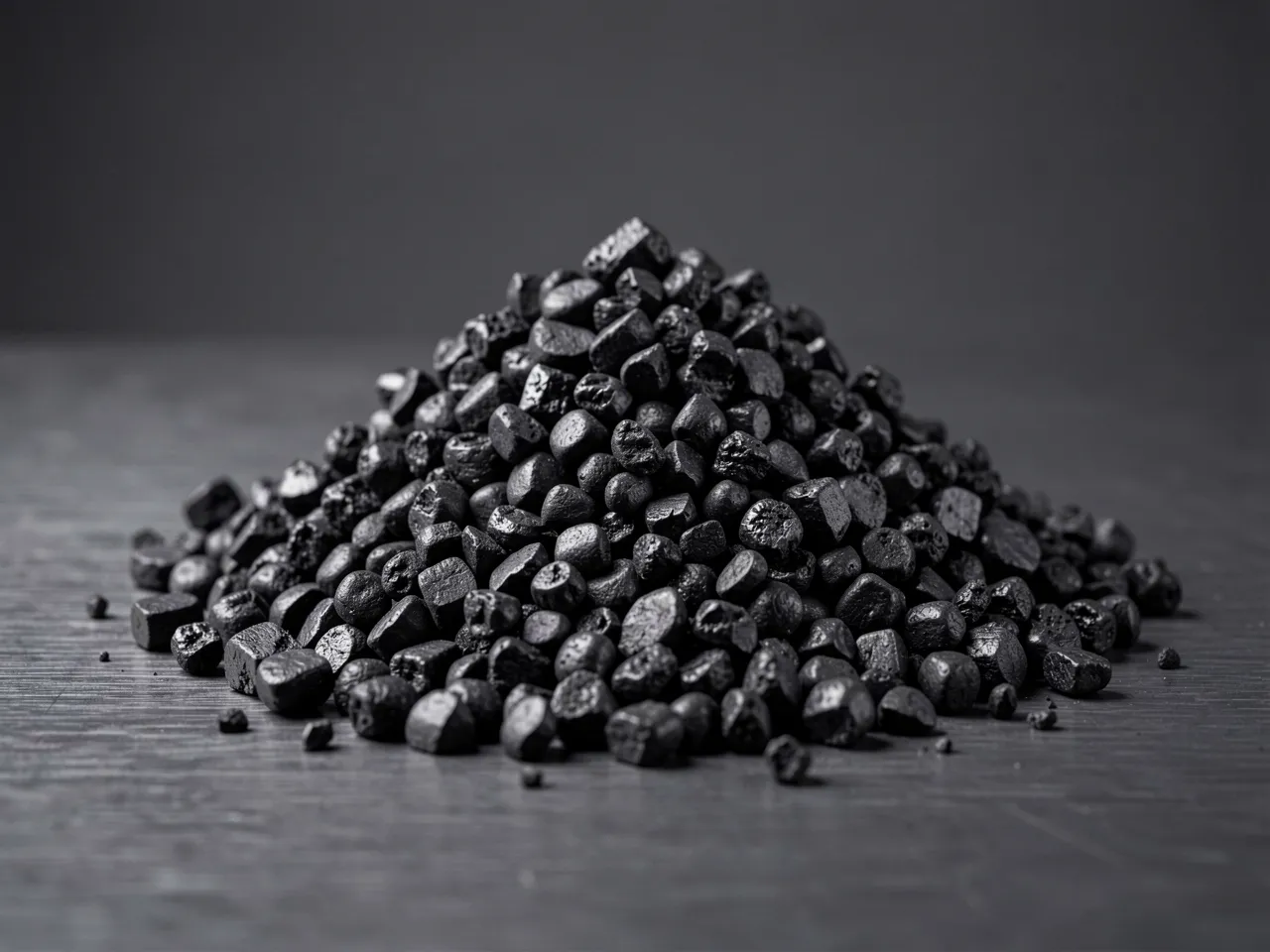
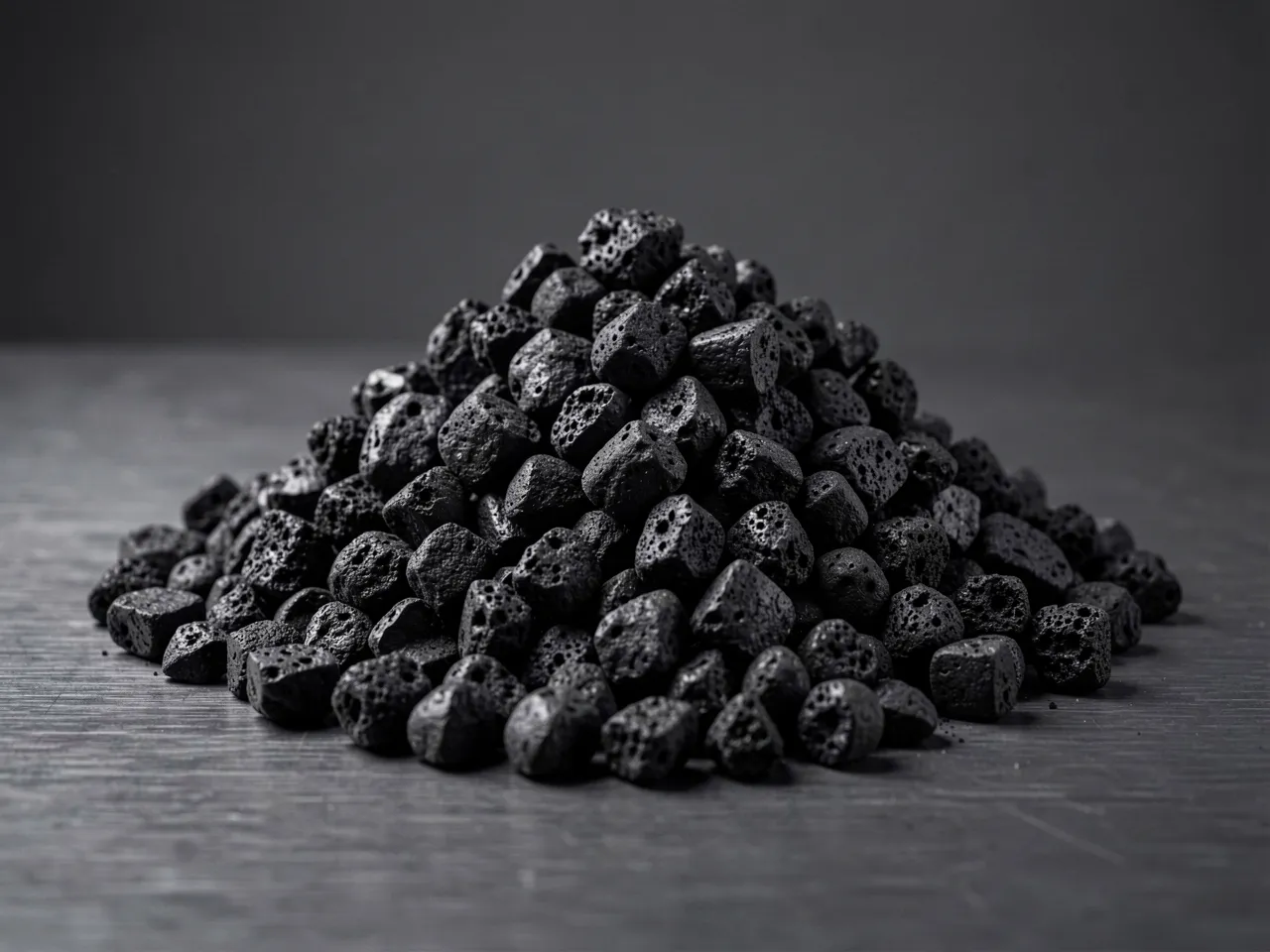
Calcined anthracite carbon raiser (CAC) is a thermally treated anthracite recarburizer that raises the carbon level of molten iron and steel. Calcination drives off volatiles and orders the carbon structure, so fixed carbon dissolves into the melt and lifts final C toward target chemistry without the cost of graphitized grades. With F.C 90-95% and a graphite-poor structure, recovery sits below synthetic graphite — which is precisely why it serves as an economical bulk carbon tier where premium pickup is not required. Typical use: grey and ductile iron carburization, casting recarburization, and EAF charge carbon for construction steel, dosed roughly 0.5-2.0 wt% depending on charge carbon deficit and target grade. The spec set supports controlled, low-residual additions: S ≤ 0.3% protects nodularity, Ash ≤ 4%, V.M ≤ 1.0%, Moisture ≤ 1.0%, N ≤ 300 ppm to limit pinholing, sized 1-5 mm for steady dissolution. Supplied with COA and MTC, multi-regional sourcing, ex Gebze bonded stock or CIF Marmara, 20 MT FCL. Send target chemistry and tonnage for an RFQ.
Specifiche tecniche
F.C
90-95%
S
≤ 0.3%
Ceneri
≤ 4%
V.M
≤ 1.0%
Umidità
≤ 1.0%
N
≤ 300 ppm
Granulometria
1-5mm
Applicazioni
Grey & ductile iron carburization
EAF charge carbon
Casting recarburization
Construction steel
Domande frequenti
Come si seleziona il grado corretto di antracite calcinata per la mia fusione?
Abbini il carbonio fisso alla Sua tolleranza per ceneri e azoto. Questo grado ha F.C 90-95%, S ≤0,3%, ceneri ≤4%, V.M ≤1,0% e N ≤300 ppm a 1-5mm. Per la carburazione di ghisa grigia e sferoidale e la ricarburazione dei getti, il basso S e l'N controllato sono adatti a un assorbimento di carbonio economico. Dove serve N più stretto o purezza maggiore, passi invece a un ricarburante grafitizzato. Confermi la fascia degli elementi del COA rispetto al Suo target di analisi finale prima di ordinare.
Quale dosaggio e pratica di aggiunta dovrei usare?
Il dosaggio dipende dal Suo divario di carbonio, dalla carica di base e dalla specifica target, non da un tasso fisso. Come fascia operativa, i ricarburanti sono tipicamente aggiunti a circa 0,3-2,0 wt% della carica per la ghisa, con l'estremo superiore per le fusioni di rottame a basso carbonio. La pezzatura 1-5mm favorisce la dissoluzione; aggiunga sulla carica o nel getto per un buon recupero, eviti gli scarichi tardivi in superficie. Il recupero si attesta comunemente intorno all'80-90% nella pratica EAF/a induzione. Esegua una colata di prova e regoli in base al Suo recupero effettivo.
Quali sono le opzioni di imballaggio, MOQ e tempi di consegna?
L'imballaggio standard è in sacchi da 25 kg o big bag da 1.000 kg, pallettizzati e avvolti in film termoretraibile per il carico in container. Lo sfuso si movimenta come 20 MT FCL; le prove minori vengono spedite in 5 MT LCL. Manteniamo stock in deposito doganale a Gebze per un ritiro rapido nella regione di Marmara e quotiamo CIF Marmara sui lotti di importazione. Il tempo di consegna dipende dal fatto che il materiale provenga da stock locale o da un lotto in arrivo. Invii tonnellaggio, pezzatura e punto di consegna e confermeremo imballaggio e tempistica per ordine.
Quale documentazione di qualità e quali prove accompagnano il materiale?
Ogni lotto viene spedito con un COA che riporta carbonio fisso, zolfo, ceneri, materia volatile, umidità, azoto e pezzatura rispetto a questa fascia di grado. Carbonio fisso e ceneri seguono l'analisi immediata (proximate) standard; lo zolfo è determinato per combustione. Su richiesta è possibile organizzare prove di terze parti presso un laboratorio riconosciuto, e sono disponibili campioni pre-spedizione per la qualifica. Specifichi eventuali limiti di accettazione interni o protocollo di campionamento con il Suo ordine così che la documentazione corrisponda alla Sua routine di controllo in accettazione.
Cosa posso sostituire se questo grado non è adatto?
Per una resa di carbonio maggiore e un azoto inferiore, un ricarburante a coke di petrolio grafitizzato è il passaggio superiore abituale, a costo più elevato. Dove l'assorbimento di azoto deve restare minimo nella ghisa sferoidale, dia priorità ai gradi a basso N. Il coke di petrolio calcinato offre un'altra opzione di fascia intermedia. Per il carbonio di carica EAF dove comanda l'economicità, questa antracite calcinata è la scelta conveniente. Ci indichi il Suo C finale target, il tetto di N e il budget e mapperemo il grado più prossimo dall'approvvigionamento multi-regionale.