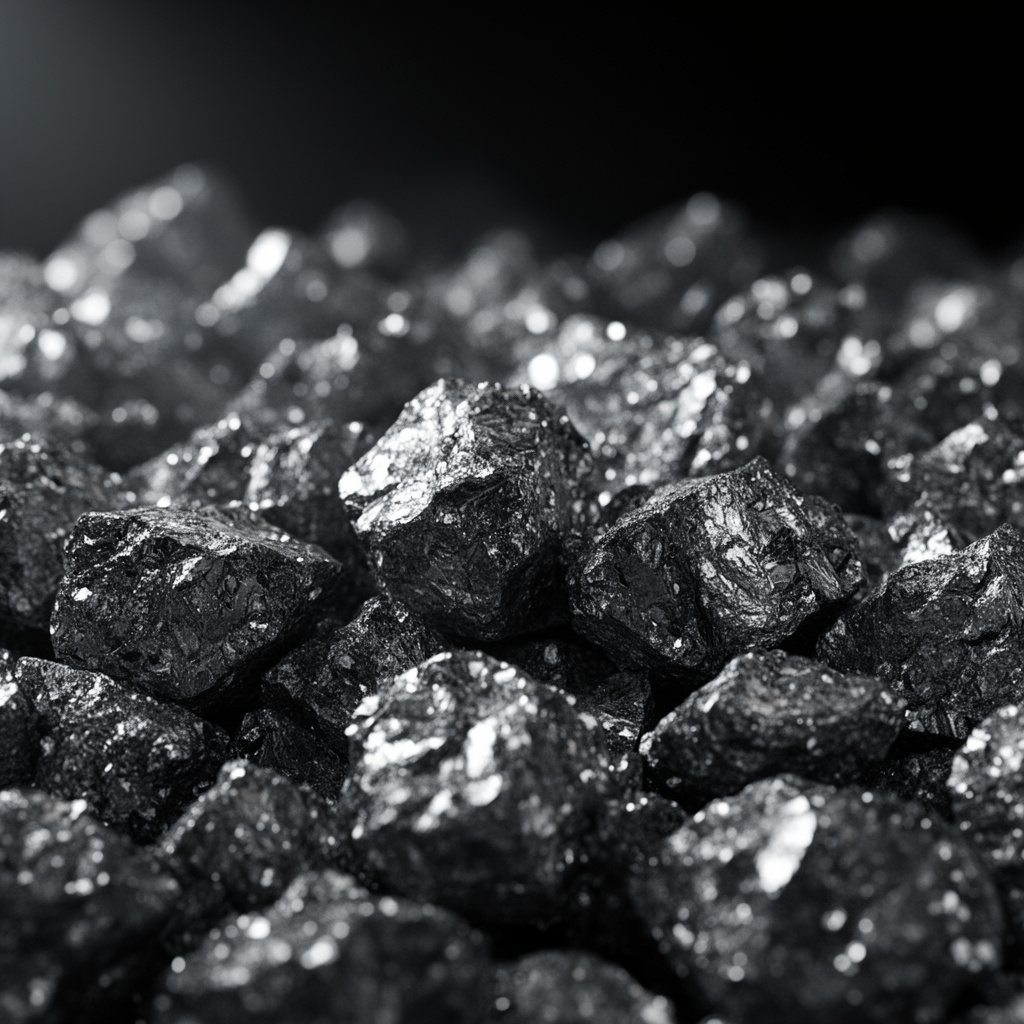
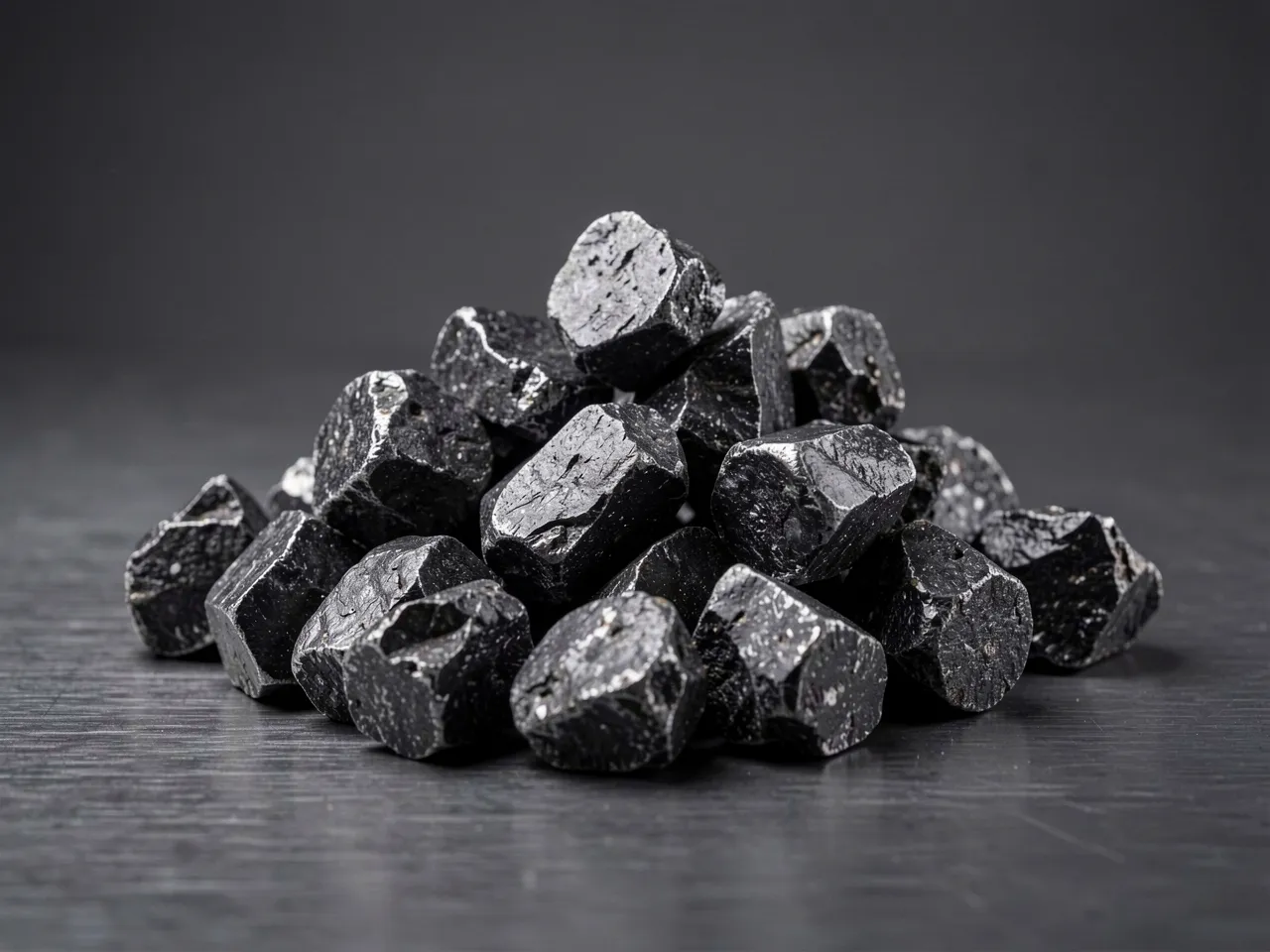
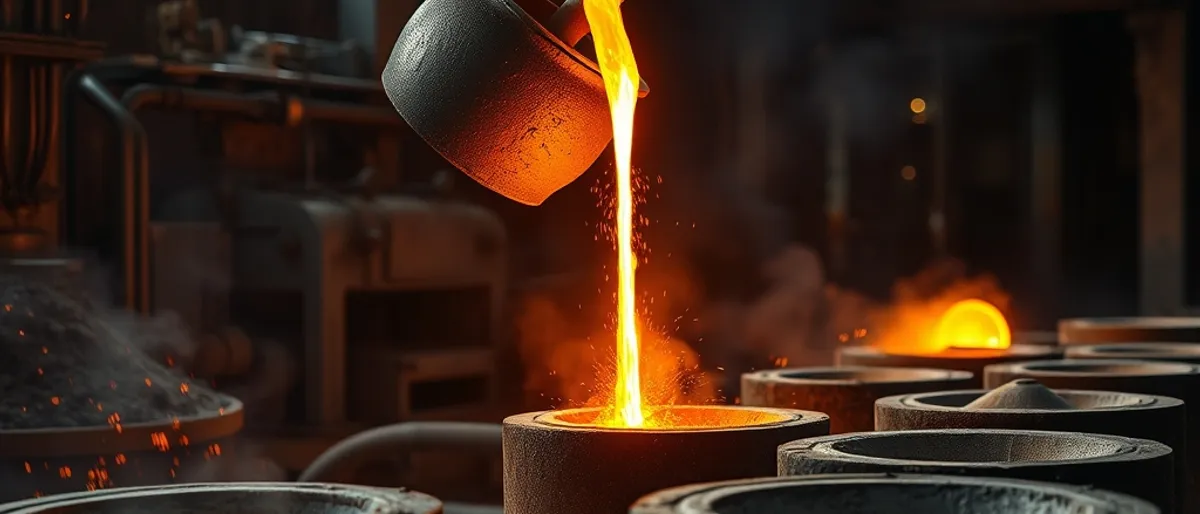
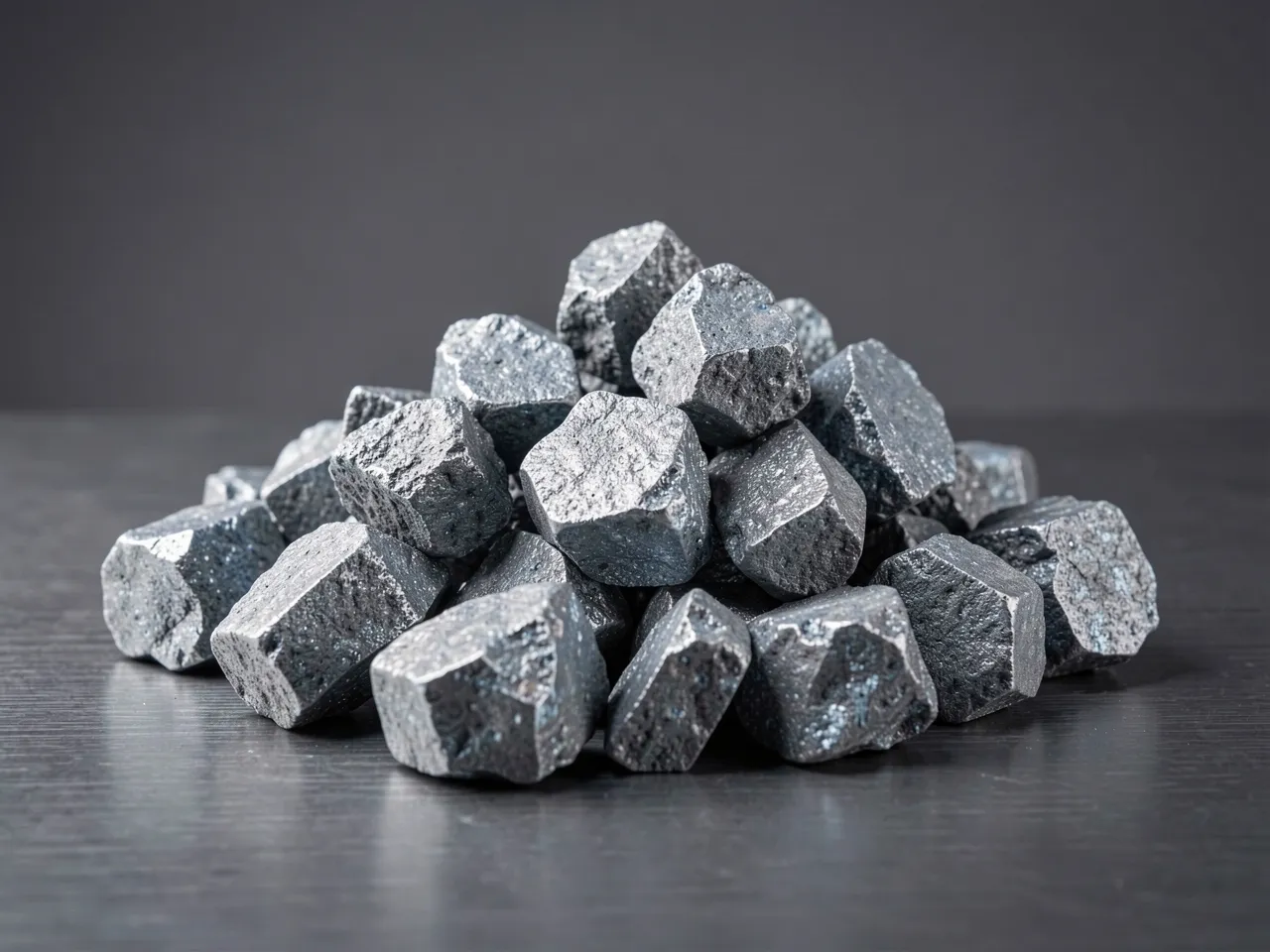
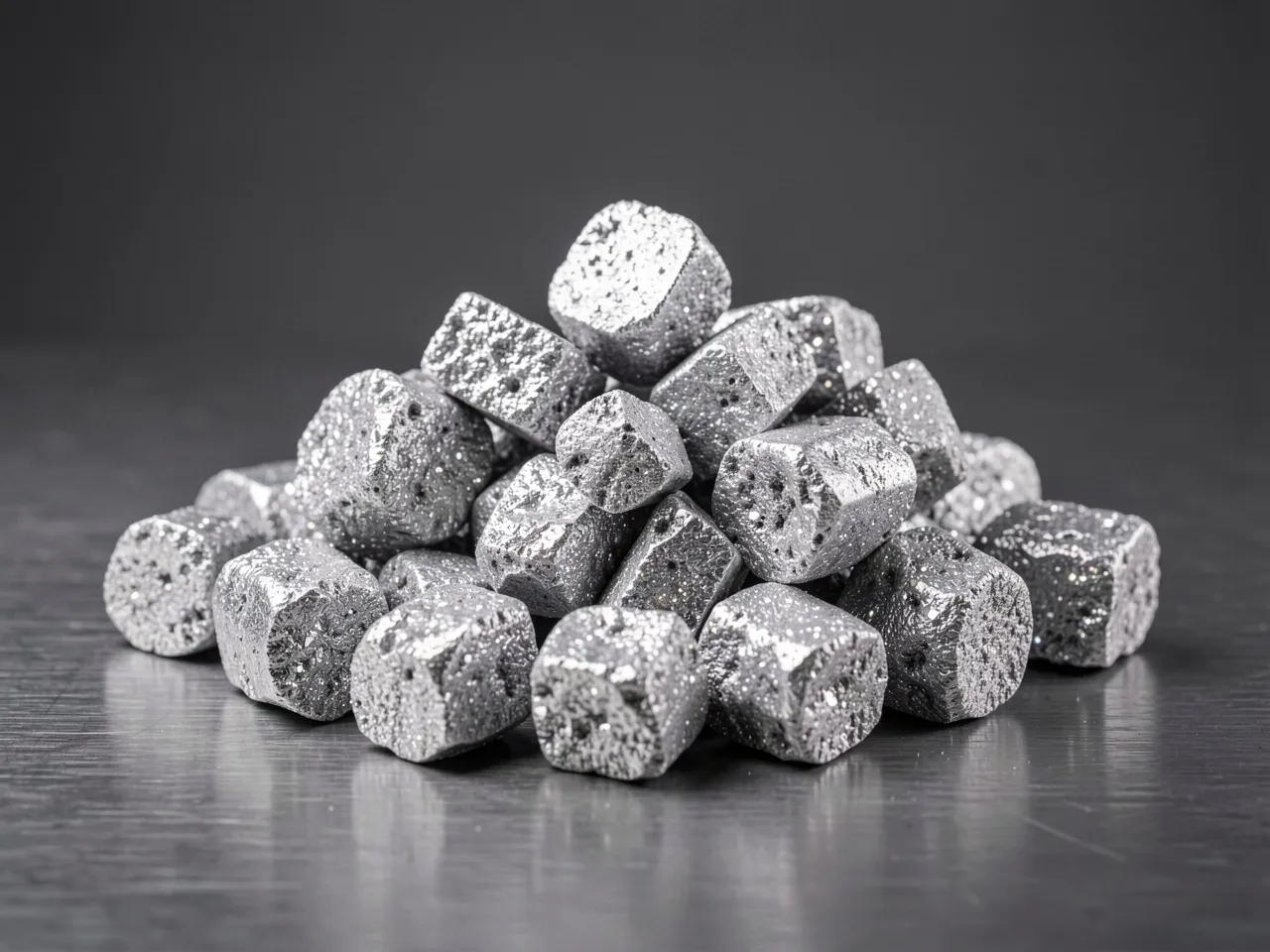
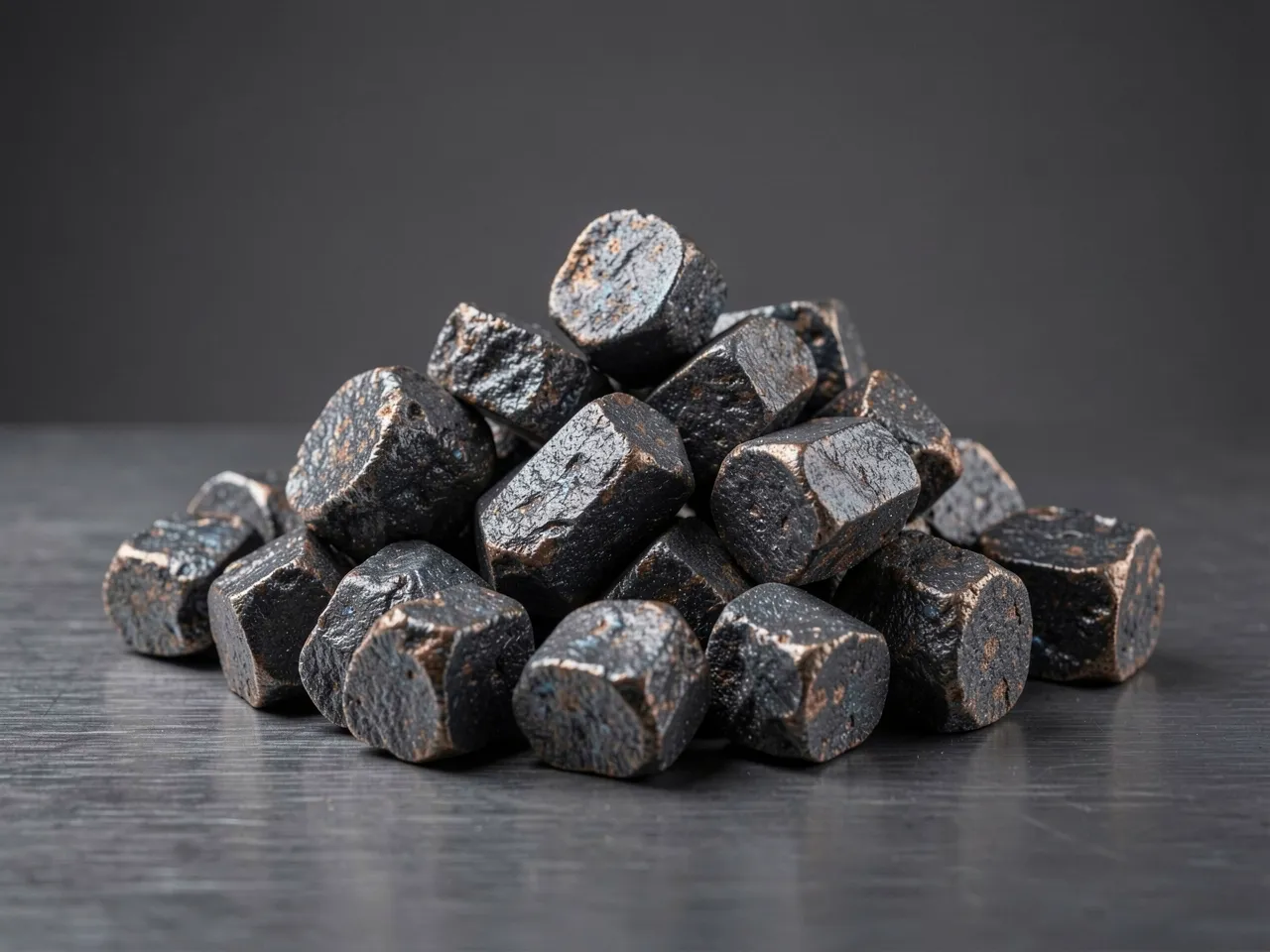
Ferro phosphorus (FeP) delivers phosphorus as a controlled, dissolvable unit into iron and steel melts, avoiding the violent reaction and fume losses of elemental phosphorus. In the bath, P partitions into the matrix to raise electrical resistivity and strengthen ferrite by solid solution, while lowering surface tension to improve melt fluidity and mold filling. P also promotes the dense, adherent oxide patina that gives weathering steel its atmospheric-corrosion resistance. Typical use spans weathering (COR-TEN) and free-machining steels, soft-magnetic alloys, and thin-section gray and ductile cast iron. Addition rates are modest, on the order of 0.1-1.0 wt% depending on the target P aim and recovery. This grade analyzes P 23-26%, with Si ≤ 4.0%, Mn ≤ 5.0%, C ≤ 1.0%, and Ti ≤ 1.0%, sized 10-100 mm for predictable dissolution and accurate ladle dosing in EAF and foundry practice. Each lot ships with COA and MTC, drawn from multi-regional sourcing, on CIF Marmara terms via Gebze bonded warehouse, in 20 MT FCL or 5 MT LCL lots. Send your target P range and tonnage for an RFQ.
Specifiche tecniche
P
23-26%
Si
≤ 4.0%
Mn
≤ 5.0%
C
≤ 1.0%
Ti
≤ 1.0%
Granulometria
10-100mm
Applicazioni
Weathering (COR-TEN) steel
Free-machining steel
Soft-magnetic alloys
Cast iron fluidity
Domande frequenti
Quale grado e specifica di FeP scegliere per acciaio resistente agli agenti atmosferici rispetto ad acciaio a lavorabilità migliorata?
Un unico grado a P 23-26% copre entrambe le vie; ciò che conta è abbinare i limiti sui residui alla Sua colata. Per l'acciaio resistente agli agenti atmosferici COR-TEN, il P è l'aggiunta deliberata per la resistenza alla corrosione, per cui i tetti di ≤4,0% Si e ≤5,0% Mn mantengono pulito il Suo bilancio di lega. Per i gradi a lavorabilità migliorata (free-machining) dove il P favorisce la rottura del truciolo, i limiti ≤1,0% C e ≤1,0% Ti evitano effetti indesiderati di carburi o inclusioni. Confermi il Suo P residuo target sul COA prima della carica.
Quale dosaggio e pratica di aggiunta si applicano al ferrofosforo?
Dosare in base al Suo P residuo target, non a un tasso fisso. Per l'acciaio resistente agli agenti atmosferici, punti a un P intorno a 0,07-0,15 wt% nell'acciaio finito; i gradi a lavorabilità migliorata spesso vanno più in alto. Calcoli la carica dal titolo di P 23-26% e dal recupero atteso, che è tipicamente elevato poiché il FeP si dissolve facilmente. Aggiunga a un bagno assestato anziché durante l'ebollizione vigorosa per limitare la perdita, poi campioni e corregga. I blocchi 10-100mm sono adatti all'aggiunta in siviera o in forno senza fumo eccessivo.
Come viene imballato il FeP e quali sono le condizioni di consegna e MOQ tipiche?
La pezzatura standard in blocchi è 10-100mm, fornita in big bag da 1 MT o fusti in acciaio su pallet, sigillati contro l'assorbimento di umidità. Le quantità d'ordine scalano all'economia del container: 20 MT FCL per i carichi completi, con 5 MT LCL disponibili per volumi di prova o di reintegro. La consegna è offerta CIF Marmara o franco stock in deposito doganale di Gebze. Il tempo di consegna dipende dalla disponibilità del lotto e dalla pezzatura; confermi rispetto al Suo programma di carica al momento della richiesta di preventivo.
Quale documentazione di qualità e quali prove accompagnano ogni lotto?
Ogni spedizione viene inviata con un certificato di prova materiale e un COA che riportano P, Si, Mn, C e Ti rispetto alle fasce indicate. La chimica è determinata con metodi spettrometrici o di chimica per via umida; la pezzatura è verificata al setaccio nella fascia 10-100mm. Su richiesta è possibile organizzare un'ispezione di terze parti SGS o Intertek al porto di carico, e i campioni di riserva supportano qualsiasi ricontrollo. Riveda il COA elemento per elemento prima della carica, poiché il controllo del P residuo è l'intero scopo dell'aggiunta.
Il FeP può essere sostituito e quando conviene considerare alternative?
Per l'alligazione massiva di P in acciaio e ghisa, il FeP a 23-26% di P è il vettore standard ed è difficile da soppiantare sul costo per unità di P. Dove serve P senza diluizione di ferro o con residui più stretti, esistono leghe madri contenenti fosforo o rame-fosforo, ma sono adatte a nicchie più ristrette. Per la fluidità della ghisa, il FeP resta la via pratica. L'approvvigionamento multi-regionale mantiene la continuità del grado, quindi specifichi la fascia di P e i tetti sui residui anziché una singola origine.