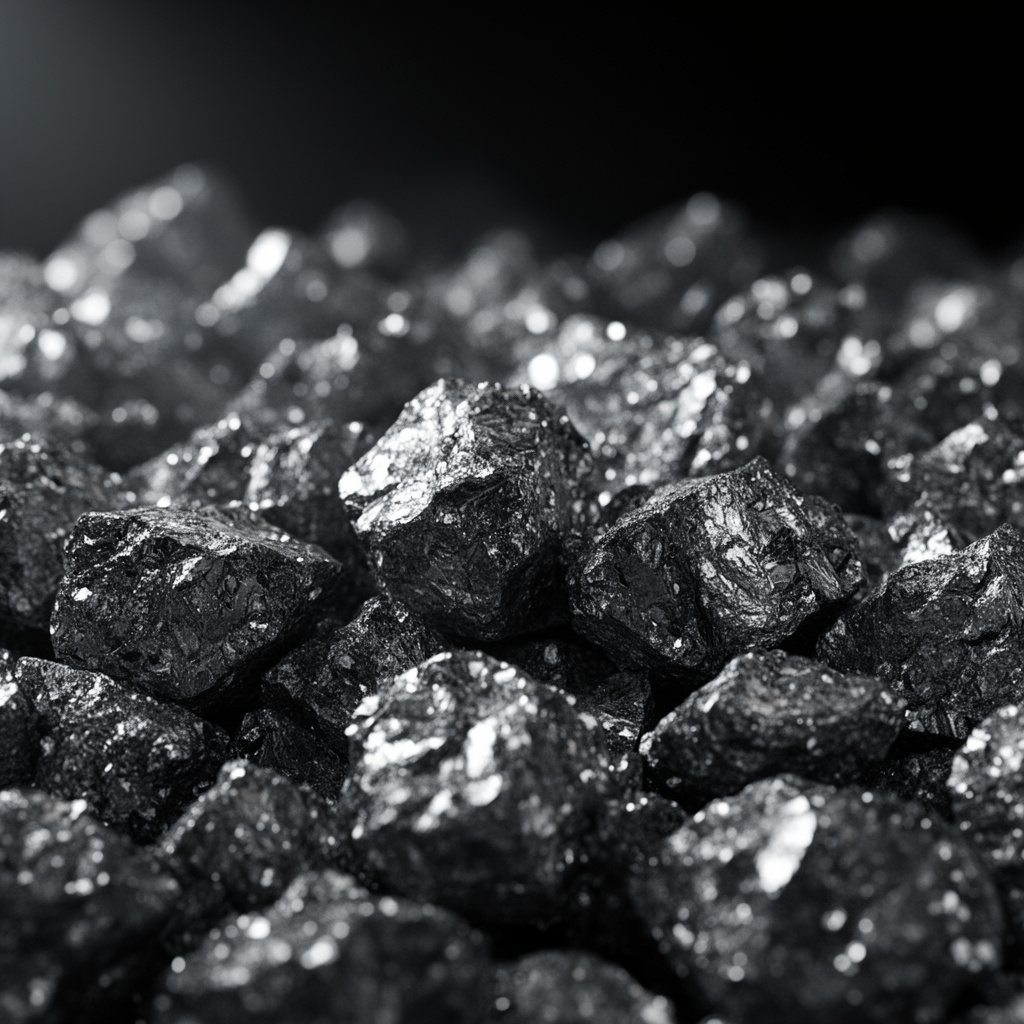
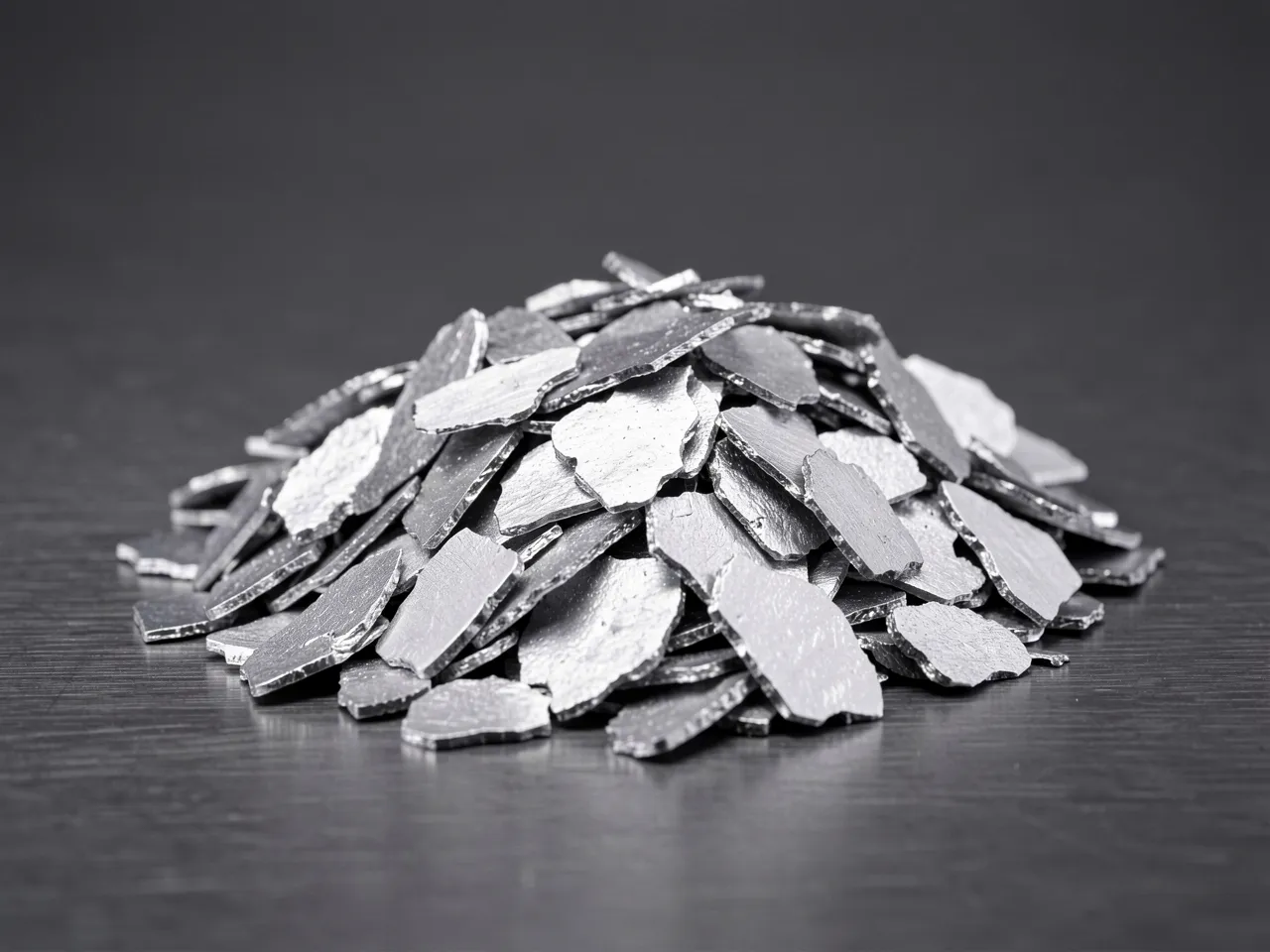
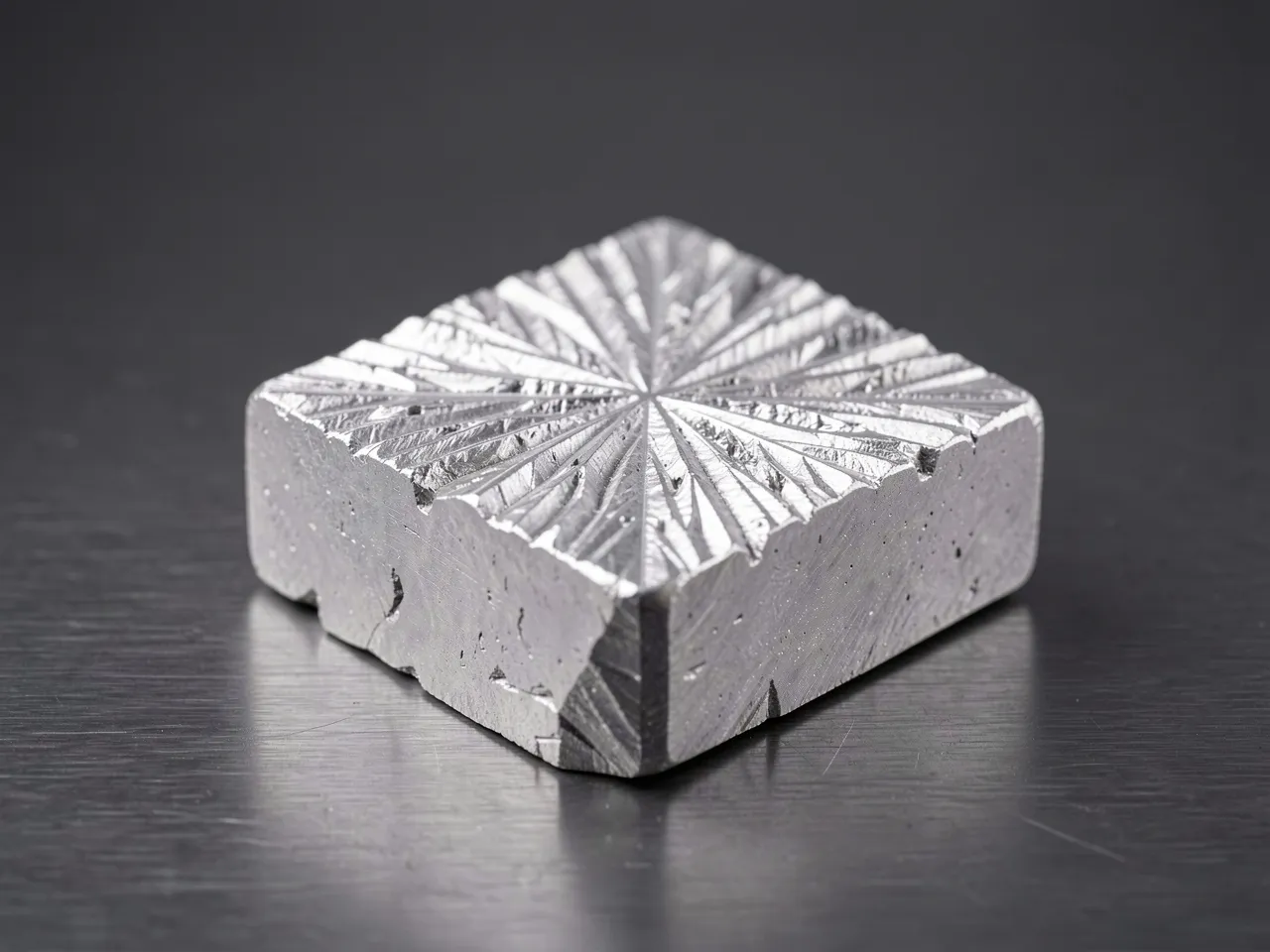
Electrolytic manganese metal is a carbon-free Mn unit produced by electrowinning, deposited as brittle cathode flakes at Mn ≥ 99.7%. Because manganese enters liquid steel as a near-pure element rather than as an Fe-Mn alloy, it raises the Mn target without dragging in carbon — the C ≤ 0.03% ceiling lets metallurgists hit Mn aim in grades where high-carbon ferromanganese would breach the carbon or phosphorus spec. Manganese supplements deoxidation and fixes residual sulfur as MnS, displacing low-melting FeS films that cause hot-shortness, so castability and hot ductility improve. As an austenite stabilizer it also strengthens work-hardening response.
Primary uses: stainless steel, special and low-C alloy steels, aluminum alloy additions, and battery-grade MnSO₄ feedstock. Additions are typically dosed from tenths of a percent up to a few wt% against ladle analysis. Low Si ≤ 0.01%, Se ≤ 0.02%, S ≤ 0.05%, and Fe ≤ 0.2% keep residuals controlled for clean-steel and chemical routes.
Supplied with COA and MTC, multi-regional sourcing, CIF Marmara or Gebze bonded stock, 20 MT FCL / 5 MT LCL. Send grade and tonnage for an RFQ.
Technische Spezifikationen
Mn
≥ 99.7%
C
≤ 0.03%
S
≤ 0.05%
Se
≤ 0.02%
Si
≤ 0.01%
Fe
≤ 0.2%
Form
flakes
Anwendungen
Stainless steel
Special / low-C alloy steel
Aluminum alloys
Battery-grade MnSO₄ feedstock
Häufig gestellte Fragen
Wann sollte ich elektrolytisches Manganmetall statt hoch- oder mittelgekohltem Ferromangan angeben?
Wählen Sie elektrolytische Mn-Flakes, wenn Ihre Stahlgüte Kohlenstoff und Phosphor eng begrenzt — austenitischer Edelstahl, C-arme legierte Stähle und Sonderstähle. Bei Mn ≥ 99.7% mit C ≤ 0.03% und Si ≤ 0.01% bringt es Mn-Einheiten ohne die Kohlenstofflast von HC FeMn (C bis ~7%) oder die Restgehalte in Ferrolegierungen geringerer Reinheit ein. Für hochgekohlte Güten, in denen Kohlenstoff akzeptabel ist, ist Ferromangan die wirtschaftlichere Mn-Quelle.
Welche Zugaberate sollte ich für Edelstahl- und Sonderstahlschmelzen einplanen?
Die Dosierung wird durch Ihr angestrebtes Rest-Mn, das eingehende Bad-Mn und die Ausbeute bestimmt, nicht durch eine feste Rate. Berechnen Sie die Mn-Lücke zu Ihrer Zielchemie und teilen Sie sie dann durch die erwartete Ausbeute — die Flake-Zugabe in ein desoxidiertes Bad hat typischerweise eine gute Ausbeute, aber EAF- gegenüber Induktionspraxis, Schlackenchemie und Timing verschieben alle die Ausbeute. Geben Sie spät und nach der Desoxidation zu, um den Mn-Verlust an die Schlacke zu begrenzen. Führen Sie einen Schmelzversuch durch, um die Ausbeute an Ihrem Ofen zu bestätigen, bevor Sie einen Standard festlegen.
Wie wird es verpackt, und wie sind typische Mindestbestellmenge und Lieferzeit?
Flakes werden in versiegelten Säcken auf Paletten versandt, üblicherweise etwa 1 MT je Einheit, trocken gehalten, um Oberflächenoxidation zu begrenzen. Die Bestellgrößen skalieren auf 20 MT FCL oder 5 MT LCL, wobei Gebze-Zolllagerbestand für schnellere Abrufe in der Marmararegion verfügbar ist. Die Lieferzeit hängt davon ab, ob das Material aus dem lokalen Zolllagerbestand gezogen oder über die Beschaffung aus mehreren Regionen nachgeliefert wird; teilen Sie uns Grade, Tonnage und Lieferbedingung (CIF Marmara, ab Zolllager) mit, und wir bestätigen einen Termin gegenüber der aktuellen Position.
Welche Qualitätsdokumentation und Prüfung liegen jeder Charge bei?
Jede Charge wird mit einem COA / MTC versandt, der Mn und die kontrollierten Restgehalte — C, S, Se, Si, Fe — gegenüber den Grade-Grenzwerten ausweist. Mangan und Verunreinigungen werden per Standard-Nasschemie und instrumenteller Methoden bestimmt (z. B. ICP/Verbrennung für C und S). Wenn Sie eine Probenahme nach einem bestimmten ISO- oder ASTM-Protokoll, eine überwachte Drittanalyse oder Elementschwellenwerte enger als der Standard-COA benötigen, geben Sie dies im Bestellstadium an, damit der Prüfumfang vor dem Versand festgelegt ist.
Welche Alternativen gibt es, wenn elektrolytisches Manganmetall überspezifiziert oder für meine Güte nicht verfügbar ist?
Für Güten, die Kohlenstoff tolerieren, liefert mittel- oder niedriggekohltes Ferromangan Mn-Einheiten zu geringeren Kosten, wobei C und Si passend zu Ihrem Pfannenfenster gewählt werden. Wo nur extrem niedriger Kohlenstoff funktioniert, bleiben elektrolytisches Metall oder raffiniertes C-armes FeMn die Route. Für nicht-metallurgischen Bedarf speist dasselbe Mn-≥-99.7%-Flake die Produktion von MnSO₄ in Batteriequalität. Senden Sie uns Ihre Zielchemie und Kohlenstoffobergrenze, und wir bilden die kosteneffizienteste Mn-Quelle aus der Beschaffung aus mehreren Regionen ab.