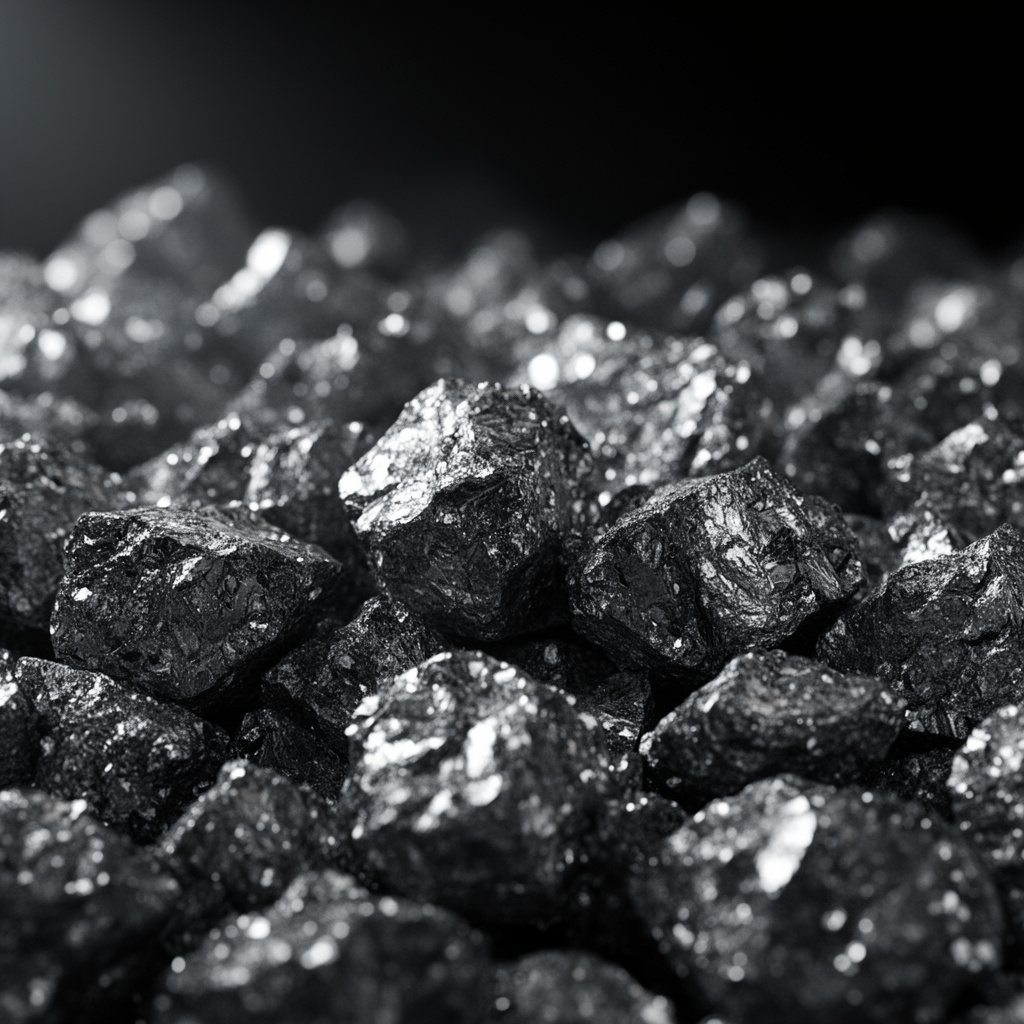
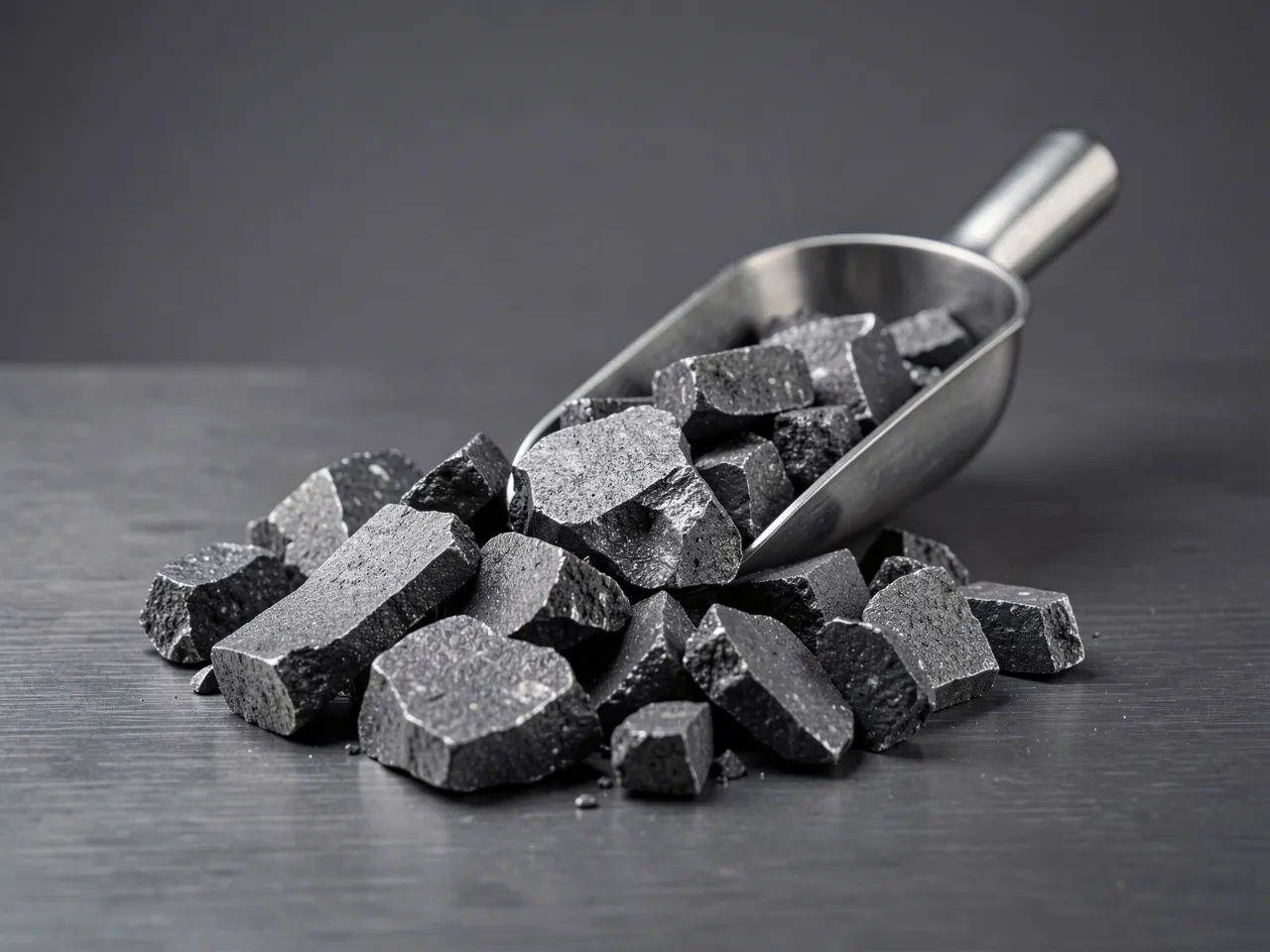
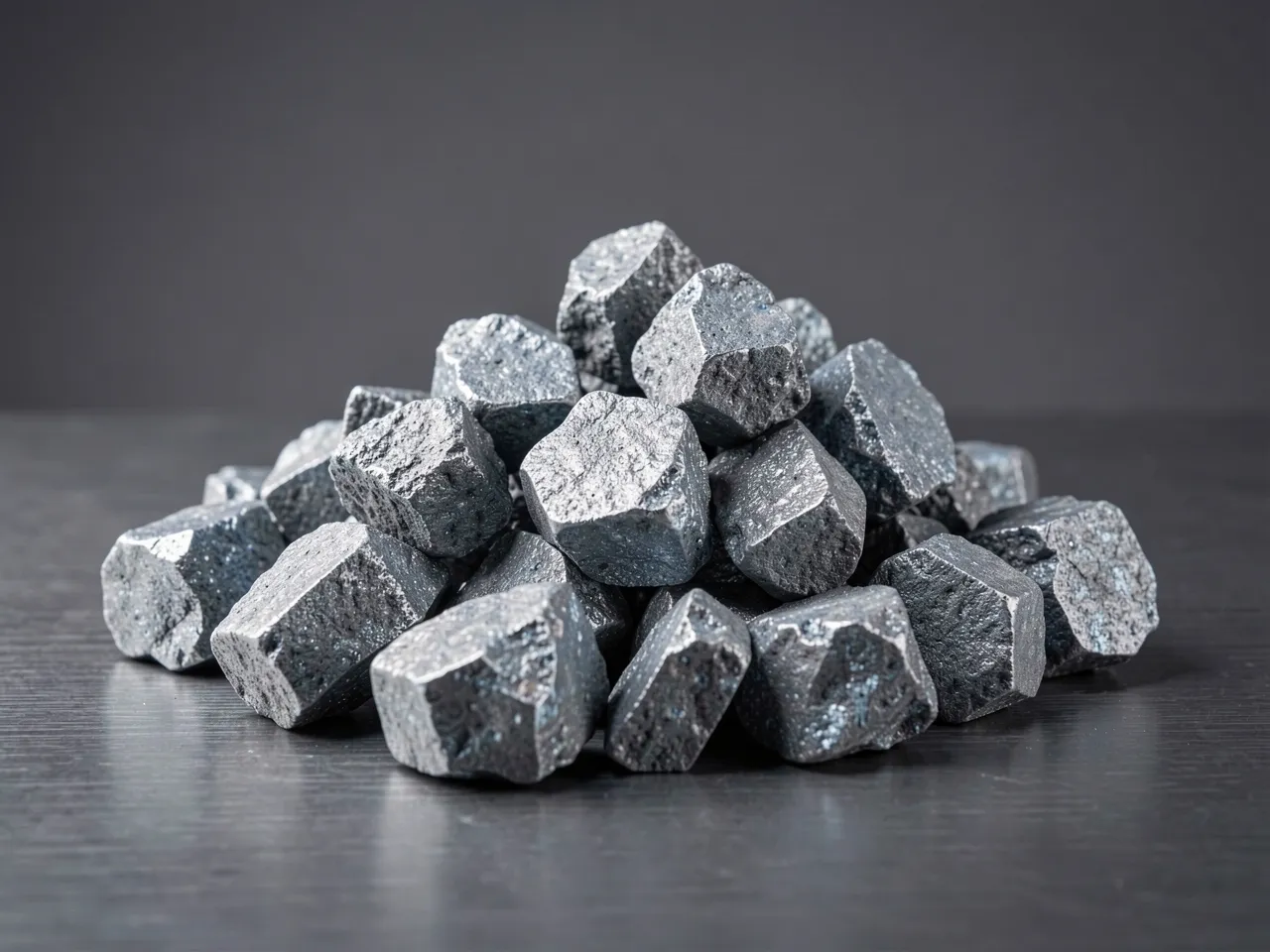
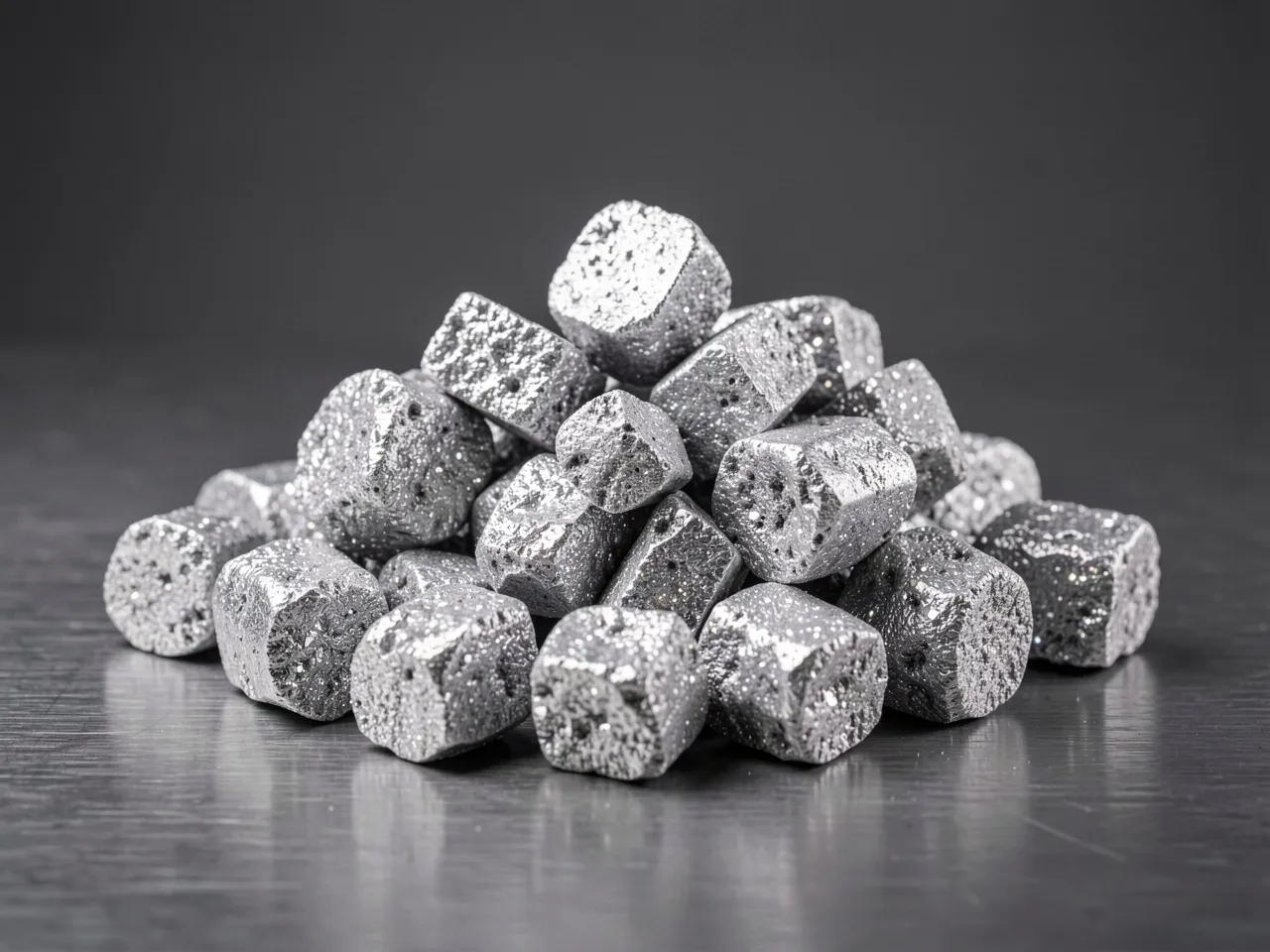
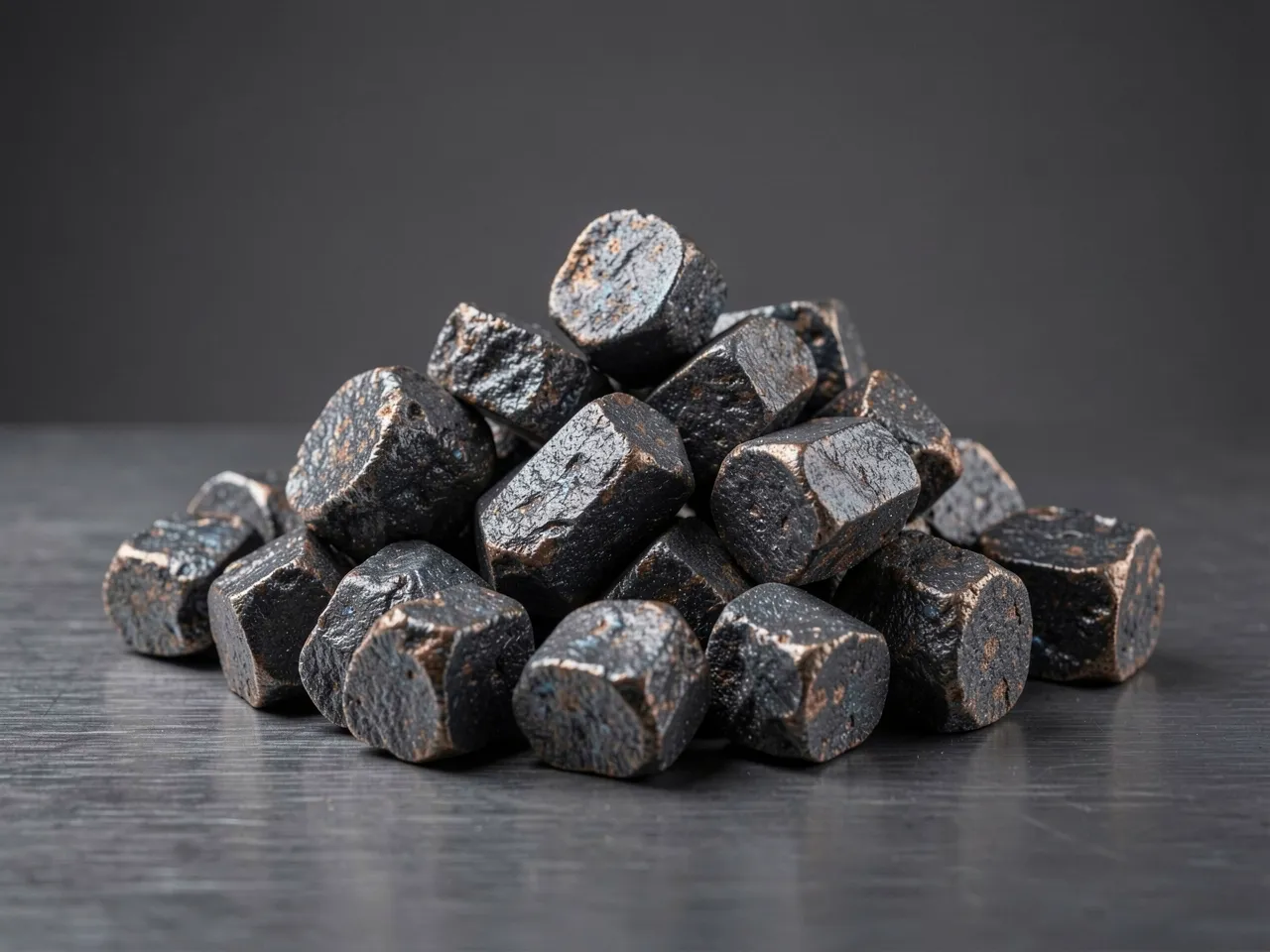
Ferro niobium (FeNb65, ASTM A550 reference) is the standard carrier alloy for introducing niobium into liquid steel. Once dissolved, Nb forms fine niobium carbonitrides (Nb(C,N)) that pin austenite grain boundaries during hot rolling, restricting recrystallization and delivering grain refinement plus precipitation strengthening. The result is a measurable rise in yield strength, toughness and weldability at additions an order of magnitude lower than conventional alloying.
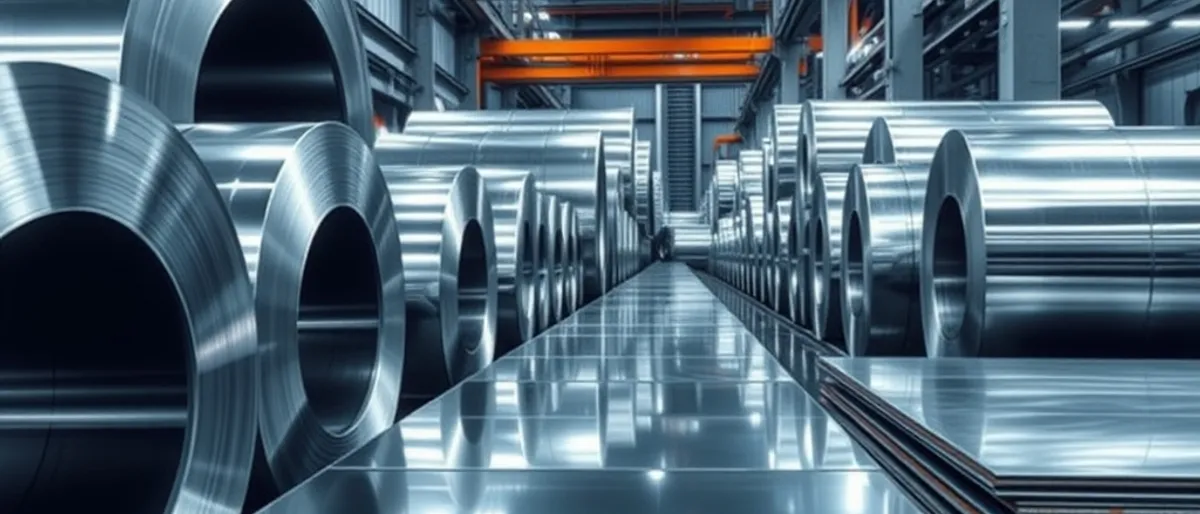
This makes FeNb a primary micro-alloying addition for HSLA structural grades, API line-pipe steels (X60-X80) and lightweight automotive sheet, and for stabilizing stainless grades against intergranular corrosion. Typical additions fall in the 0.01-0.10 wt% Nb range, so a single charge treats large heats economically.
Specification: Nb 63-68%, with C ≤0.15%, P ≤0.15%, S ≤0.05%, Si and Al ≤2.0% each, Ta ≤0.50%, sized 10-50 mm for controlled dissolution and minimal fade. Every lot ships with COA and MTC. Multi-regional sourcing supports CIF Marmara delivery and Gebze bonded stock, 20 MT FCL or smaller LCL lots.
Send your grade and tonnage for a FeNb RFQ.
Technische Spezifikationen
Nb
63-68%
Al
≤ 2.0%
Si
≤ 2.0%
C
≤ 0.15%
P
≤ 0.15%
S
≤ 0.05%
Ta
≤ 0.50%
Körnung
10-50mm
Anwendungen
HSLA steel
Pipeline (API) steel
Automotive steel
Stainless steel
Häufig gestellte Fragen
Welchen FeNb-Grade und welche Spezifikation sollte ich für die Mikrolegierung bestellen?
Dies ist FeNb65 (Referenz DIN 17569) mit Nb 63-68%, der aluminothermische Standard-Grade für die Stahlerzeugung. Für HSLA-, API-Pipeline- und Automobilstähle bestätigen Sie die für Ihre Route relevanten Restgehalte: Al ≤ 2.0%, Si ≤ 2.0%, C ≤ 0.15%, P ≤ 0.15%, S ≤ 0.05%, Ta ≤ 0.50%. Niedriges C und P eignen sich für reine Bau- und Pipeline-Güten. Die Stückgröße ist 10-50mm für die Pfannen- oder Ofenzugabe.
Welche Zugaberate und Ausbeute sollte ich für FeNb65 erwarten?
Niob ist ein Mikrolegierungselement, daher liegt das angestrebte Nb im Fertigstahl typischerweise bei 0.02-0.10 wt% für HSLA- und API-Güten. Rechnet man von ~65% Nb in der Legierung und einer Nb-Ausbeute, die üblicherweise im Bereich 85-95% liegt, zurück, sind das etwa 0.3-1.7 kg FeNb pro Tonne Stahl. Geben Sie spät in ein desoxidiertes, sauerstoffarmes Bad zu, um die Ausbeute zu maximieren. Verifizieren Sie mit Ihren eigenen Schmelzversuchen und Ihrer Pfannenpraxis.
Wie wird FeNb65 verpackt, und wie sind Lieferzeit und Mindestbestellmenge?
Standard-Stückgut 10-50mm wird in Stahlfässern oder Big-Bags geliefert, typischerweise etwa 1 MT je Einheit, palettiert für die FCL-Verladung. Die Bestellung skaliert auf 20 MT FCL oder kleinere LCL-Sendungen über den Gebze-Zolllagerbestand. Die Lieferzeit hängt davon ab, ob das Material aus dem Lagerbestand oder gegen eine frische Bestellung versandt wird, sowie von den gewählten Incoterms (CIF Marmara ist für regionale Käufer üblich). Teilen Sie uns Ihren Zielgrade und Ihr Volumen für ein verbindliches Lieferfenster mit.
Welche Qualitätsdokumentation und Prüfung liegen jeder Sendung bei?
Jede Charge wird mit einem COA / MTC versandt, der Nb plus die kontrollierten Restgehalte (Al, Si, C, P, S, Ta) gegenüber der Referenz FeNb65 / DIN 17569 ausweist. Die Chemie wird per XRF und nasschemischen Methoden bestimmt; die Probenahme folgt der einschlägigen ISO-Praxis für Ferrolegierungen. Die Korngrößenverteilung wird gegenüber dem Bereich 10-50mm kontrolliert. Muster vor Versand oder eine unabhängige Drittprüfung (etwa SGS) können auf Anfrage arrangiert werden.
Kann ich ein anderes Mikrolegierungselement für FeNb65 einsetzen?
Niob, Vanadium (FeV) und Titan (FeTi) verfeinern alle das Korn und erhöhen die Festigkeit, sind aber nicht eins zu eins austauschbar. Nb wird für thermomechanisch gewalzte API-Pipeline- und HSLA-Güten bevorzugt, weil es die Rekristallisation verzögert und die Schweißbarkeit bei geringer Zugabe verbessert. FeV eignet sich für die Ausscheidungshärtung bei höheren Temperaturen; FeTi wird hauptsächlich zur N- und S-Kontrolle verwendet. Stimmen Sie die Wahl auf Ihren Walzplan und Ihre angestrebten mechanischen Eigenschaften ab, statt nach Masse zu tauschen.