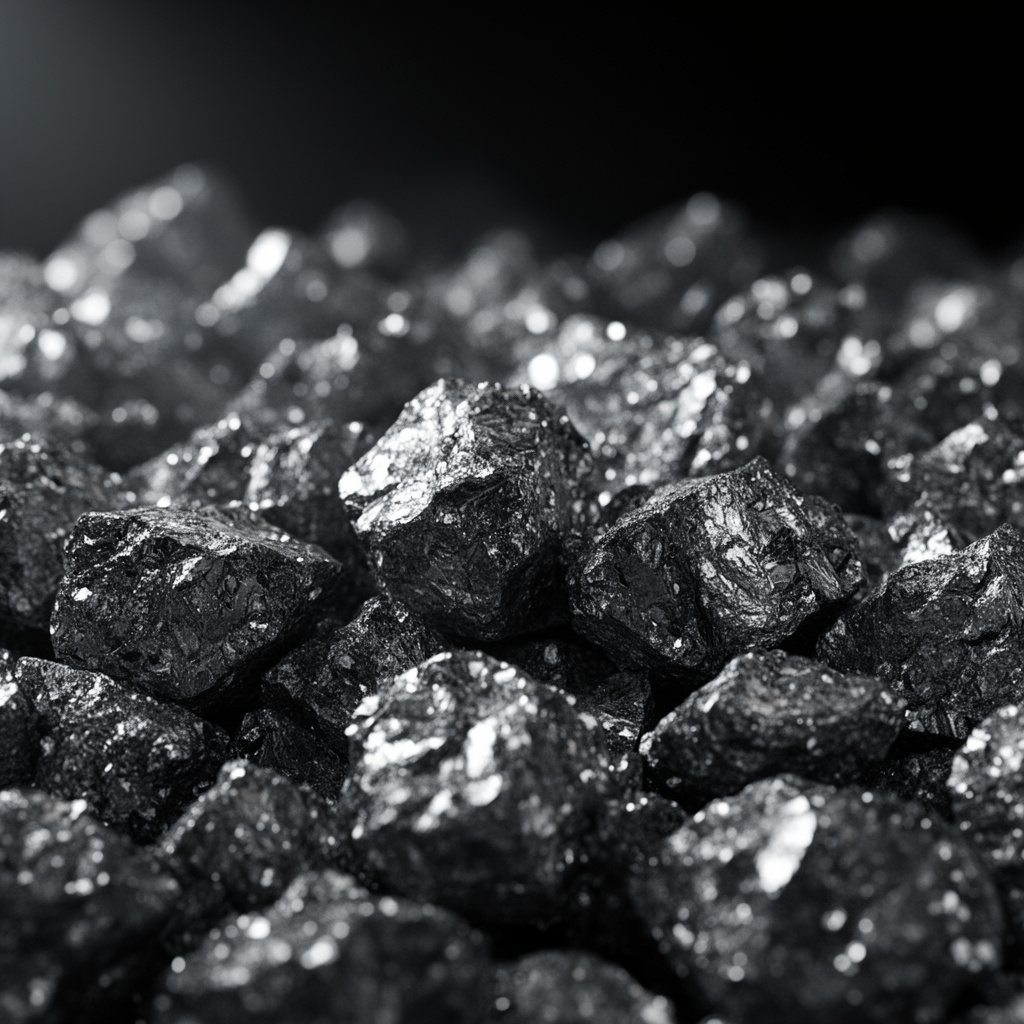
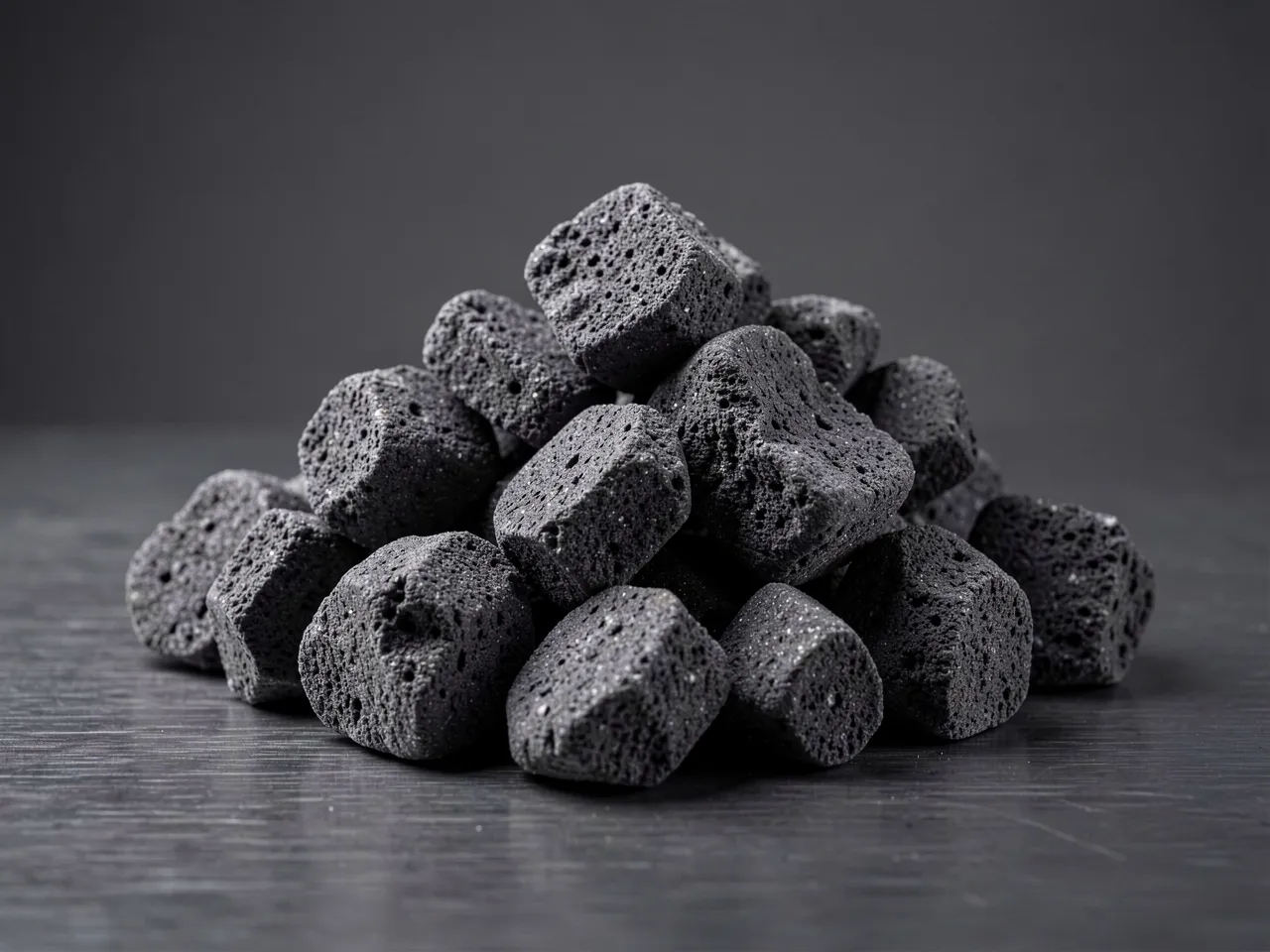
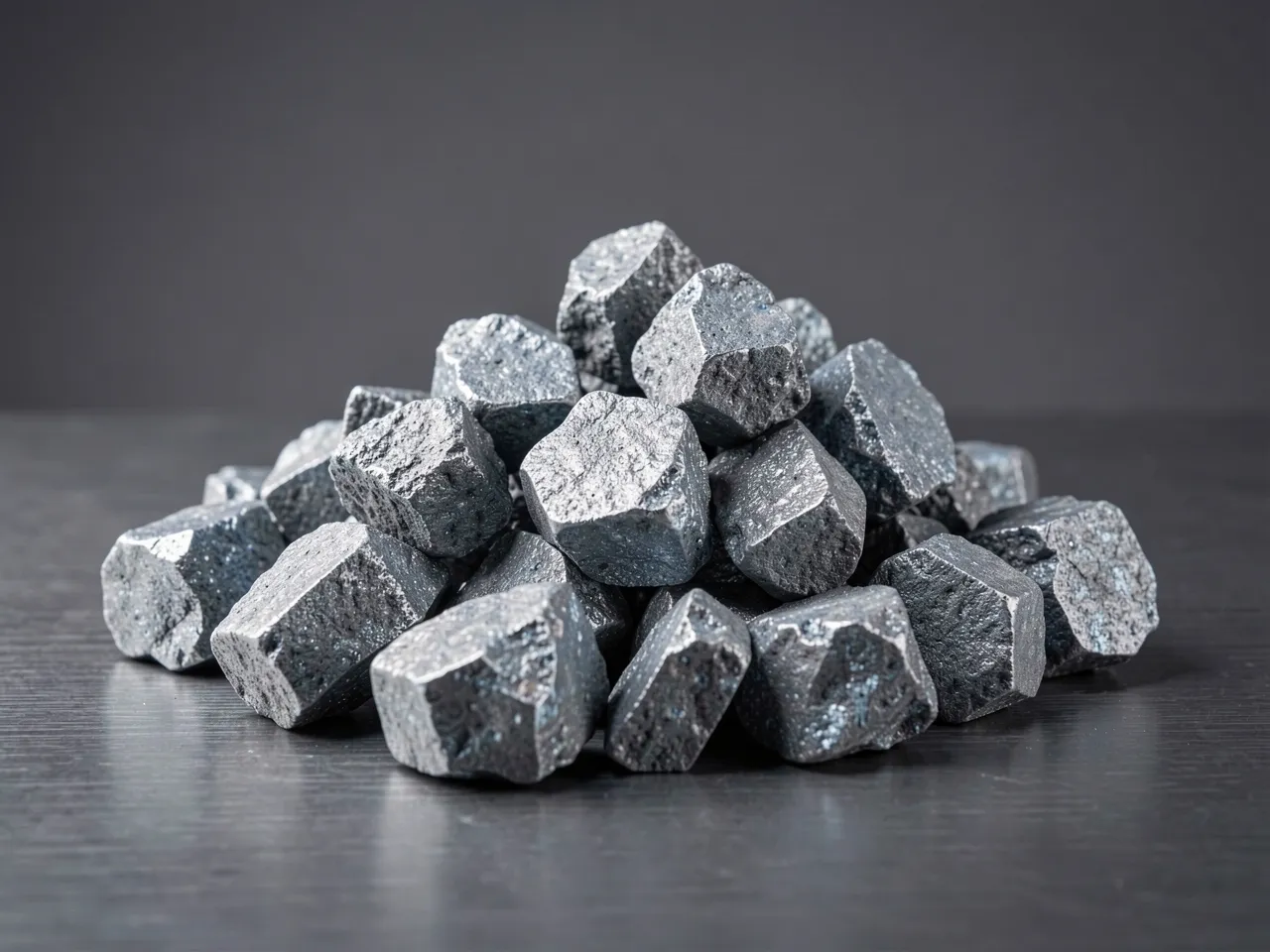
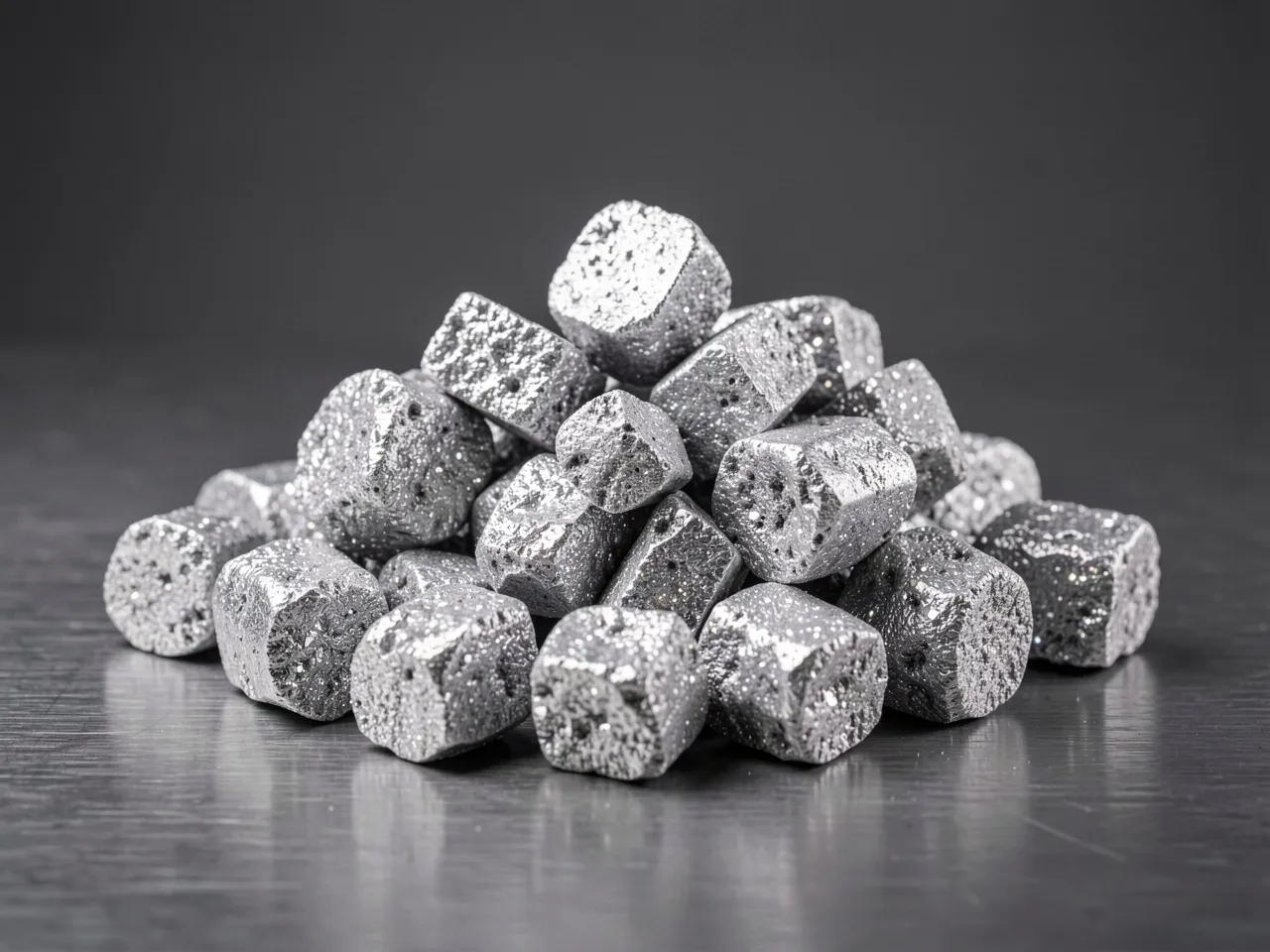
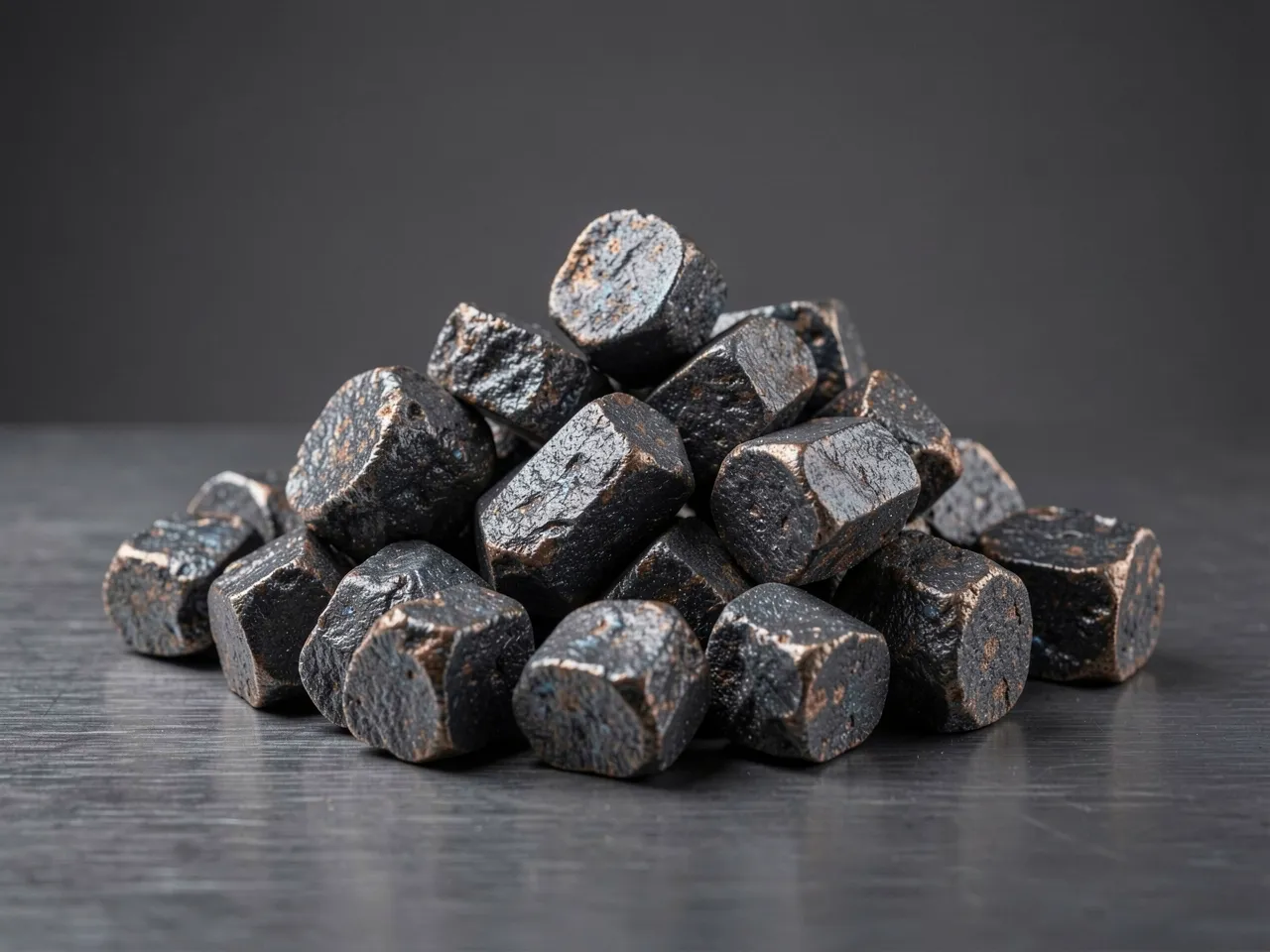
Nitrided Ferro Chrome (FeCrN) is a solid-state nitrided alloy that delivers chromium and nitrogen to the melt in a single addition, dissolving without the recovery losses and porosity risk of gas-phase nitrogen injection. Nitrogen acts as a strong austenite stabilizer and interstitial strengthener: it raises yield strength, improves pitting and crevice corrosion resistance, and lets producers cut nickel without sacrificing the austenite/ferrite balance. This makes FeCrN the standard route to duplex and super-duplex stainless steels, nitrogen-alloyed and high-nitrogen steels (HNS), and certain tool steels. Typical addition is dosed to hit the target N specification, commonly 0.1-0.5 wt% nitrogen in the finished steel, adjusted for furnace nitrogen recovery. The grade carries Cr 60-65% and N 5-8%, with controlled C ≤0.06%, Si ≤1.5%, P ≤0.03% and S ≤0.04% to protect weldability and ductility; sized 10-50mm for predictable dissolution and clean charging. Supplied with COA and MTC against each lot, multi-regional sourcing, CIF Marmara or Gebze bonded stock, 20 MT FCL. Send your grade and N target for an RFQ.
Technische Spezifikationen
Cr
60-65%
N
5-8%
C
≤ 0.06%
Si
≤ 1.5%
P
≤ 0.03%
S
≤ 0.04%
Körnung
10-50mm
Anwendungen
Duplex stainless steel
Nitrogen-alloyed steel
High-nitrogen steel (HNS)
Tool steel
Häufig gestellte Fragen
Wie wähle ich den richtigen FeCrN-Grade für stickstoffverfestigten Edelstahl aus?
Stimmen Sie die Chrom- und Stickstoffziele der Schmelze ab. Dieser Grade läuft Cr 60-65% mit N 5-8%, sodass das Cr:N-Verhältnis nahe 8-12:1 liegt. Für Duplex-Güten (z. B. Typ 2205) wünschen Sie in der Regel das obere N-Ende, um 0.14-0.20% N in der Schmelze zu erreichen; hochstickstoffhaltige Stähle (HNS) gehen weiter. Halten Sie C ≤0.06%, um die Beständigkeit gegen interkristalline Korrosion zu schützen. Bestätigen Sie Si ≤1.5%, P ≤0.03% und S ≤0.04% gegenüber Ihren Restgrenzwerten, bevor Sie den Grade festlegen.
Welche Dosierung und Zugabepraxis ergeben eine gute Stickstoffausbeute?
Die Dosierung richtet sich nach Ihrem Stickstoff- und Chromdefizit, nicht nach einer festen Rate. Die meisten Edelstahlschmelzer geben etwa 0.5-2.0 wt% FeCrN des Einsatzes zu, um N um Zehntelprozent anzuheben, da das Stückgut 5-8% N analysiert. Die Stickstoffausbeute ist schmelzenabhängig; geben Sie spät zu, nach der Desoxidation und unter einer dichten Schlacke, um die Entstickung zu begrenzen. Das Stückgut 10-50mm löst sich in flüssigem Stahl vorhersehbar auf. Führen Sie einen Schmelzversuch mit COA-Werten durch, um die Ausbeute für Ihren Ofen und Ihre Abstichpraxis zu kalibrieren.
Welche Verpackungsoptionen, Lieferzeit und Mindestbestellmenge gibt es?
Standardverpackung ist das Stückgut 10-50mm in 1 MT Big-Bags auf Paletten oder Stahlfässer für kleinere Partien; wir können nach Ihrem Routing etikettieren. Typische Sendung ist 20 MT FCL oder konsolidiertes 5 MT LCL, wobei Zolllagerbestand in Gebze für eine schnellere Lieferung in der Marmararegion verfügbar ist. Mindestbestellmenge und Lieferzeit hängen von der Grade-Verfügbarkeit ab und davon, ob Sie aus dem Zolllagerbestand oder einer frischen Zuteilung ziehen, fordern Sie daher ein aktuelles Angebot mit Ihrer Tonnage und Ihren Lieferbedingungen (CIF, CFR oder ab Zolllager) an.
Welche Qualitätsdokumentation und Prüfung liegen jeder Charge bei?
Jede Charge wird mit einem COA versandt, der Cr, N, C, Si, P, S und Körnung gegenüber dieser Spezifikation ausweist, dazu ein MTC auf Anfrage. Die Chemie wird per Verbrennungsanalyse für C/S, Trägergasschmelzverfahren für N und XRF oder Nassmethoden für Cr verifiziert. Die Körnung wird per Sieb auf das Fenster 10-50mm geprüft. Eine Drittprüfung (Typ SGS/Bureau Veritas) und eine Probenahme vor Versand können arrangiert werden, sodass Ihre Wareneingangs-QK die zertifizierten Werte vor dem Schmelzen abgleicht.
Wann sollte ich FeCrN verwenden, statt FeCr plus eine separate Stickstoffquelle einzusetzen?
Verwenden Sie FeCrN, wenn Sie kontrollierten, einlegierten Stickstoff zusammen mit Chrom in einer Zugabe benötigen — es vermeidet die schlechte, variable Ausbeute von Gasstickstoff oder nitriertem Mangan in Edelstahlschmelzen und hält C niedrig. Standard-HC/LC-Ferrochrom bringt nur Cr ein; nitriertes Ferromangan eignet sich für Mn-N-Stähle, nicht für Cr-Ziele. Für Duplex, HNS und stickstofflegierte Werkzeugstähle gibt FeCrN eine engere N-Kontrolle. Wenn Ihre Güte kein zusätzliches Cr toleriert, ist eine manganbasierte Nitrierlegierung die Alternative.