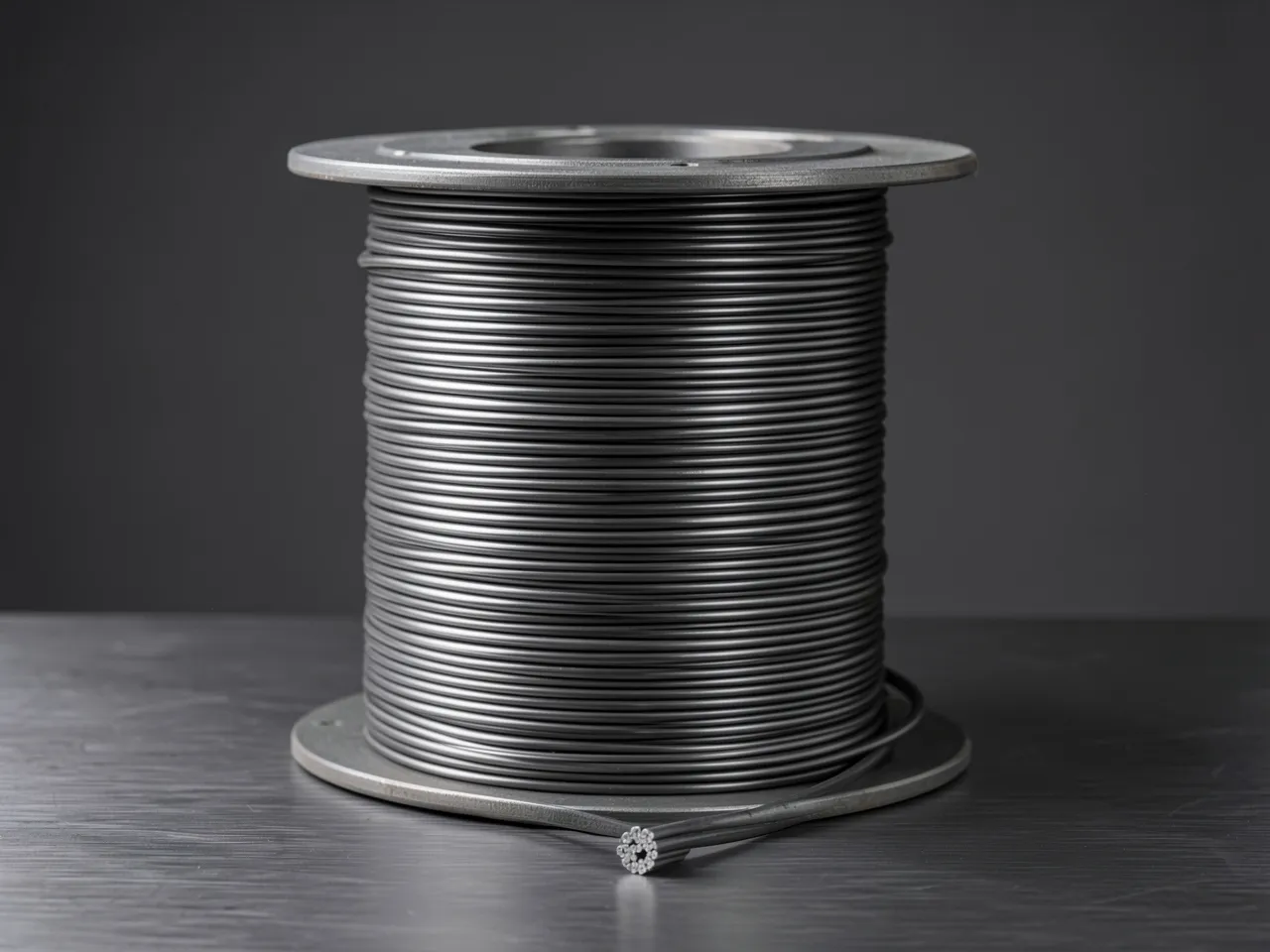
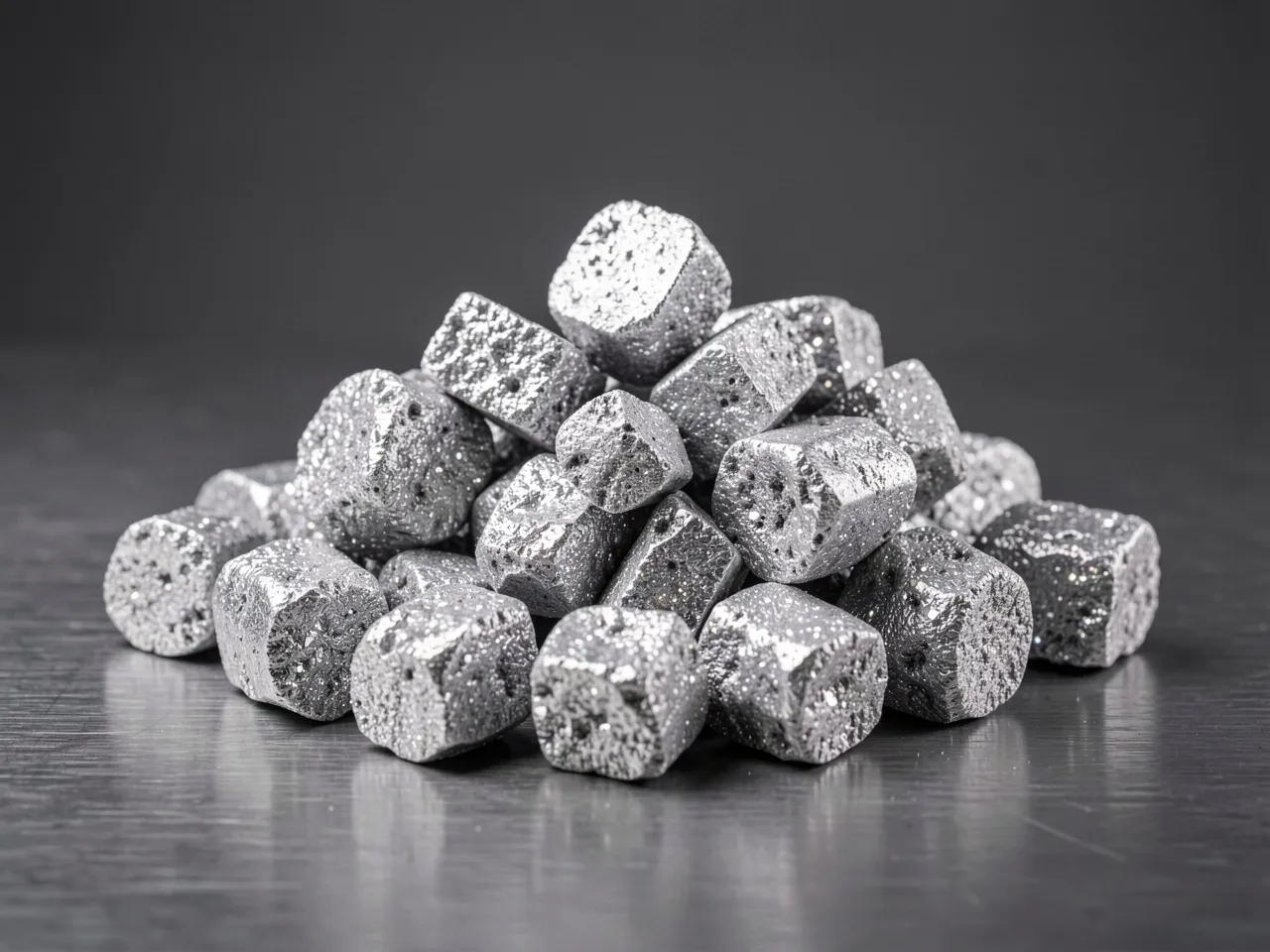
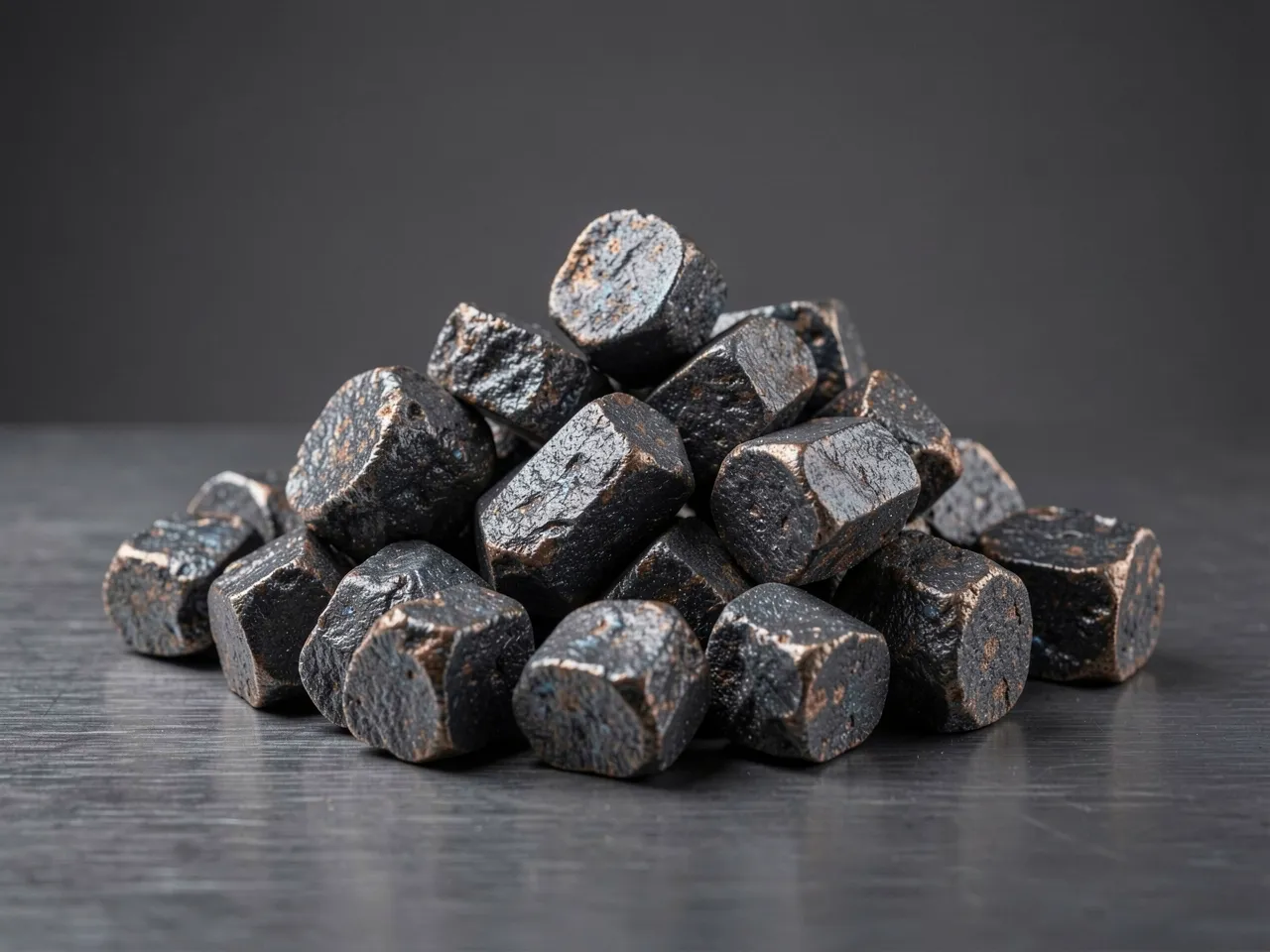
Pure Calcium Cored Wire is solid calcium metal compacted inside a low-carbon steel sheath, fed into the ladle during secondary metallurgy. Calcium boils near 1484 C — below steel-ladle temperature — so direct addition flashes off and oxidizes before it can work; the steel jacket carries the Ca below the slag line, where it releases at depth for controlled recovery. Dissolved calcium reduces alumina and modifies hard, angular Al2O3 inclusions into rounded, low-melting calcium aluminates. This curbs nozzle clogging during continuous casting and lifts transverse ductility and fatigue life. Typical uses cover EAF and BF-BOF clean-steel routes, line-pipe and forging grades, and engineering steels needing tight inclusion control. Injection speed and length are tuned to the target Ca/S and total oxygen, with addition rates commonly around 50-200 g Ca per tonne of steel. The 9 mm wire carries about 195 g/m of Ca at >= 98% purity, sheathed in low-carbon steel and wound on ~1.8-2.0 t coils for stable payout. Each lot ships with COA and MTC, multi-regional sourcing, CIF Marmara or Gebze bonded stock, 20 MT FCL. Send your grade, Ca/S target and coil spec for an RFQ.
Technische Spezifikationen
Ca
≥ 98%
Wire Ø
9mm
Powder
≈ 195 g/m
Sheath
low-carbon steel
Coil Weight
~1.8-2.0 t
Anwendungen
Ladle calcium treatment
Inclusion modification
Clean-steel casting
Castability improvement
Häufig gestellte Fragen
Wie wähle ich zwischen Rein-Ca-Fülldraht und CaSi- oder CaFe-Draht für meine Pfannenbehandlung?
Rein-Ca-Draht (Ca ≥ 98%) liefert das meiste Calcium pro Meter ohne Si- oder Fe-Aufnahme und eignet sich daher für Reinstahl und Stähle mit niedrigem Si-Gehalt, in denen zugesetztes Silizium unerwünscht ist. CaSi-Draht bringt Si ein und ist üblich für unlegierte Kohlenstoffstähle, die es tolerieren. CaFe ist milder und leichter zuzuführen. Stimmen Sie den Draht auf Ihre Restchemie-Grenzwerte und die benötigte Ausbeute ab; Rein-Ca gibt die effizienteste Ca-Zugabe pro zugeführtem Meter.
Welche Zuführrate und Dosierung sollte ich zur Einschlussmodifikation verwenden?
Die Calciumbehandlung wird dosiert, um ein Ziel-Verhältnis Ca/S oder Ca/Al2O3 für die vollständige Sulfid- und Aluminiumoxidmodifikation zu erreichen, typischerweise einige Zehntel kg Ca pro Tonne Stahl. Mit ~195 g Pulver pro Meter und Ca ≥ 98% rechnen Sie die zugeführten Meter aus Ihrer angestrebten Ca-Zugabe und der erwarteten Ausbeute zurück. Die Zuführgeschwindigkeit (oft 150-300 m/min) wird so eingestellt, dass der Draht in der Tiefe schmilzt, um Abklingen und Reoxidation zu minimieren. Validieren Sie durch Ca- und S-Analyse nach der Behandlung.
Welche Spulengröße, Verpackung und Lieferzeit gelten, und gibt es eine Mindestbestellmenge?
Der Draht wird auf Spulen von etwa 1.8-2.0 t bei 9mm Durchmesser geliefert, auf Mehrweg- oder Einwegträgern, die für Standard-Drahtzuführmaschinen geeignet sind, gegen Feuchtigkeit verpackt. Zolllagerbestand in Gebze unterstützt eine schnellere Erfüllung, mit FCL- (20 MT) und LCL- (5 MT) Optionen für Mischladungen. Die Lieferzeit hängt von Spulenzahl, Endbearbeitung und Lieferbedingungen (CIF Marmara oder ab Zolllager) ab. Teilen Sie uns Ihre Tonnage und Zuführanlagen-Spezifikation mit, und wir bestätigen Spulenzahl, Mindestbestellmenge und Zeitplan.
Welche Qualitätsdokumentation und Prüfung stellen Sie bereit?
Jede Charge wird mit einem COA/MTC versandt, der Calciumgehalt (Ca ≥ 98%), Pulverfüllgewicht pro Meter, Drahtdurchmesser (9mm) und Daten zur kohlenstoffarmen Stahlhülle ausweist. Die Konstanz der Füllung bestimmt die Dosiergenauigkeit, daher wird die Pulverfüllung pro Meter über die Spule geprüft. Auf Anfrage können wir die Berichterstattung an die ISO/ASTM-Beprobungspraxis anpassen und eine Elementanalyse der Calciumfüllung beifügen, damit Ihre Metallurgen die Ausbeute gegenüber den Zuführraten-Berechnungen verifizieren können.
Kann Rein-Ca-Fülldraht durch stückiges CaSi oder durch CaSi-Fülldraht ersetzt werden?
Stückiges oder brikettiertes CaSi, das in die Pfanne gegeben wird, ergibt eine schlechte, unregelmäßige Ca-Ausbeute, da Calcium bei Stahltemperaturen siedet und aufschwimmt; ein tief in die Schmelze zugeführter Fülldraht ist die Standardroute für eine wiederholbare Ausbeute. Wenn Ihre Güte Silizium toleriert, ist CaSi-Fülldraht eine gültige Alternative und oft günstiger pro kg Ca. Für Güten mit niedrigem Si-Gehalt oder Reinstahl vermeidet Rein-Ca-Draht die unerwünschte Si-Aufnahme, was CaSi nicht kann.