
Choosing an inoculant: FeSiBa, FeSiZr or FeSiSr for your castings?
Barium, zirconium and strontium ferrosilicon inoculants for grey and ductile iron: fade, section size, chill, base iron, addition point, grain size and what to put in the RFQ.
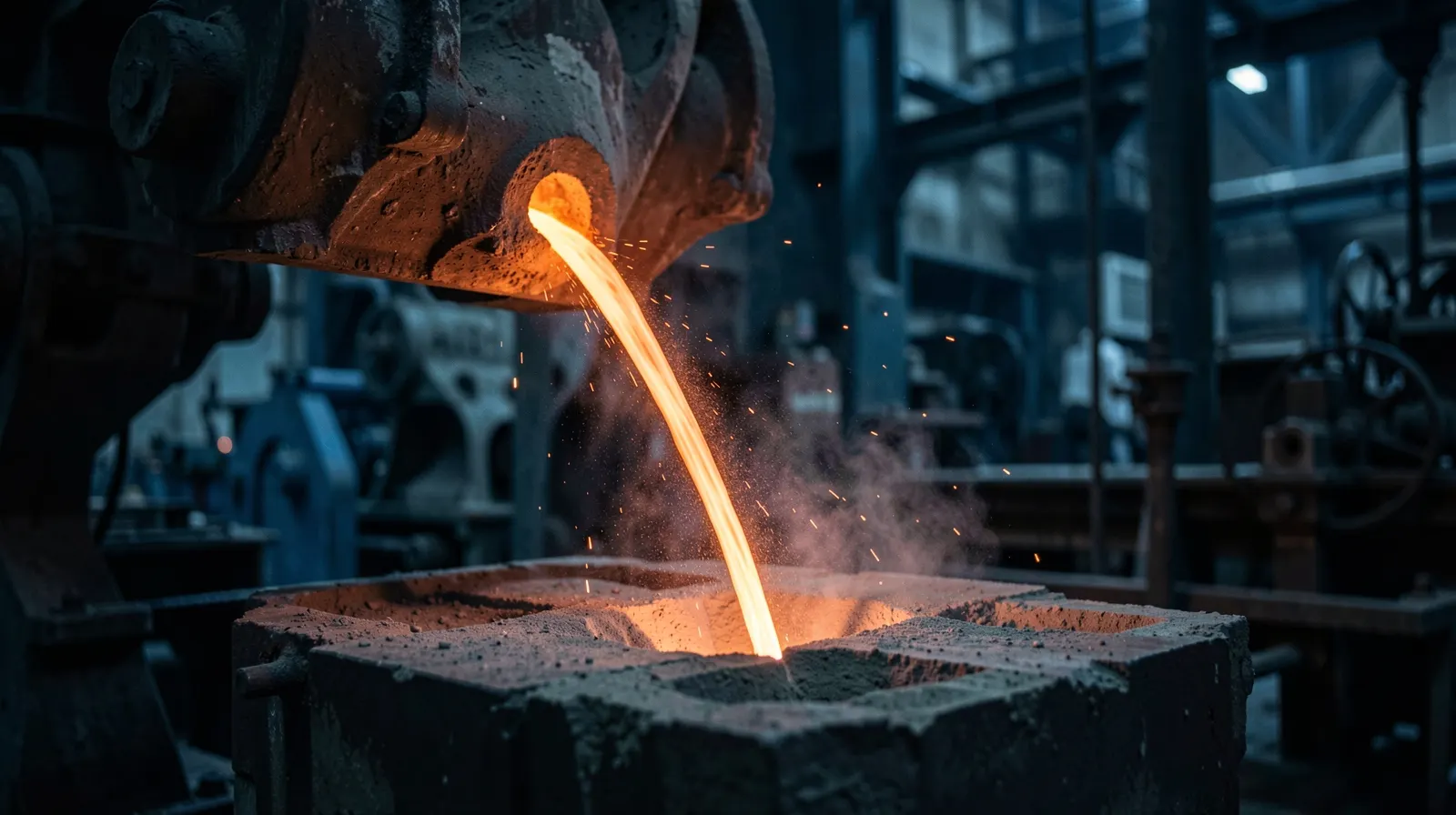
An inoculant is a ferrosilicon based alloy added in small amounts to liquid cast iron just before pouring. Its job is to multiply the nuclei that graphite can grow on as solidification starts. With too few nuclei the iron undercools, carbon comes out as carbide instead of graphite, and the casting shows chill (white solidification) at its edges. Barium, zirconium and strontium grades do this job on the same base. Where they differ is the conditions they hold up in.
Short answer: If there is a long gap between inoculation and pouring, especially in ductile iron, barium bearing FeSi (FeSiBa) holds up better against fade. For chill in thin wall grey iron the familiar choice is strontium bearing FeSi (FeSiSr), but its calcium needs to be low. In low sulphur grey iron from an electric furnace, preconditioning with zirconium (FeSiZr) can reduce chill. Whatever the grade, the biggest gain comes from adding the inoculant as late as you can. The addition rate you will only find on your own line, with chill wedges and microstructure.
Inoculation runs on a clock
An inoculant is at its strongest once it has dissolved and dispersed in the melt, and then it weakens. This is fade. In Giesserei-Lexikon's ductile iron data, the largest drop in nodule count comes in the first 3 minutes. A 2003 inoculant patent (US 6613119) states that the effect has generally halved within a few minutes.
Fade carries on in the mould. A casting with 8 to 25 mm walls solidifies in a few minutes, while sections above roughly 80 mm can take hours. That is why heavy castings show lower nodule counts and larger eutectic grains.
Ductile iron has two kinds of "fade", and they get mixed up. One is magnesium burning off and leaving the melt, which I covered in the FeSiMg article. This one is about the other: the inoculation effect weakening over time.
The elements in the inoculant change the clock. A study published in Metallurgical and Materials Transactions B in 2022 tested two inoculants on the same ductile iron melt. One was a FeSi with calcium and aluminium, the other the same plus 2.6% barium. Iron treated with the calcium inoculant lost about 37% of its nodules after 5 minutes of holding. The barium inoculated melt kept its performance even after 10 minutes. It is one laboratory study, on ductile iron. I would not expect the same numbers in grey iron.
Which grade for which situation
What sets barium bearing FeSi apart is fade resistance. If distribution to the moulds takes a long time after ladle inoculation, if many moulds are poured from one ladle, or if the line cannot inoculate in the stream, this is the first grade to look at. Our FeSiBa inoculant runs Si 60-70%, Ba 1-3%.
In grey iron, zirconium's role has to do with the structure of the nucleus. According to the review by Riposan and co-workers on electric melt grey iron, early zirconium oxide based micro-inclusions help (Mn,X)S type sulphides nucleate, and these sulphides in turn nucleate flake graphite better. The same review reports that preconditioning with zirconium reduced chill and raised the eutectic cell count. Our FeSiZr inoculant runs Si 73-78%, Zr 1-3%.
Strontium bearing FeSi is at home in thin wall grey iron. A 2020 patent (US 10767238) describes a FeSi inoculant with 1.0-1.5% Zr and 0.6-1.0% Sr that has been used for years in thin wall, high strength grey iron castings. The element to watch in this grade is calcium. A 1987 patent (US 4666516) asks for calcium in a strontium inoculant to stay below about 0.35%, preferably under 0.15%. The 2020 patent calls a level under 0.5% critical for limiting slag build up in the pouring unit. If your line is used to a low calcium Sr inoculant, ask for the Ca value on the batch COA when you request a quote. Current values for our FeSiSr inoculant are on the product page.
The base iron has a say too
Judging the inoculant on its own leaves something out. Two values in the base iron change the result.
The first is sulphur. Riposan's review notes that inoculants work less well in low sulphur electric melt iron than in higher sulphur cupola iron of similar carbon equivalent. If sulphur is not brought into the preferred range, the choice of inoculant chemistry changes as well. That is why we ask for base iron sulphur in the RFQ.
The second is aluminium, and it cuts both ways. According to the same review, 0.007-0.010% Al in grey iron melt supports type A graphite and lower chill, while very low aluminium raises chill. In green sand, on the other hand, aluminium raises the risk of pinholes. In a 2011 study in the journal of the Japan Foundry Engineering Society, pinholes formed easily once about 0.02% aluminium was added to the melt, and their number rose with the moisture of the moulding sand. Aluminium brought in by the inoculant counts too. For a green sand line with pinhole trouble, the inoculant's Al ceiling is a selection criterion.
The later, the better
Inoculant can go in at three points: while the ladle fills, into the metal stream from ladle to mould (stream inoculation), or inside the mould. Giesserei-Lexikon states that, as a general rule, ladle inoculation cannot reach the effect of late inoculation. The most effective late methods in practice are stream and in-mould inoculation, and the best results come with the lowest additions. A Total Materia technical article likewise says stream and in-mould methods give the least fade and generally need less inoculant.
Grain size follows the addition point. Patent US 6613119 gives the common ranges: 2-10 mm for pre-inoculation, 0.2-2 mm for ladle treatment and 0.2-0.7 mm for stream inoculation. A particle added in the stream has only a few seconds before solidification once it reaches the mould inlet, which is why that fraction is fine. We supply all three inoculants in two fractions. 0.2-0.7 mm suits stream inoculation, and 1-3 mm is close to the coarser class used in the ladle.
I am not giving an addition rate. It moves with section, addition point, holding time and base iron. In grey iron, inoculant power is traditionally measured by chill depth, and the 1987 patent compares inoculants with chill wedges following ASTM A367. When you switch grades on your line, change one variable at a time: same addition point, same grain size, same holding time.
Selection table
| Situation on the line | Grade to look at first | Why |
|---|---|---|
| Long distribution after ladle inoculation, many moulds per ladle, ductile iron | FeSiBa | Barium bearing FeSi is more fade resistant |
| Thin wall grey iron, chill at the edges | FeSiSr with low calcium | Familiar grade for chill in grey iron; keep Ca low |
| Electric furnace, low sulphur grey iron, chill | Adjust sulphur first; Zr preconditioning with FeSiZr as an option | Low S weakens inoculation; Zr preconditioning reduced chill |
| Pinholes in green sand | Inoculant with a low Al ceiling | Aluminium and sand moisture raise pinhole counts |
| Stream or in-mould inoculation available | Fine fraction and late addition, any grade | Least fade, less inoculant |
| Heavy sections above roughly 80 mm | Late inoculation first, grade second | Longer solidification means more fade |
Treat the table as a starting point. Run trial casts on your own base iron before you switch grades.
What belongs in the RFQ
An enquiry from a foundry that reached us at the end of November was a good example. Its two inoculant lines used trade names, but under each one sat target chemistry, tolerance ranges, grain size and packing. We could have quoted without the trade names. Without that table we could not have. An enquiry that says "FeSiBa, 20 tonnes" leaves the supplier guessing the grade, and nothing settles in the first round.
These are the details that settle grade and fraction in the first email:
- Iron type and grade: grey or ductile, for example EN-GJL-250 or EN-GJS-400-15.
- Melting: induction or cupola; base iron S and Mn, plus Al and N if known.
- Sections: thinnest and thickest wall, and where chill appears.
- Addition point: ladle, stream or in-mould; time from inoculation to the last mould poured.
- Current practice: COA and addition rate of the inoculant you use now, and the defect you see (chill, pinholes, low nodule count).
- Chemical limits: required ranges and ceilings; for Sr grades, state the Ca and Al ceilings separately.
- Grain size: fraction and accepted share of fines.
- Packing: moisture protected bags, pallets or big bags.
- Quantity and documents: annual tonnage, batch size and the documents you need with each batch.
Frequently Asked Questions
Is an inoculant the same as a nodularizer (FeSiMg)? No. Magnesium ferrosilicon makes graphite grow as spheres; the inoculant makes graphite nucleate. Ductile iron uses both. Giesserei-Lexikon notes that inoculation raises the nodule count and improves nodularity. For the nodularizer, see FeSiMg.
Can plain FeSi 75 replace an inoculant? Giesserei-Lexikon says aluminium free ferrosilicon on its own has almost no inoculating effect. The FeSi 75 that foundries use for inoculation is a FeSi 75 with enough Ca and Al. Ba, Zr and Sr grades add their own strengths on top of that.
How long does inoculation last? It depends on temperature and on the inoculant. In the sources behind this article, the largest drop comes within the first few minutes. Keeping the time between inoculation and pouring short is the rule that comes before grade choice.
What should I watch when switching inoculant grade? Test at the same addition point, grain size and holding time, and change only the inoculant. Compare chill wedge and microstructure results with the old grade, then set the rate from there.
We supply all three inoculants in 0.2-0.7 mm and 1-3 mm fractions: FeSiBa, FeSiZr and FeSiSr. Every batch ships with a COA. Other foundry additives are on the foundry page. Send the details above and we will settle the right grade and fraction for your iron together: quote form.
Sources: Giesserei-Lexikon, "Inoculation" (giessereilexikon.com) · Michels L., Pires A.J.F., Ribeiro C.A.S., Kroka B., Hoel E.G., Ott E., Hartung C., "Effect of Holding Time on Populations of Microparticles in Spheroidal Graphite Irons", Metallurgical and Materials Transactions B 53B, 2022, pp. 836-845, doi:10.1007/s11663-021-02418-w · Riposan I., Chisamera M., Stan S., "Enhanced Quality in Electric Melt Grey Cast Irons", ISIJ International 53(10), 2013, pp. 1683-1695, doi:10.2355/isijinternational.53.1683 · Iwahori S., Sugiyama Y., Kondo Y., Awano Y., "Effects of Aluminum, Manganese, Sulfur and Mold Materials on Pinhole Defects of Gray Cast Iron Castings Arising from Hydrogen Absorption of Melt during Mold Filling", Journal of the Japan Foundry Engineering Society 83(1), 2011, pp. 20-25, doi:10.11279/jfes.83.20 · "Gray cast iron inoculant", US 4666516, 1987 (Google Patents) · "Gray cast iron inoculant", US 10767238, 2020 (Google Patents) · "Inoculant pellet for late inoculation of cast iron", US 6613119, 2003 (Google Patents) · Total Materia, "Iron Inoculation Mechanisms: Part Two" (totalmateria.com).

About the author
Mehdi Malek
Managing Director
Mehdi Malek is the managing director of Arsam Metal. He runs the supply network and the technical side of the business, and he has the final word on which specification, which documents and which shipping date a lot goes out with. On the blog he writes about the questions foundries and steel mills ask every day: which alloy, which size range, which certificate is actually needed.
Author page LinkedInProducts in this article
Foundry Inoculant (FeSiBa)
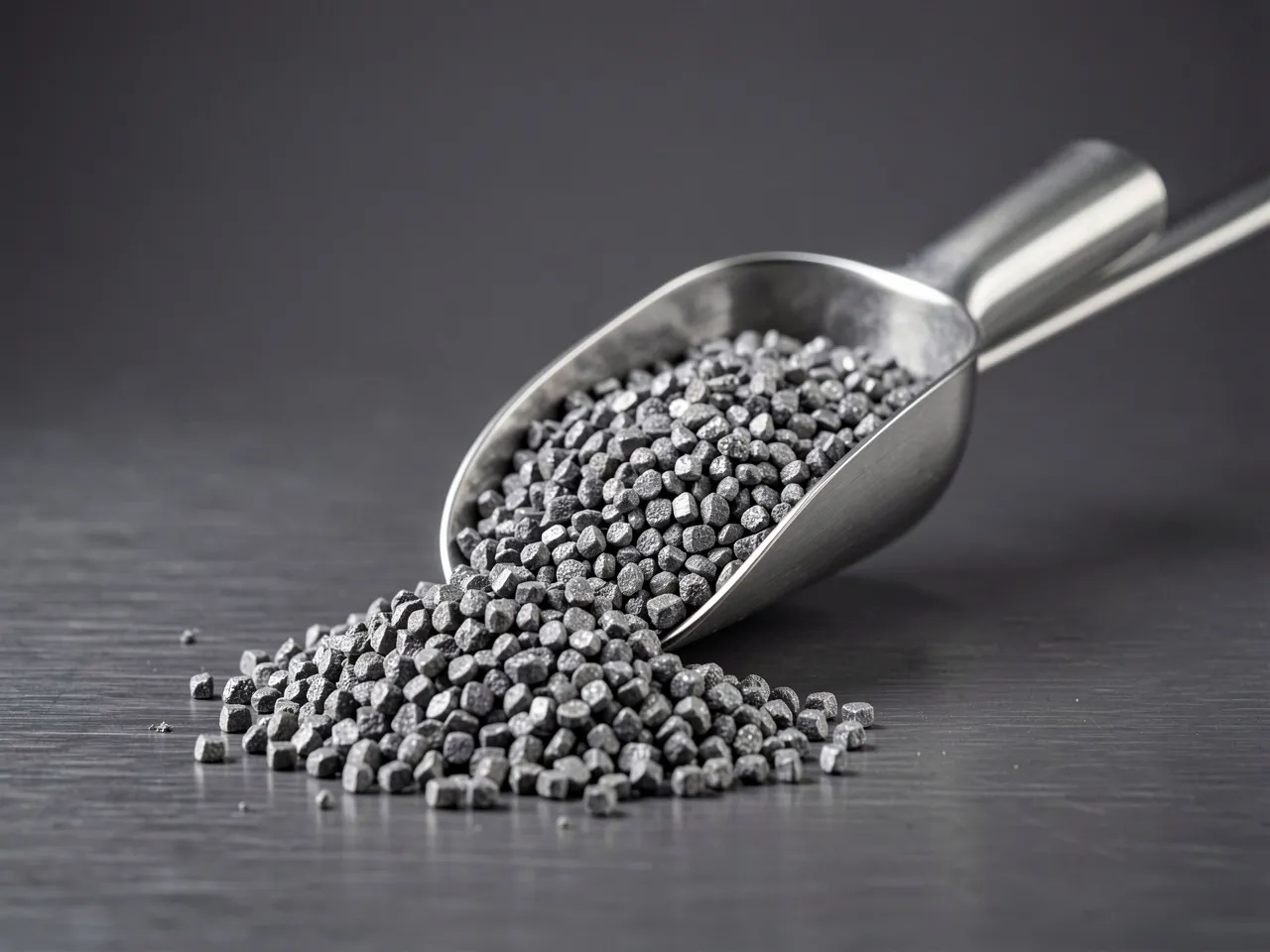
Foundry inoculant (FeSiBa) is a barium-bearing ferrosilicon added to molten grey and ductile iron just before or during pouring. The Si carrier and 1-3% Ba seed silicate-oxide nuclei in the melt, giving graphite a preferred site to precipitate as the iron solidifies. This suppresses undercooling, cuts the chill (white iron) tendency at thin sections and edges, and refines graphite morphology toward a fine, evenly distributed Type A flake in grey iron or a higher nodule count in ductile iron. The 1-2% Ca and ≤1.5% Al support deoxidation and keep nucleation active longer, reducing fade in held or transferred metal. Used for grey iron inoculation, ductile iron inoculation, chill reduction and graphite refinement across automotive and machinery ductile-iron foundries and general jobbing shops. Typical late/ladle addition runs about 0.1-0.5 wt% (1-5 kg/t); finer 0.2-0.7 mm sizing suits in-stream or in-mould dosing, while 1-3 mm fits ladle treatment. Supplied with COA and MTC against ISO/ASTM practice, multi-regional sourcing, CIF Marmara, 20 MT FCL. Send grade, size and tonnage for an RFQ.
Details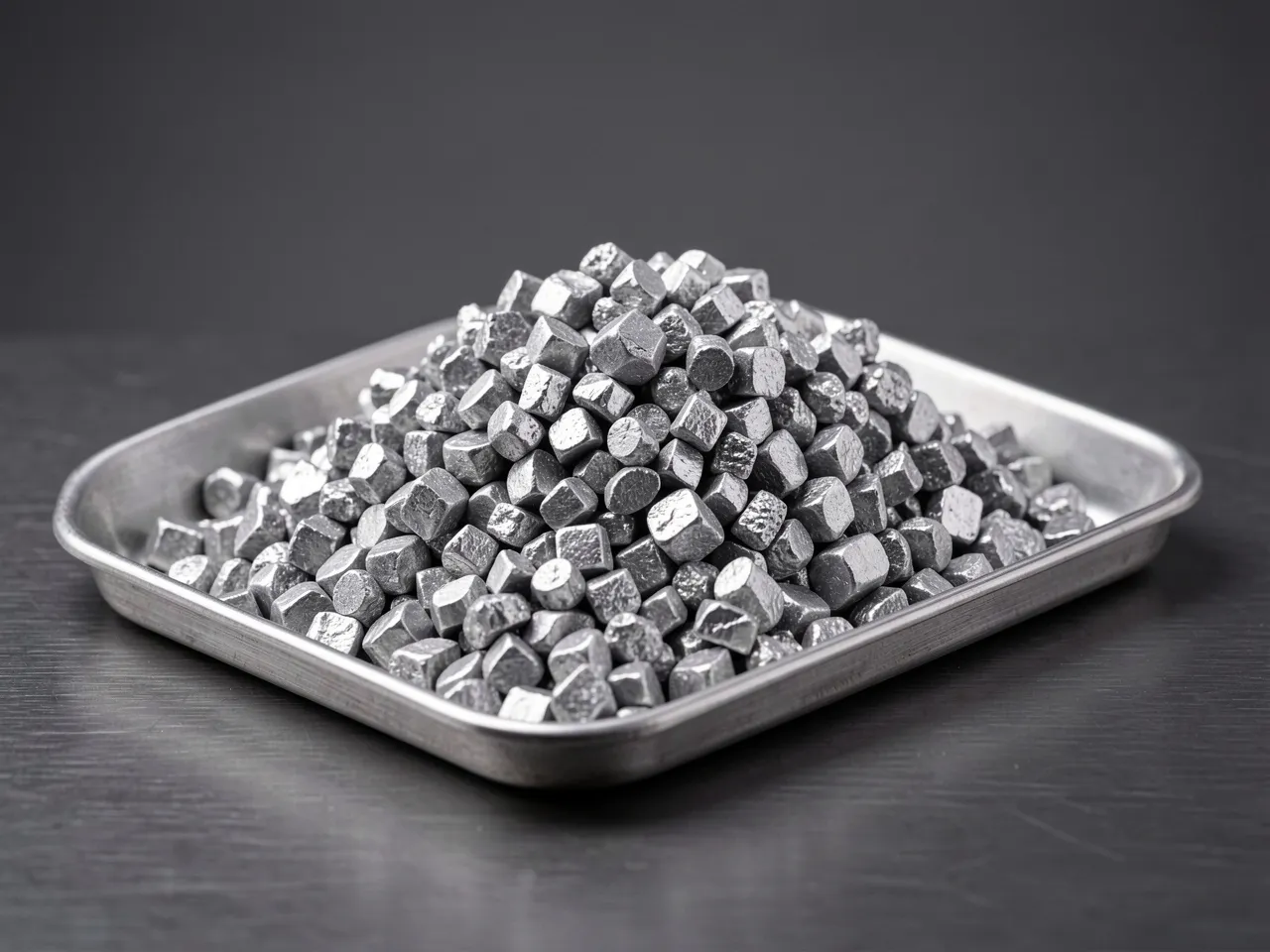
Foundry Inoculant (FeSiZr)
FeSiZr is a zirconium-bearing ferrosilicon inoculant for grey and ductile cast iron. Added to the molten metal just before or during pouring, its Si 73-78% matrix carries active elements (Zr 1-3%, Ca 0.8-1.5%, Al 0.8-1.5%, Mn 1-3%) that form oxide and oxysulfide micro-sites. These nuclei seed graphite precipitation during eutectic solidification, suppressing carbides and chill. In grey iron this favours fine, evenly distributed Type A flake; in ductile iron it raises nodule count and density and improves nodularity, rather than forming the nodular shape itself, which the Mg treatment governs. The Zr and Mn fractions also deoxidize and scavenge residual nitrogen, reducing pinhole and fissure defects in thicker sections. Foundries running grey iron, ductile iron, and section-sensitive castings use FeSiZr where late fade is a problem: the Zr-stabilized nuclei resist dissolution, holding nucleation potential well past the typical inoculation window. Standard ladle addition runs 0.1-0.4 wt% (1-4 kg/t); finer 0.2-0.7 mm grades suit in-stream and late inoculation, while 1-3 mm serves ladle dosing. Every lot ships with COA and MTC. Multi-regional sourcing supports CIF Marmara delivery, 20 MT FCL or 5 MT LCL. Send grade and quantity for an RFQ.
Details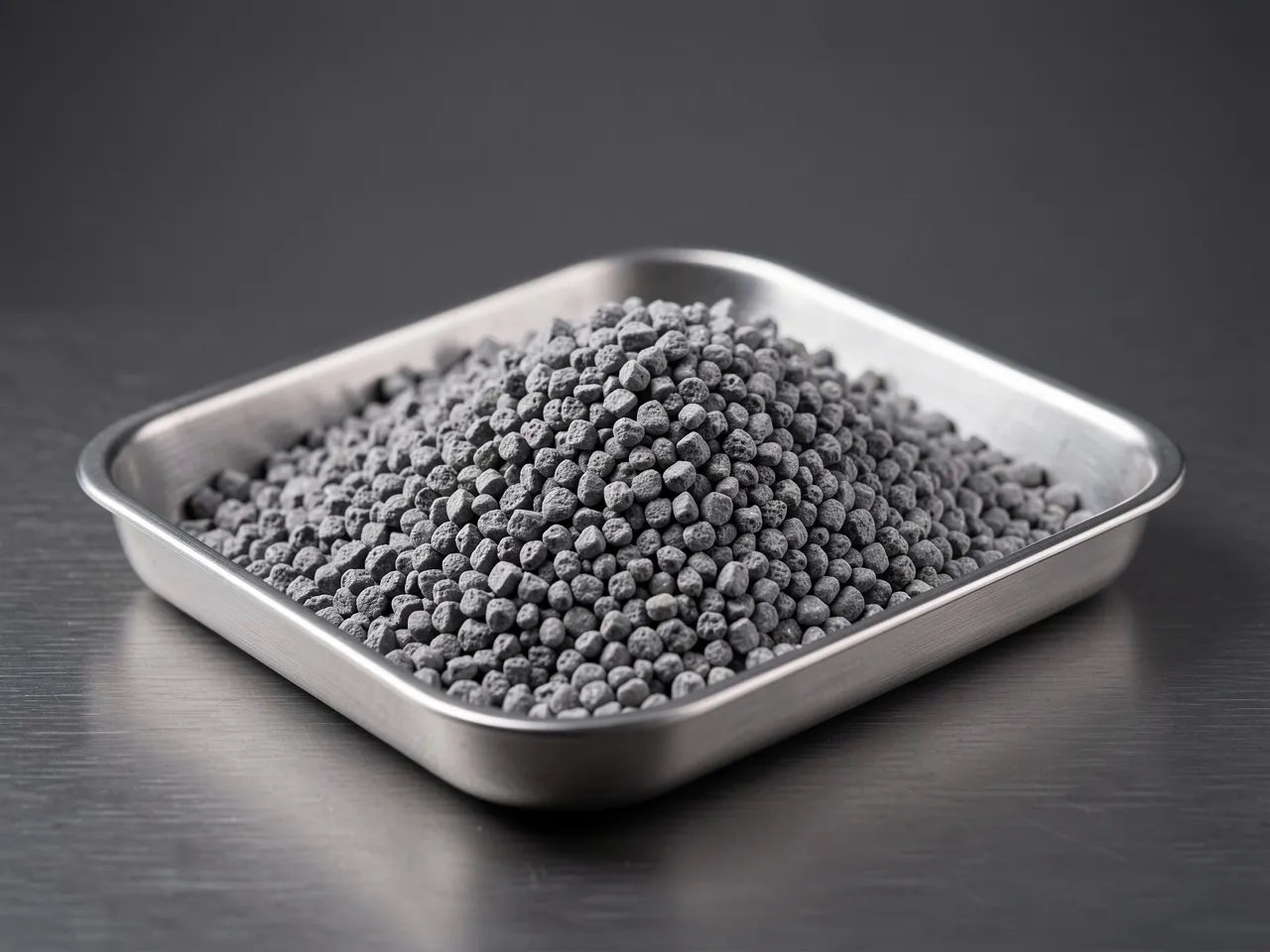
Foundry Inoculant (FeSiSr)
Strontium-bearing ferrosilicon inoculant (Si 73-78%, Sr 0.6-1.0%) for grey and ductile iron. Strontium delivers potent graphite nucleation at a low addition rate with minimal silicon pickup, so it controls chill in thin and section-sensitive castings without raising eutectic cell count the way barium grades can. The result is a clean, uniform graphite structure, fewer edge and core carbides, and steadier mechanical properties from shot to shot. Fade resistance is strong, which suits longer pour windows and stream or in-mould dosing. Supplied in 0.2-0.7mm and 1-3mm sizings with COA + MTC on every lot.
DetailsFacing a similar problem?
Arsam's technical desk handles every supply and production question: same-day quote (4-hour target), technical consulting included.