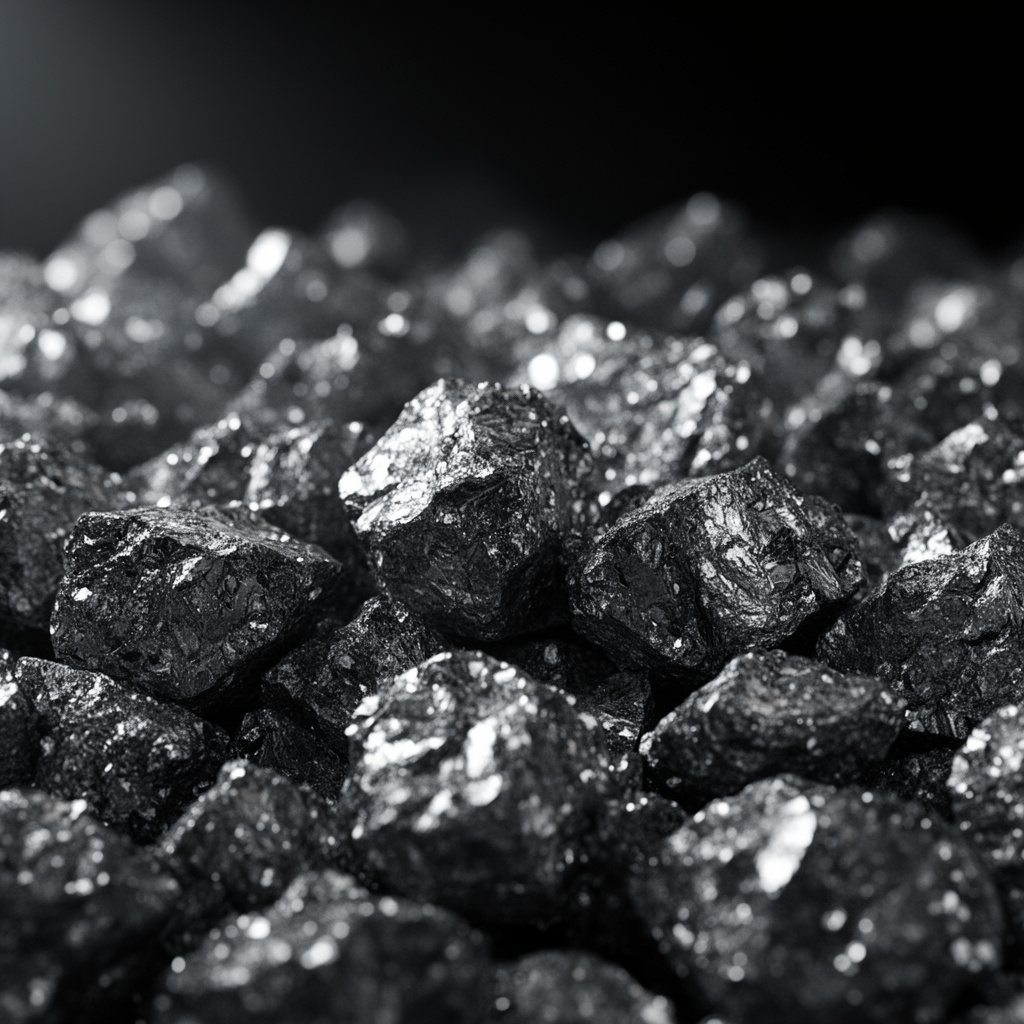
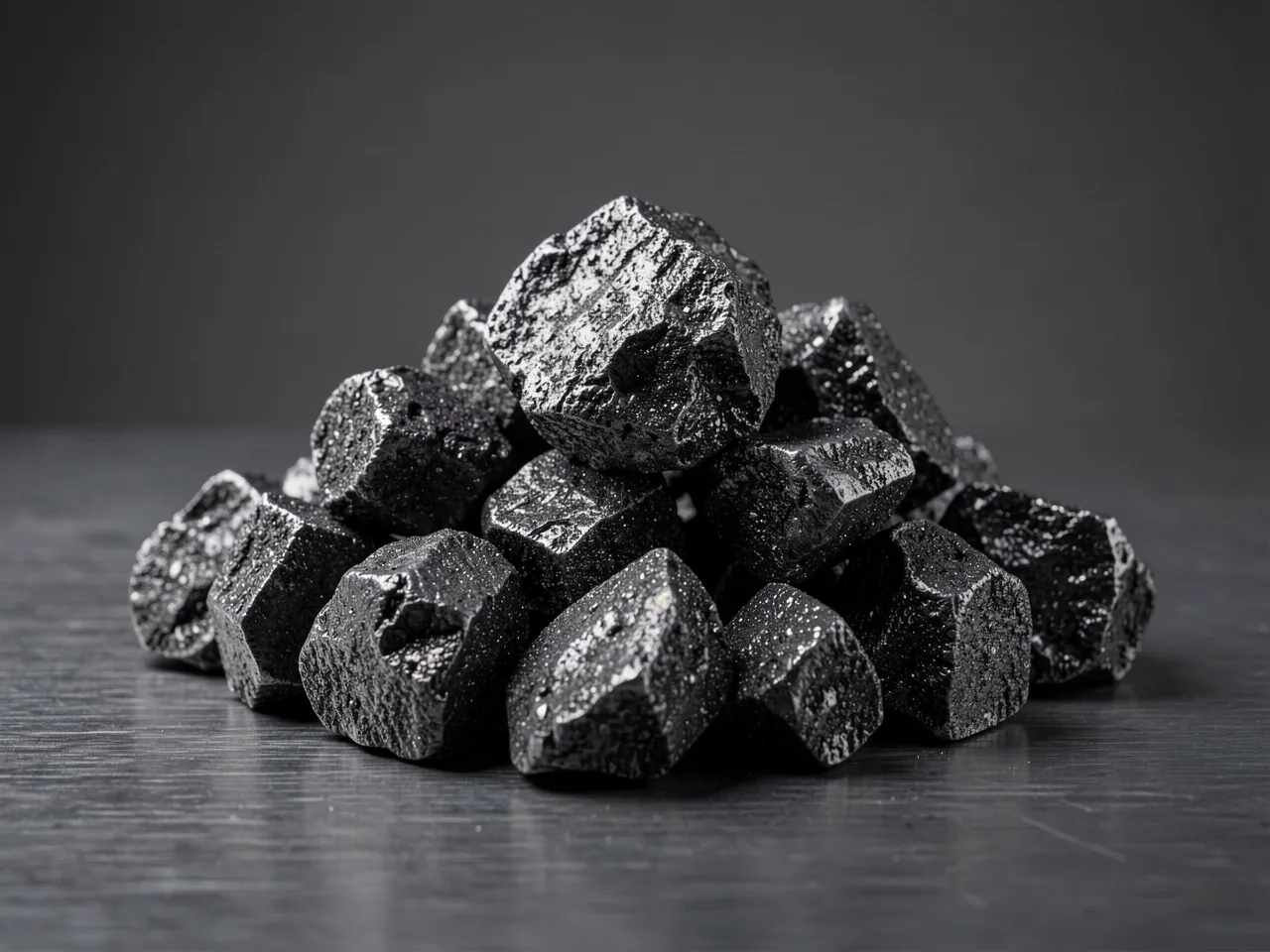
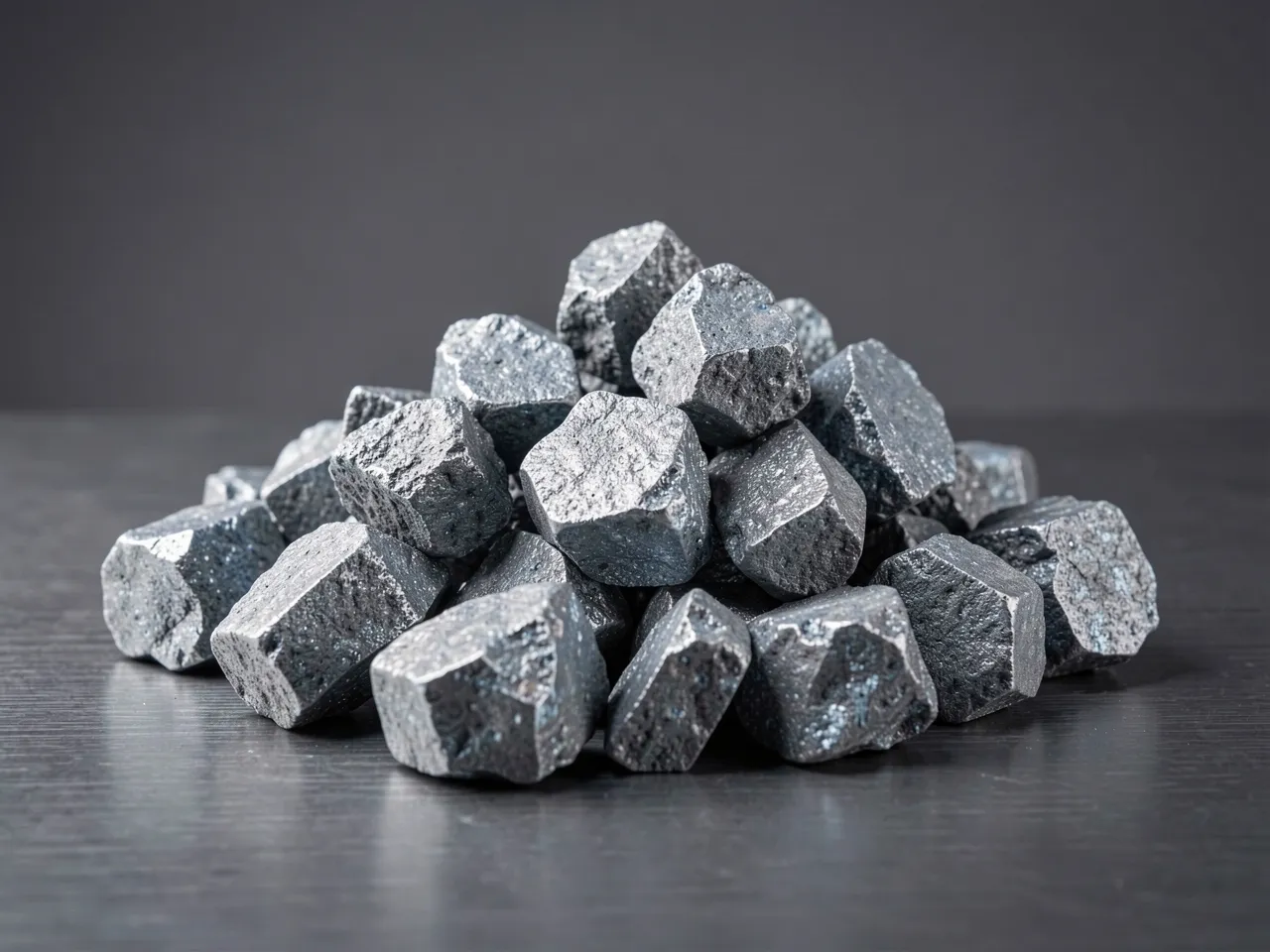
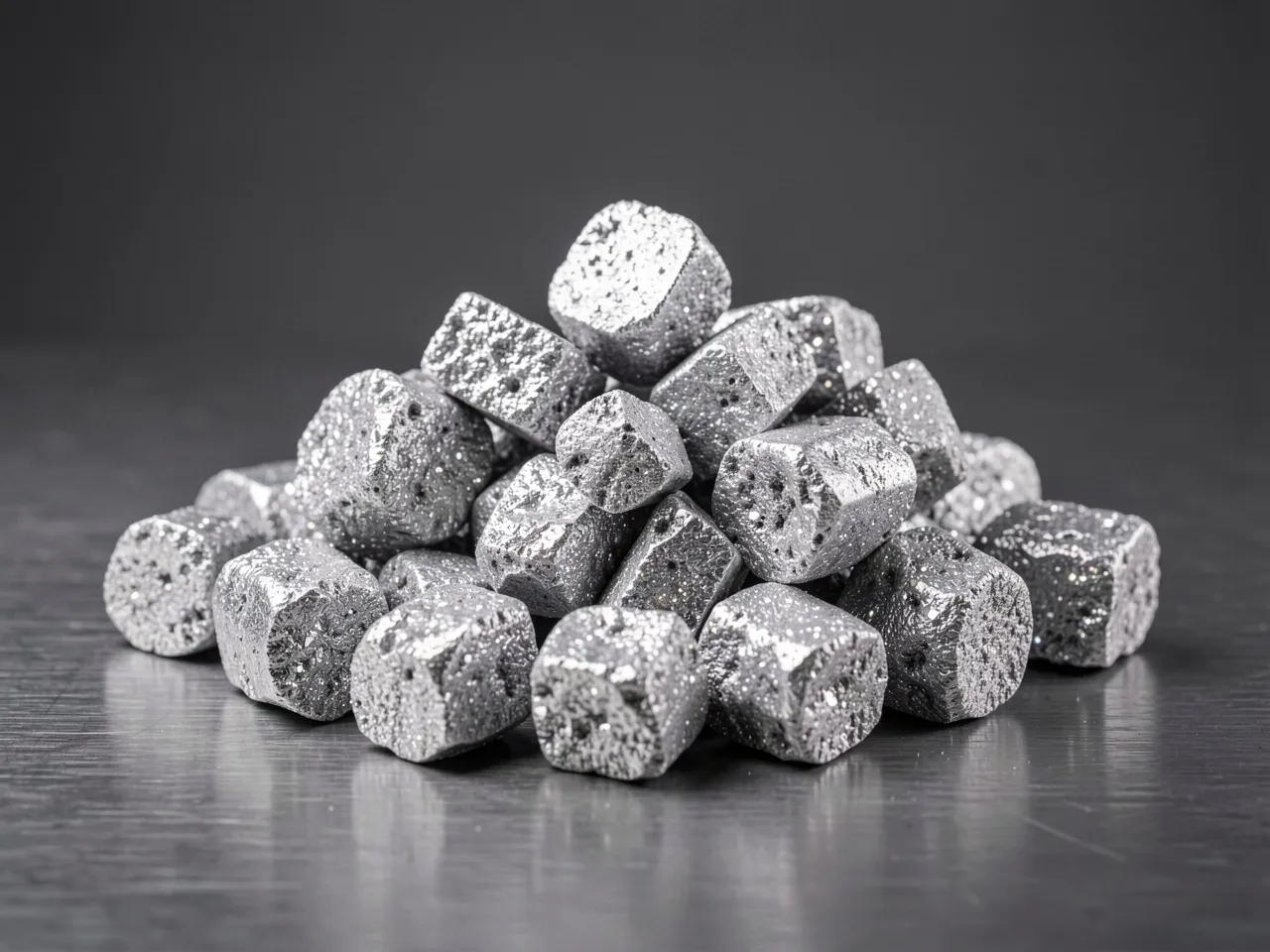
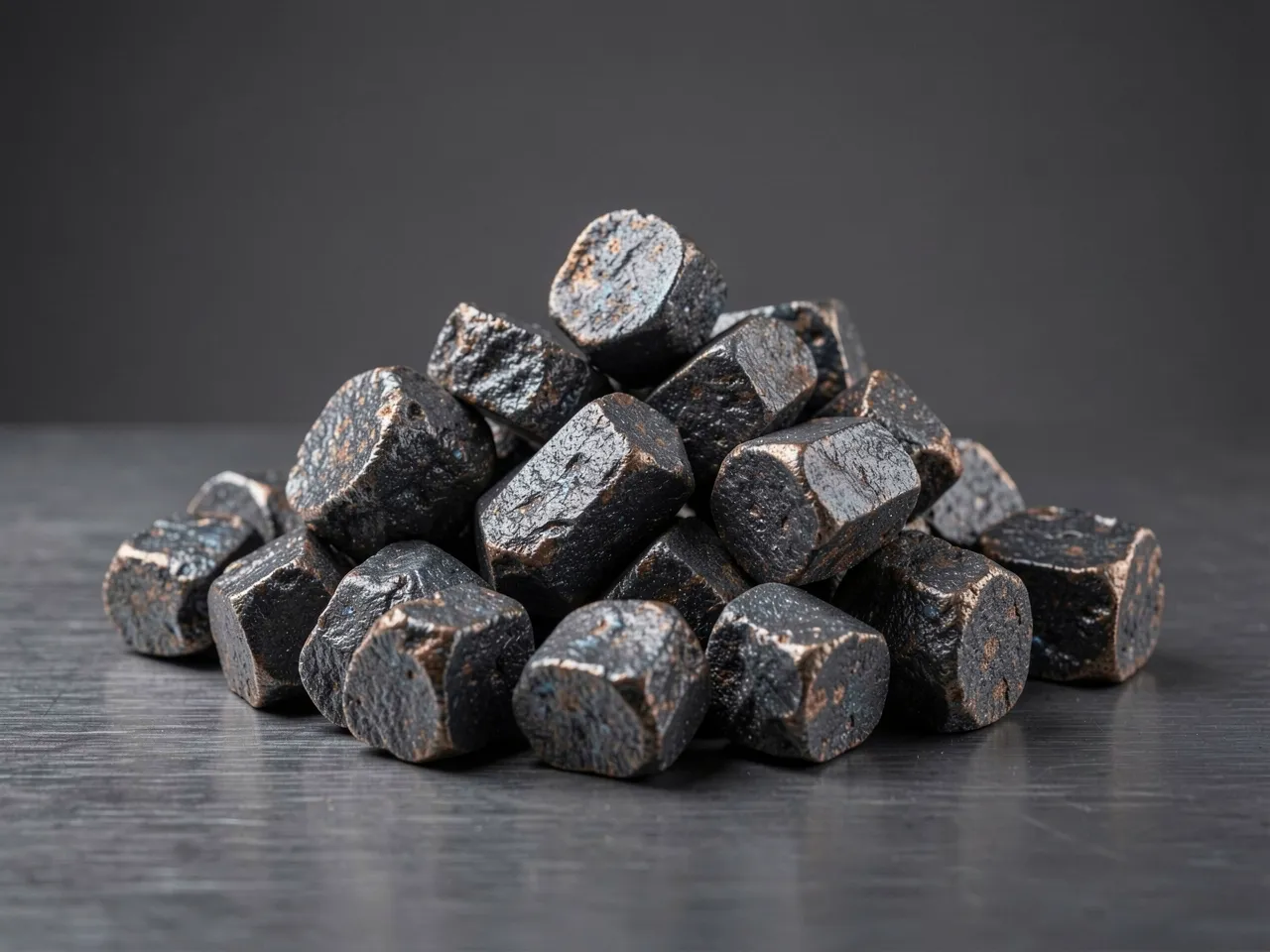
Ferro tungsten (FeW80) delivers a high tungsten unit into liquid steel without the melting losses of metallic W. Once dissolved, tungsten forms stable carbides (WC, W2C) and complex M6C phases that resist dissolution and coarsening at elevated temperature. This is the mechanism behind red-hardness: the tool keeps its cutting edge and hardness even when the tip glows during machining. Tungsten also raises hot strength and abrasion resistance, which is why it anchors high-speed steel (HSS), tool and die steels, hard-facing alloys, and heat-resistant grades. Additions are tuned to target W chemistry, commonly a few tenths up to several wt% depending on grade. The FeW80 cut carries W 75-82% with controlled C (≤0.5%), Si (≤0.7%), Mn (≤0.25%), and low P (≤0.04%) / S (≤0.08%), so the master alloy stays clean and adds minimal tramp residuals to the heat; 10-50mm lump suits clean charge handling and predictable recovery. Each lot ships with COA and MTC for full traceability. Multi-regional sourcing supports CIF Marmara and Gebze bonded stock, FCL or LCL. Send your target grade for an RFQ.
Specifiche tecniche
W
75-82%
C
≤ 0.5%
Si
≤ 0.7%
Mn
≤ 0.25%
P
≤ 0.04%
S
≤ 0.08%
Granulometria
10-50mm
Applicazioni
High-speed steel (HSS)
Tool & die steel
Hard-facing alloys
Heat-resistant steel
Domande frequenti
Quale grado e specifica di FeW scegliere per acciai per utensili e rapidi?
Questo grado ha W 75-82% (la comune fascia FeW80) con C ≤0,5%, Si ≤0,7%, Mn ≤0,25%, P ≤0,04% e S ≤0,08%. L'elevata unità di tungsteno e il basso carbonio sono adatti ai gradi HSS e per utensili e stampi dove si controlla il C separatamente e servono residui stretti. Per le leghe di riporto duro e resistenti al calore, lo stesso profilo a basso P e basso S protegge la tenacità e la durezza a caldo (red-hardness). Confermi il Suo recupero di W target e il C massimo rispetto alla Sua pratica di siviera prima di fissare la specifica d'ordine.
Quale tasso di aggiunta pianificare per il FeW?
Il dosaggio è guidato dal W residuo che punta ad avere nell'acciaio finito, non da una percentuale fissa. Per i tipici gradi HSS che contengono circa 6-18% di W, pianifichi le aggiunte per raggiungere quell'obiettivo corretto per il recupero del tungsteno, che è elevato e stabile poiché il FeW si dissolve senza decadimento significativo. Aggiunga a un bagno ben disossidato, conceda tempo per la dissoluzione data la pezzatura grossolana 10-50mm, e calcoli a ritroso dal valore di W del Suo COA anziché da un generico dato in kg per tonnellata.
Come viene imballato il FeW e quali sono i tempi di consegna e il MOQ?
La pezzatura standard è in blocchi 10-50mm, tipicamente confezionati in fusti in acciaio o big bag su pallet per questa unità ad alta densità, con rivestimenti impermeabili per tenere fuori l'assorbimento di S e P. Le condizioni di consegna possono essere quotate CIF Marmara o franco stock in deposito doganale di Gebze; MOQ e tempo di consegna dipendono da grado, pezzatura e volume d'ordine da 5 MT LCL fino a lotti 20 MT FCL. Ci indichi la fascia di W target, la pezzatura e la destinazione e confermeremo imballaggio, MOQ e tempo di consegna per ordine.
Quale documentazione di qualità accompagna ogni lotto di FeW?
Ogni lotto viene spedito con un COA / MTC che riporta l'ID di colata o lotto e il W analizzato più C, Si, Mn, P e S rispetto ai limiti di grado. Tungsteno e impurezze sono determinati con metodi riconosciuti di chimica per via umida e strumentali (XRF / ICP / combustione per C e S), con la pezzatura verificata tramite analisi al setaccio. Il campionamento pre-spedizione segue la pratica standard, e su richiesta è possibile organizzare un'ispezione di terze parti o un campionamento presenziato così che i risultati in accettazione si riconcilino con il certificato.
Quando conviene sostituire il FeW e con cosa?
Il FeW è la via efficiente a un W residuo elevato dove servono durezza, resistenza all'usura e durezza a caldo negli acciai HSS e per utensili. Dove la metallurgia lo consente, è comune una sostituzione parziale con ferromolibdeno perché il Mo dà un contributo di durezza a caldo simile per unità, quindi molti gradi HSS bilanciano W e Mo su costo e disponibilità. Per impieghi di pura usura o riporto duro, le aggiunte di carburo di tungsteno servono a uno scopo diverso. Abbini qualsiasi sostituzione al rapporto W:Mo del grado e ai target di proprietà finali.