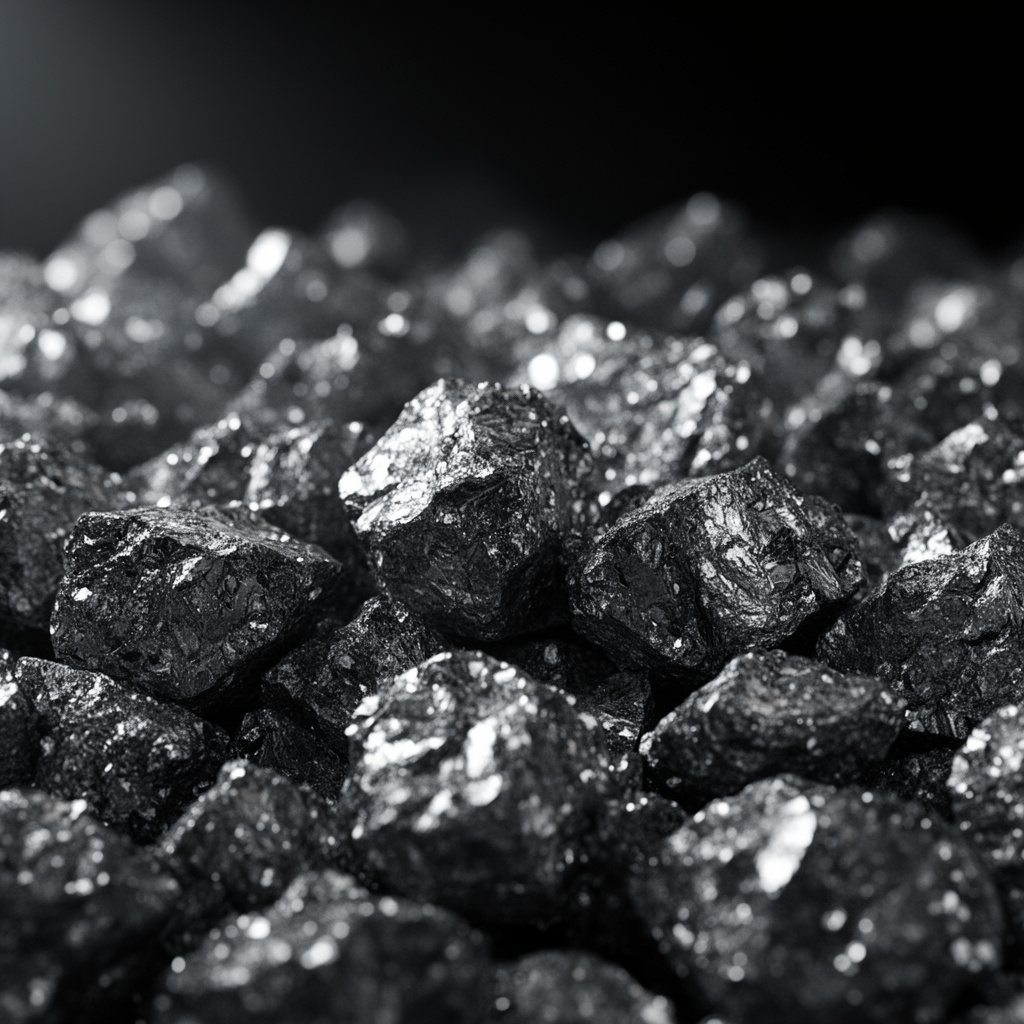
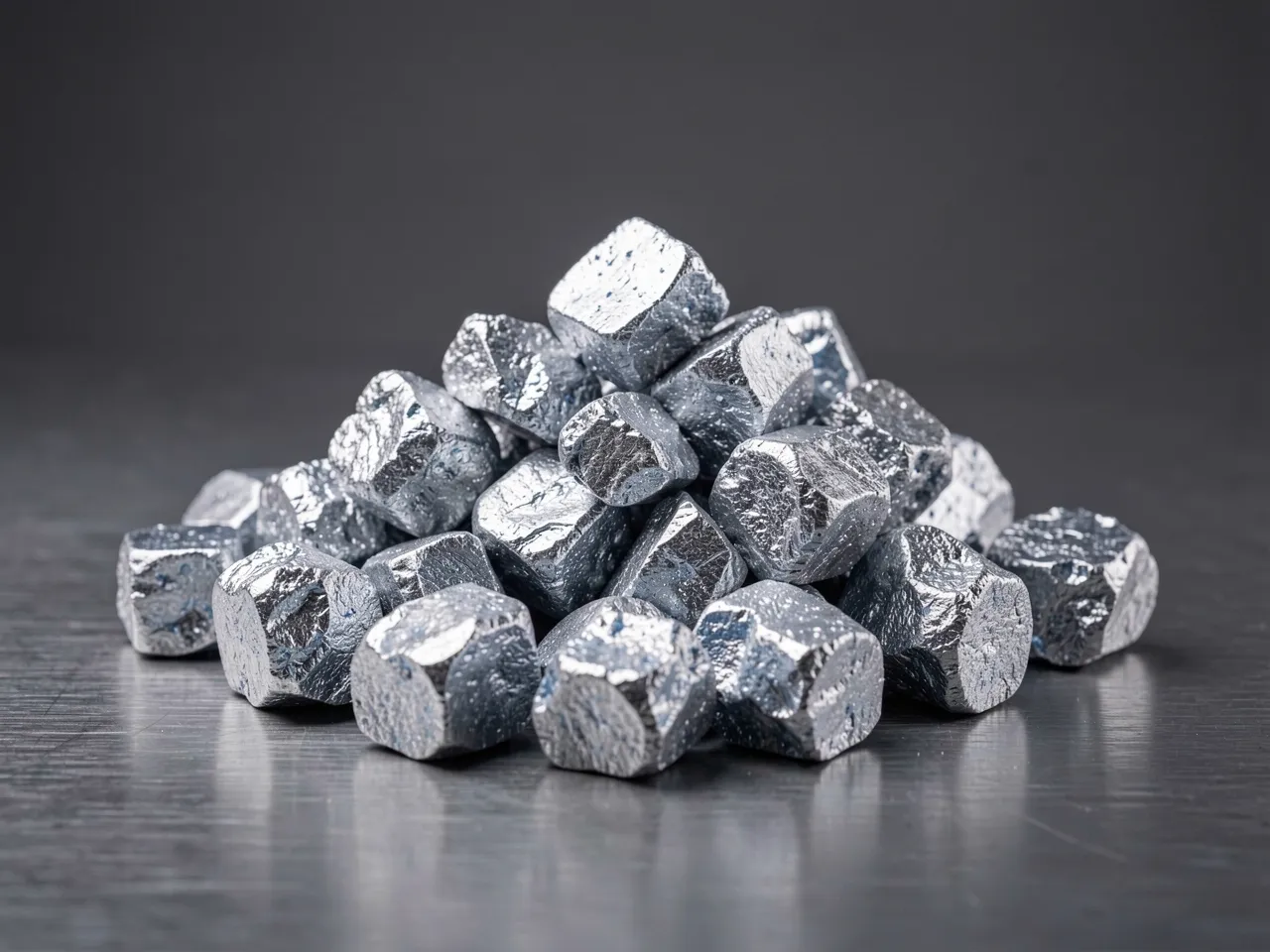
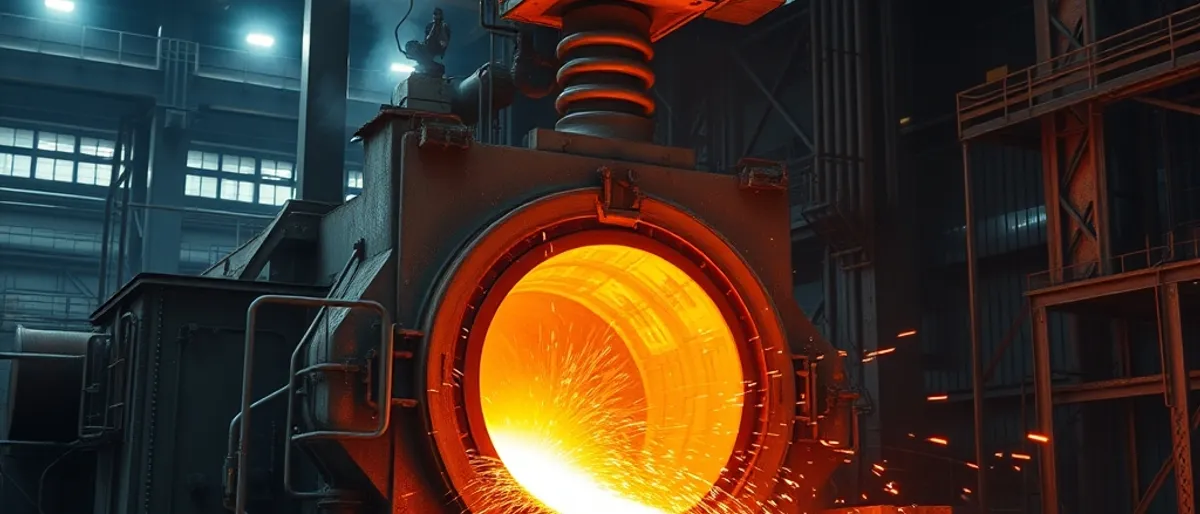
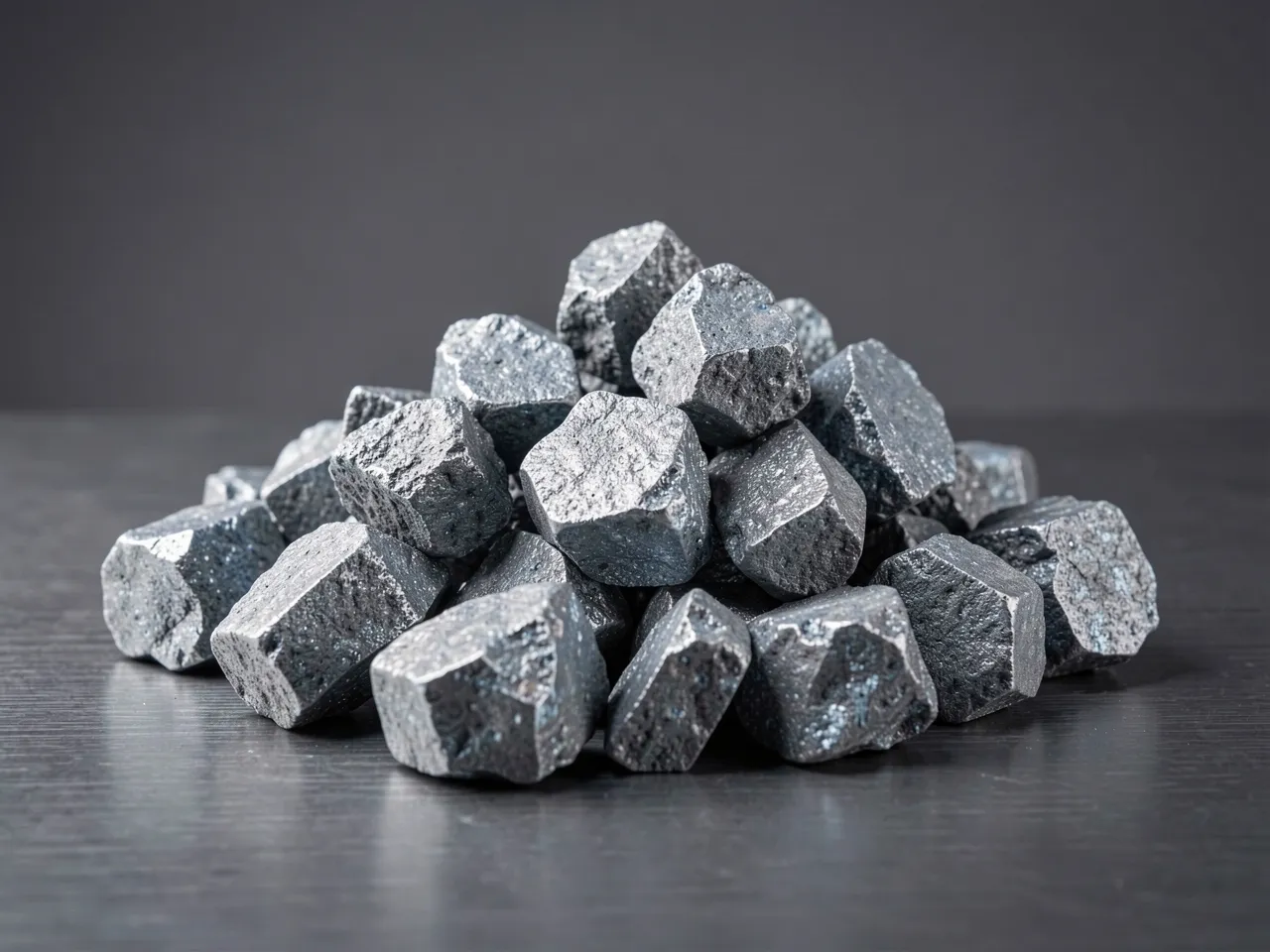
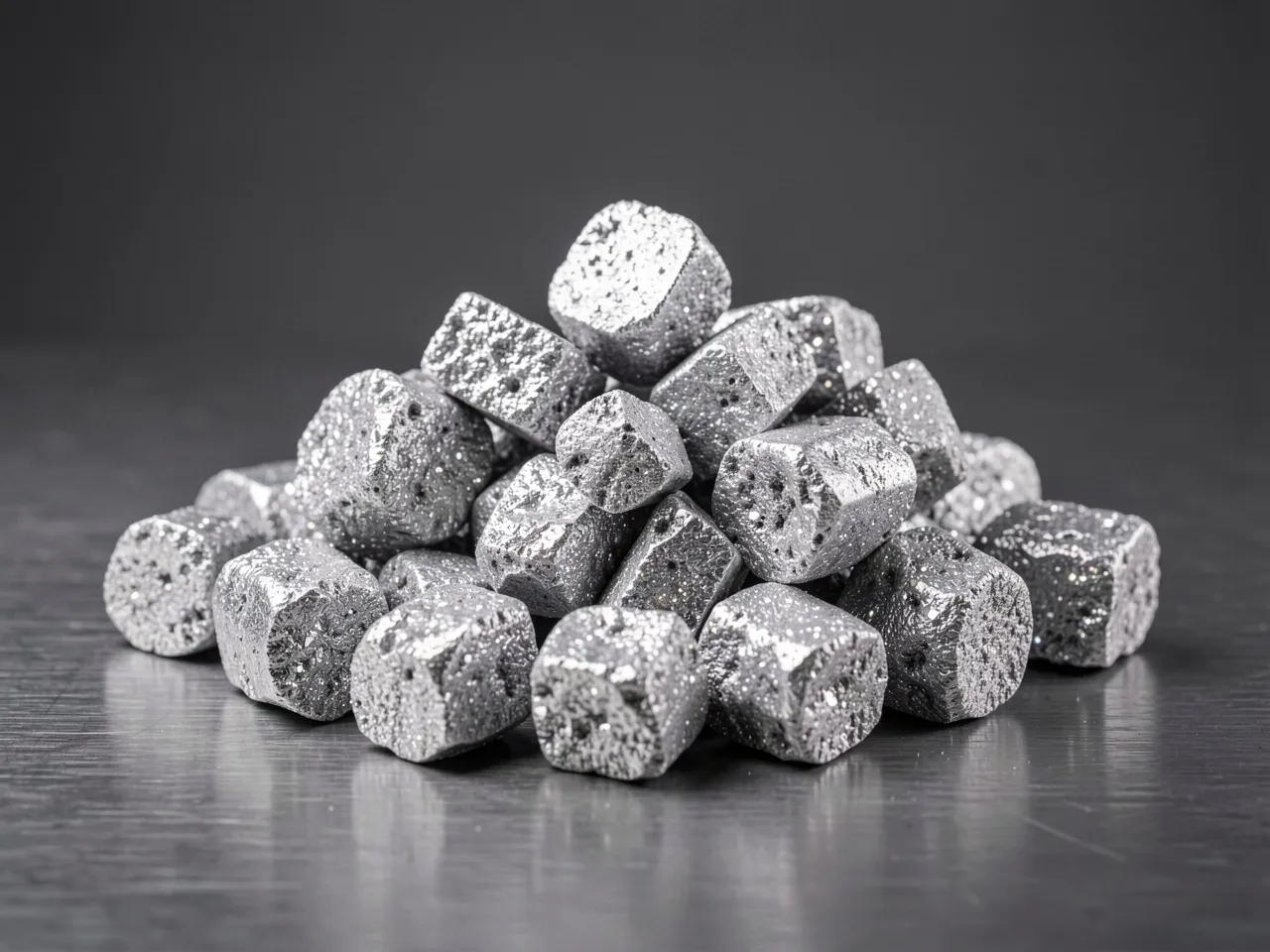
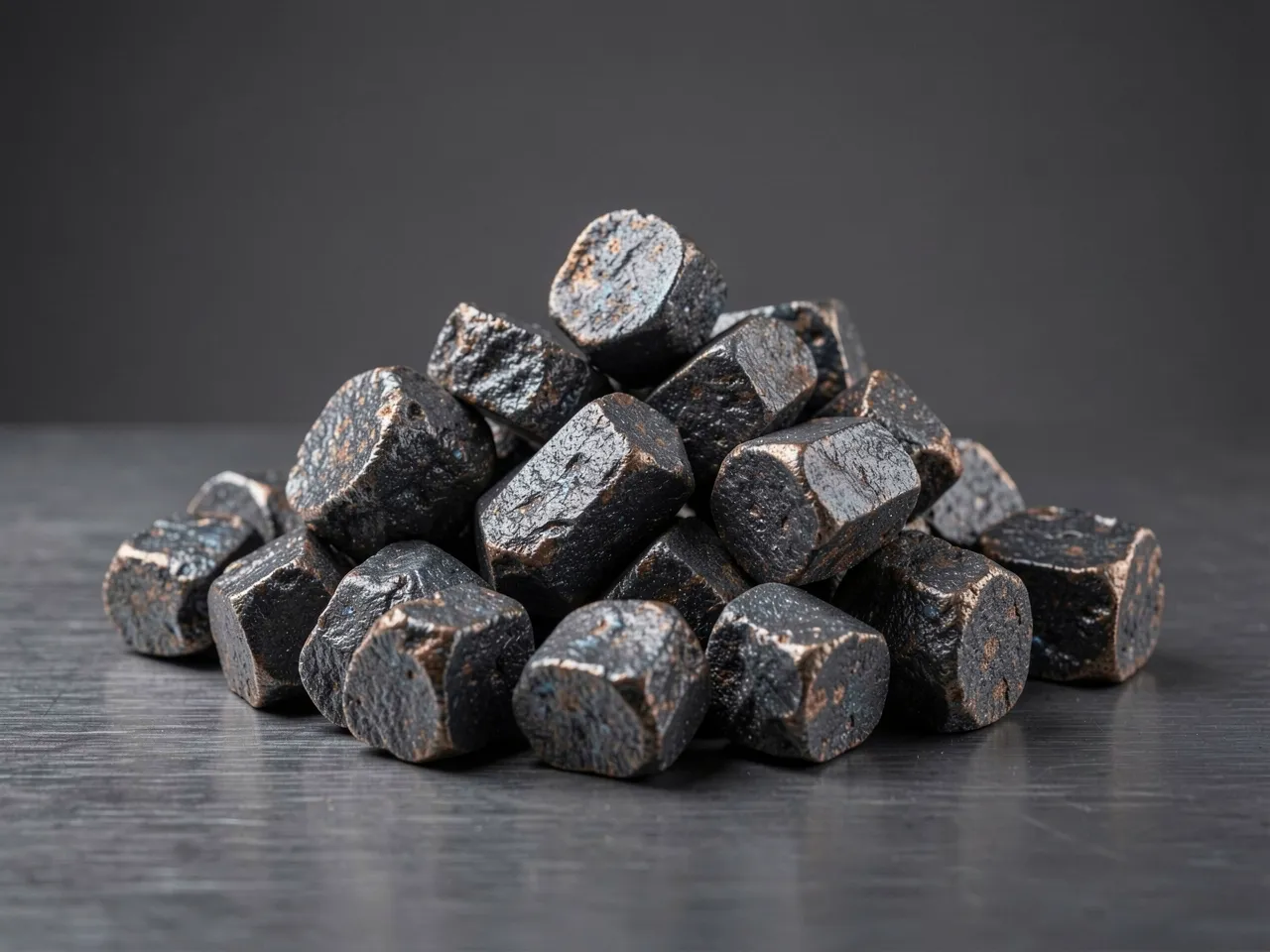
Ferro Vanadium (FeV) is a master alloy that delivers vanadium to liquid steel for micro-alloying. Even at low addition, vanadium forms fine V(C,N) carbonitrides that precipitate during cooling and pin austenite grain boundaries, refining grain size while raising yield strength, toughness and wear resistance without a separate heat treatment. This grade carries V at 78-82% with C held to 0.30% max, P 0.06% max and S 0.05% max, suiting clean-steel chemistries where residuals must stay tight. Si is capped at 2.0% and Al at 1.5%, with 10-50mm sizing for controlled dissolution and stable recovery in ladle or EAF practice. Typical additions run 0.05-0.20 wt% V depending on target strength, common across HSLA structural plate, micro-alloyed rebar, spring steels and tool steels; FeV is also a feedstock for long-duration vanadium-flow energy storage. Every lot ships with COA and MTC. Multi-regional sourcing covers CIF Marmara delivery in 20 MT FCL or 5 MT LCL lots. Send your grade, tonnage and delivery terms for a current RFQ.
Technische Spezifikationen
V
78-82%
Si
≤ 2.0%
Al
≤ 1.5%
C
≤ 0.30%
P
≤ 0.06%
S
≤ 0.05%
Körnung
10-50mm
Anwendungen
HSLA steel
Rebar micro-alloying
Spring steel
Tool steel
Häufig gestellte Fragen
Welchen FeV-Grade und welche Spezifikation sollte ich für die Mikrolegierung von HSLA und Betonstahl angeben?
Für HSLA-, Betonstahl-, Feder- und Werkzeugstähle ist FeV80 die Standardwahl, hier geliefert bei V 78-82% mit C ≤ 0.30%, Si ≤ 2.0%, Al ≤ 1.5%, P ≤ 0.06% und S ≤ 0.05%. Die niedrigen Kohlenstoff- und Restgrenzwerte eignen sich für Pfannen- oder Ofenzugaben, bei denen Sie den End-C steuern und versprödende Restelemente vermeiden. Die Körnung ist 10-50 mm Stückgut. Nennen Sie Ihre angestrebte V-Ausbeute und jede engere Al- oder N-Obergrenze auf der Bestellung, damit wir bestätigen können, dass die Charge sie erfüllt.
Welche Zugaberate ergibt einen angestrebten Vanadiumgehalt im Stahl?
Die Vanadium-Mikrolegierung zielt typischerweise auf 0.03-0.15% V im Fertigstahl, sodass die Zugaben klein sind. Als Faustregel bringt jedes 1 kg FeV80 pro Tonne Flüssigstahl vor Ausbeuteverlusten etwa 0.08% V ein. Rechnen Sie bei später Pfannenzugabe unter guter Praxis mit etwa 75-90% V-Ausbeute. Rechnen Sie von Ihrem angestrebten Rest-V und Ihrer eigenen gemessenen Ausbeute zurück; geben Sie spät und unter Rühren zu, um die Ausbeute hoch und die Legierung gelöst zu halten.
Wie wird FeV80 verpackt, und wie sind typische Mindestbestellmenge und Lieferzeit?
Standardverpackung ist 10-50 mm Stückgut in verschlossenen Stahlfässern oder 1 MT Big-Bags auf Paletten, palettiert für die FCL-Stapelung. Typische Bestellgrößen reichen von 5 MT LCL bis zu vollem 20 MT FCL, wobei kleinere Fassmengen aus dem Zolllagerbestand verfügbar sind. Die Lieferzeit hängt von der Losverfügbarkeit und dem gewählten Incoterm ab (zum Beispiel CIF Marmara oder ab Zolllager Gebze). Senden Sie Tonnage, Hafen und benötigtes Lieferfenster, und wir bestätigen den Zeitplan gegenüber der aktuellen Beschaffung aus mehreren Regionen.
Welche Qualitätsdokumentation und Prüfung liegen jeder Charge bei?
Jede Charge wird mit einem COA / MTC versandt, der Schmelz- oder Losnummer und die analysierten Werte für V, Si, Al, C, P und S gegenüber der FeV80-Spezifikation ausweist. Die Chemie wird nach Standardmethoden bestimmt (XRF und Nassanalyse für V; LECO für C und S). Die Korngrößenverteilung wird zum Bereich 10-50 mm gemeldet. Wenn Sie eine Drittbeprobung, eine überwachte Analyse oder eine Analyse nach einer bestimmten ASTM- oder DIN-Methode benötigen, vermerken Sie dies vor dem Versand auf der Bestellung, damit es in den Prüfplan aufgenommen wird.
Wann können FeNbV, nitriertes Vanadium oder VN FeV80 ersetzen, und wann sollte ich nicht substituieren?
Für die einfache Festigkeitssteigerung über feine V(C,N)-Ausscheidung ist FeV80 die direkte Route mit den niedrigsten Restgehalten. Nitriertes Ferrovanadium oder VN-Legierung kann die Streckgrenze weiter anheben, wenn Sie ein höheres N:V-Verhältnis und feinere Ausscheidungen wünschen, oft bei geringerer V-Zugabe. FeNb oder FeNbV verschiebt die Strategie hin zur Nb-basierten Kornfeinung mit anderem Rekristallisationsverhalten. Tauschen Sie zwischen diesen nicht, ohne den N-Gehalt Ihres Stahls, die Endwalztemperatur und die angestrebten mechanischen Eigenschaften erneut zu prüfen, da sich Ausscheidungschemie und Ausbeute unterscheiden.