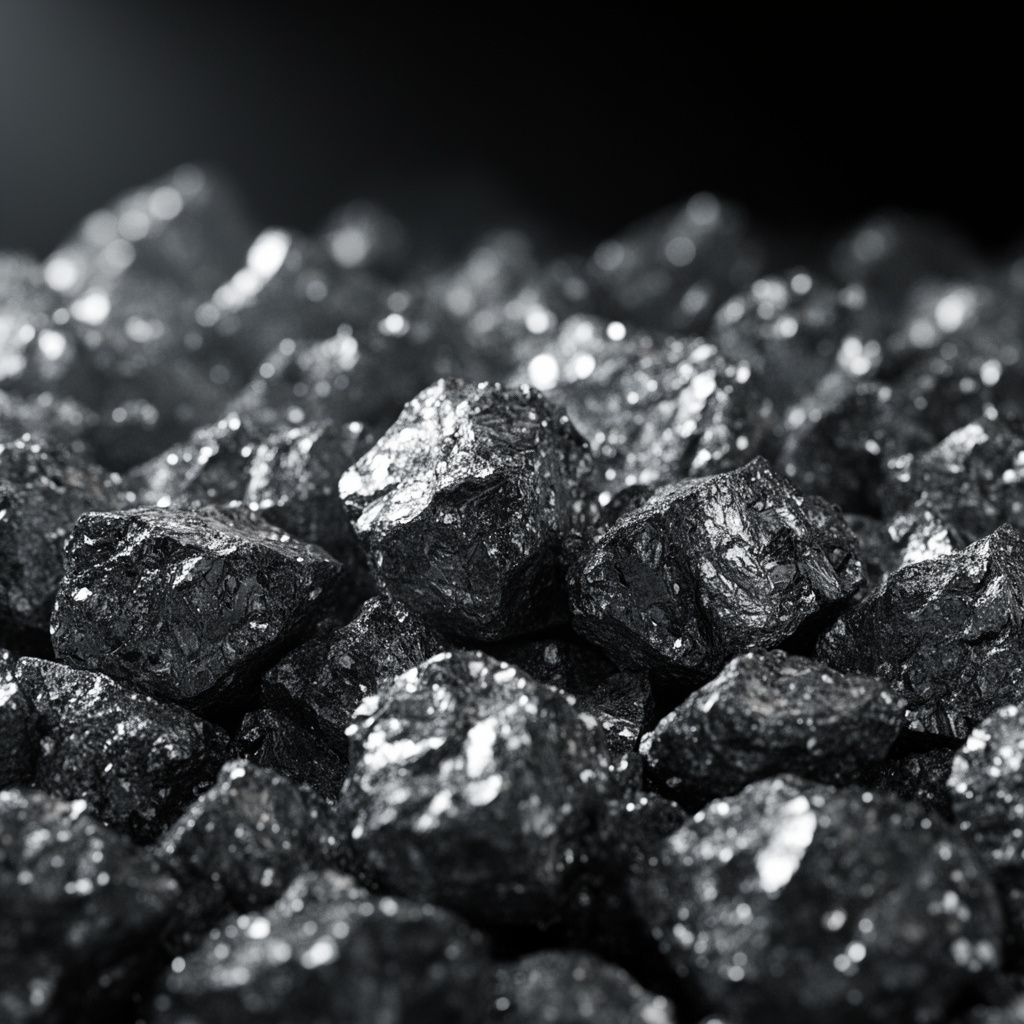
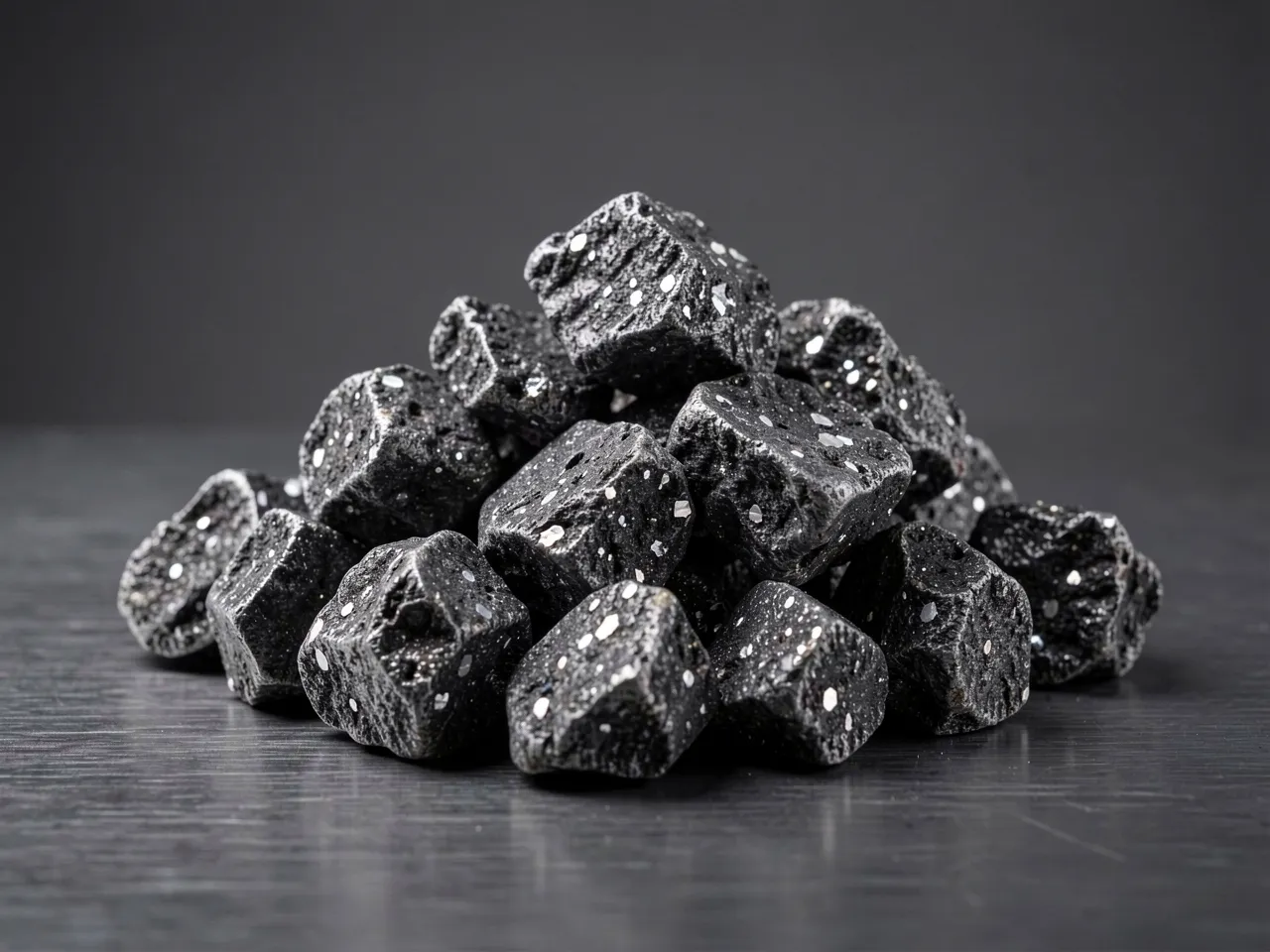
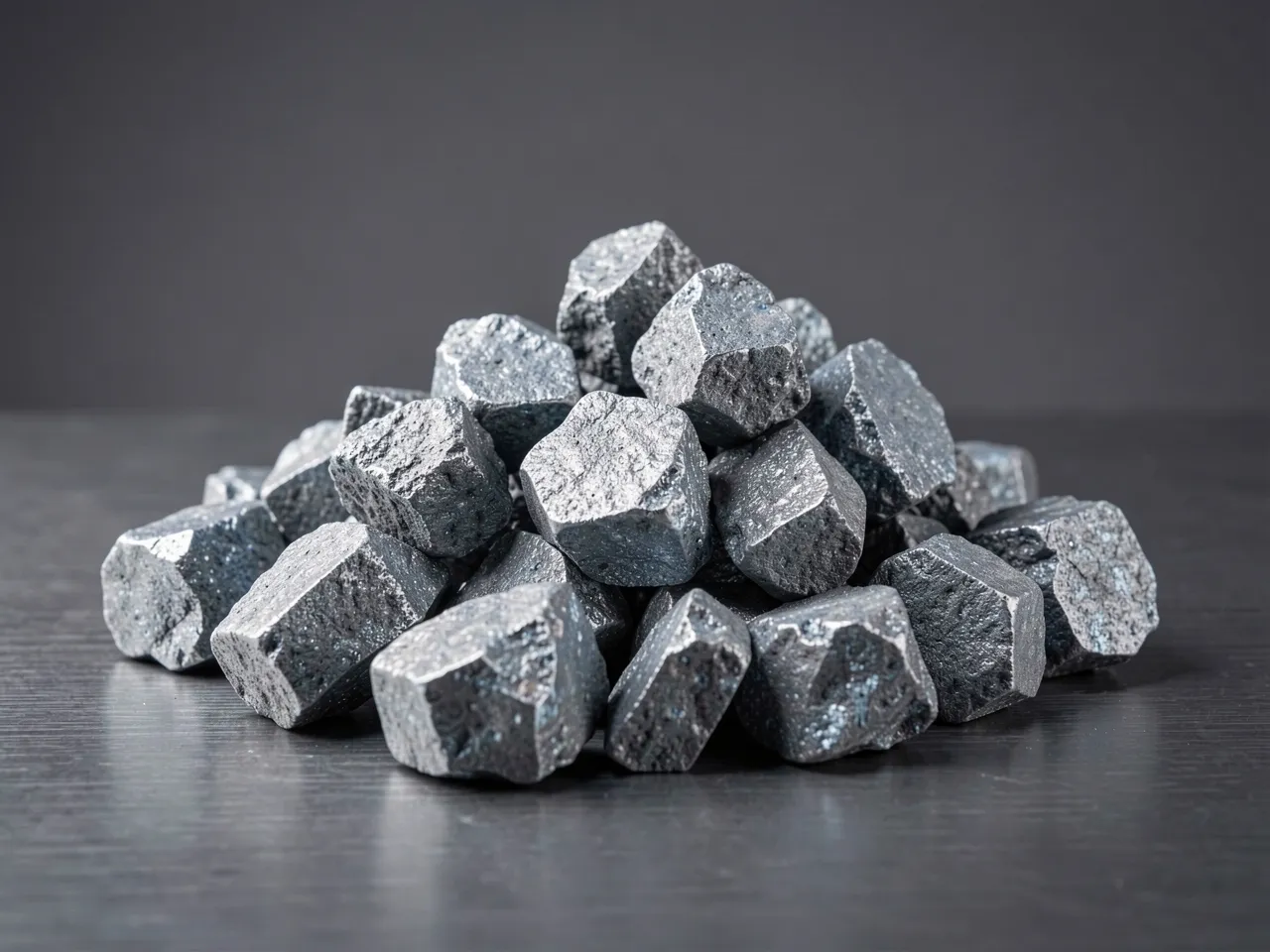
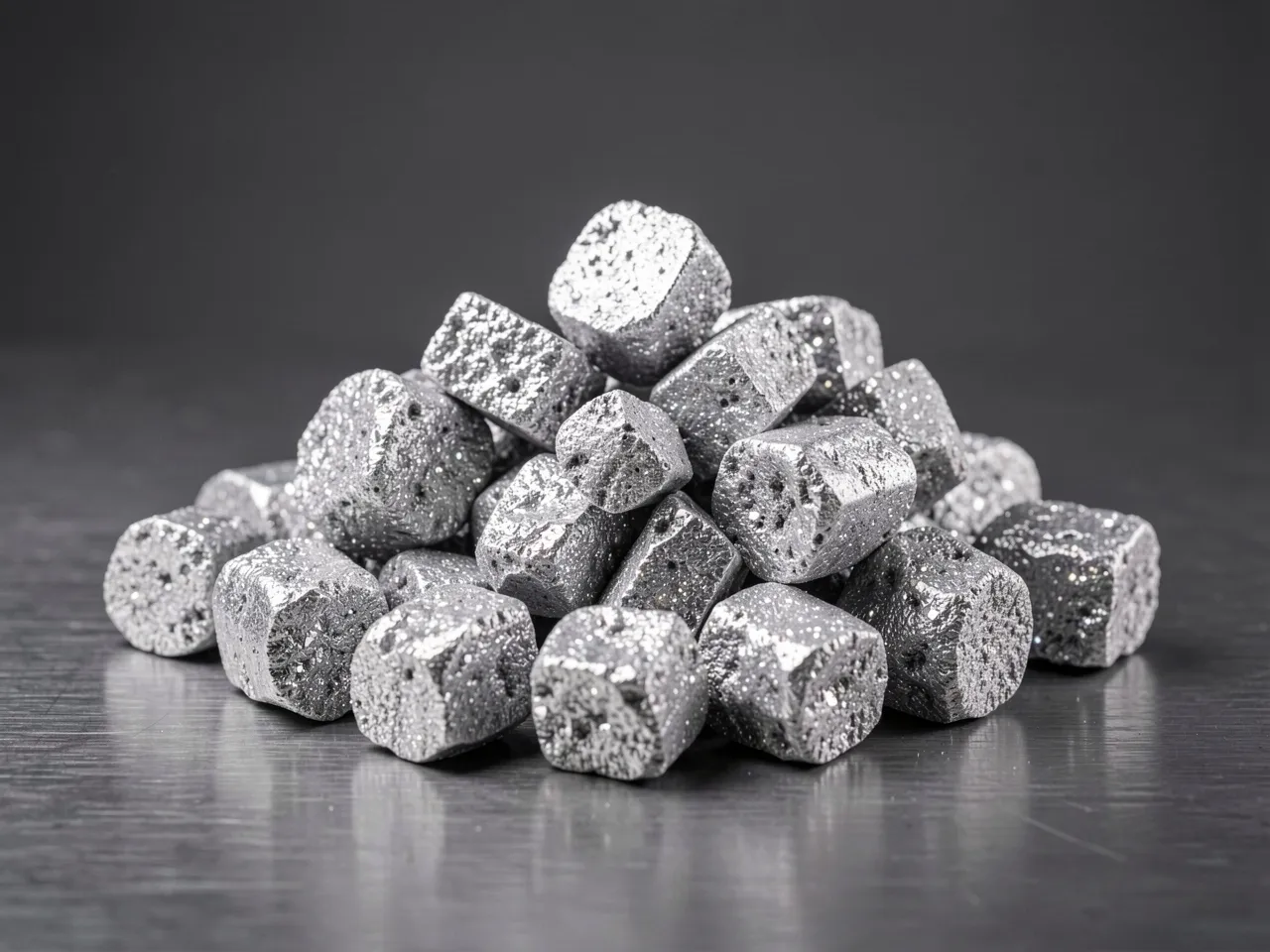
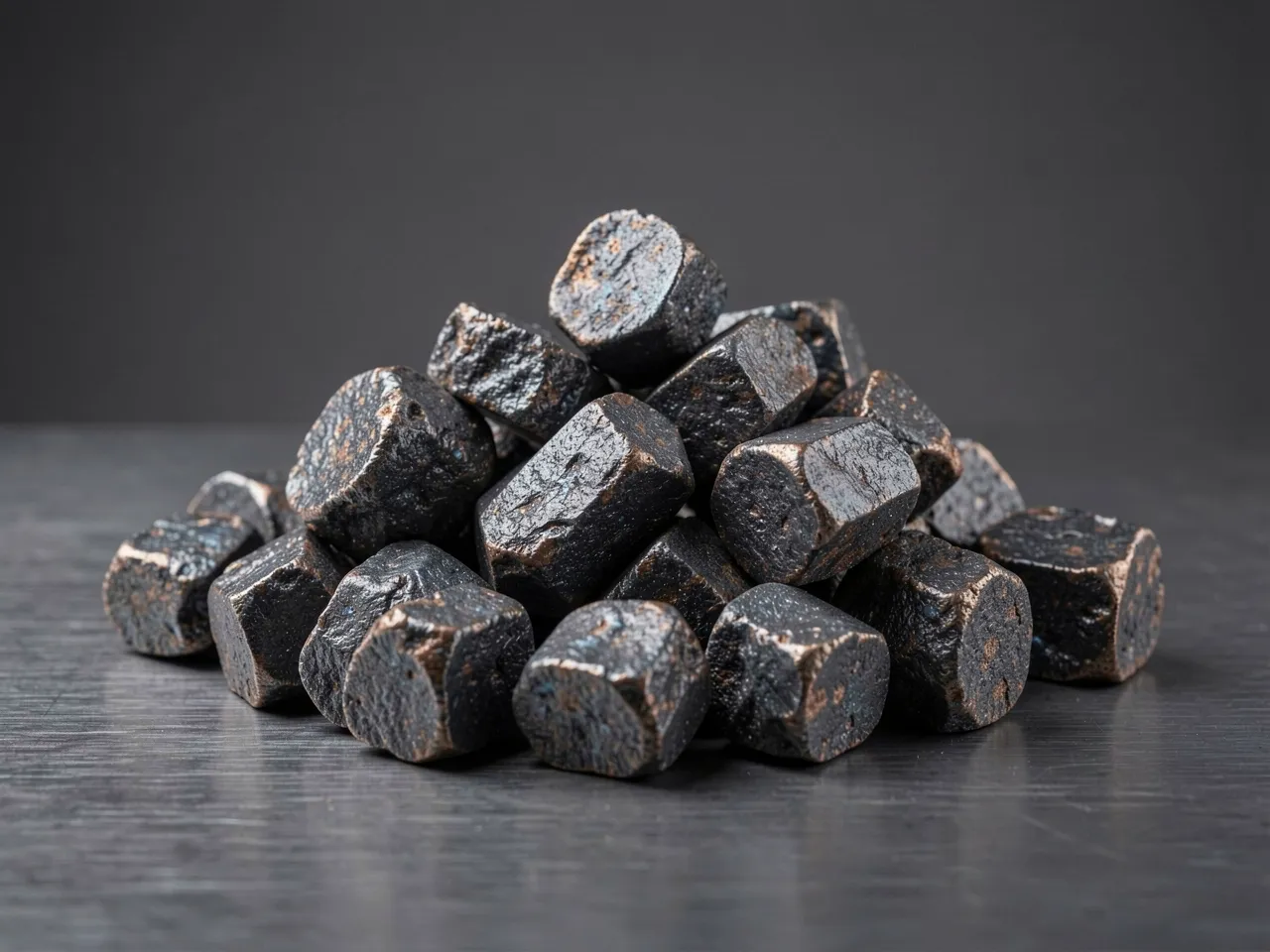
Ferro Boron (FeB18) is a lump ferroalloy carrying B 17-20% for boron-treated steels and special alloys. In hardenability practice, a very small addition, typically 0.0008-0.0035 wt% soluble boron in the finished steel, sharply raises the hardenability of low-carbon steel and replaces much larger amounts of Mn, Cr or Mo. Boron only works in solution, so the steel must be killed with Ti/Al and nitrogen kept under control: free N ties boron up as BN, while Ti and Al act as nitride formers that scavenge N and keep the boron effective. Add late, after full deoxidation and Ti treatment, and back-calculate the charge from the B 17-20% assay, ladle weight and an assumed 50-70% recovery. The grade also serves as a boron carrier for amorphous / soft-magnetic alloys and NdFeB permanent-magnet feedstock. Supplied as 10-50mm lump with C ≤0.5%, Si ≤2.0%, Al ≤0.5%, S ≤0.01%, P ≤0.10%; every lot ships with COA / MTC. Send grade, addition rate and required quantity for an RFQ.
Technical Specifications
B
17-20%
C
≤ 0.5%
Si
≤ 2.0%
Al
≤ 0.5%
S
≤ 0.01%
P
≤ 0.10%
Size
10-50mm
Applications
Boron steel (hardenability)
Amorphous / soft-magnetic alloys
NdFeB magnet production
Special alloy steel
Frequently Asked Questions
Which FeB grade and B content should I specify for boron-treated steel?
Our standard is FeB18 with B at 17-20%, C ≤ 0.5%, Si ≤ 2.0%, Al ≤ 0.5%, S ≤ 0.01% and P ≤ 0.10%. For hardenability of low-carbon boron steel, low C, low S and low Al are what matter, because free N ties up boron as BN and blunts its effect; Al and Ti act as nitride formers that scavenge N and keep boron in solution. When the steel is fully Ti/Al-killed and N is controlled, FeB18 to this spec delivers the soluble boron needed. State your residual N and target soluble-B band and we match the grade.
What is a typical dosage and how do I add FeB to the melt?
Boron is effective at very small additions. In hardenability practice, target soluble B around 0.0008-0.0035 wt% in the finished steel; the FeB charge is back-calculated from your B 17-20% assay, ladle weight and an assumed recovery (often 50-70%, deoxidation-dependent). Add late, after full deoxidation and Ti treatment, so Ti and Al scavenge O and N first and free boron survives. Use 10-50mm lump for ladle or furnace addition. Confirm recovery on your own heats and adjust.
How is FeB packed, and what are the MOQ and lead-time terms?
Standard pack is 10-50mm lump in sealed steel drums or big-bags on pallets, suitable for FCL and bonded-stock pulls. We move full 20 MT FCL and consolidated 5 MT LCL lots, with smaller quantities available from Gebze bonded stock for trial heats. Delivery is typically CIF Marmara or ex-bonded stock. Lead time depends on lot size, grade and incoterm; send tonnage, destination port and required grade and we confirm the schedule against current multi-regional sourcing.
What quality documentation and testing come with the material?
Each lot ships with a COA/MTC stating B, C, Si, Al, S, P and size against the FeB18 spec. Chemistry is determined by ICP-OES or wet analysis; size is confirmed by screening. Third-party inspection (SGS, Bureau Veritas or equivalent) and pre-shipment sampling can be arranged on request, and we hold retained samples for traceability. Specify any tighter element limits, sampling protocol (ISO 5446-type) or witness-test requirement at order and we document accordingly.
When should I use FeB versus another boron source or alloying route?
FeB18 suits steelmaking where you add boron via lump ferroalloy: boron steel hardenability, special alloy steels, and as a B carrier into amorphous/soft-magnetic and NdFeB magnet feedstock. Where you need boron plus a strong deoxidizer/nitride former in one addition, a boron-bearing complex alloy can be considered, but it shifts your Si/Al balance. For ultra-low residual control, a finer or tighter-spec grade may fit better. Tell us the soluble-B target and host chemistry and we advise the right route.
Do you quote ferro boron (FeB 18) CIF to Indian ports?
Yes. For FeB 18 (B 17-20%) we quote CIF to Indian ports such as Nhava Sheva, Mundra or Chennai. Tell us the boron range, the C and Al limits, the size and whether the tonnage is one-off or regular, and we build the quote around that.