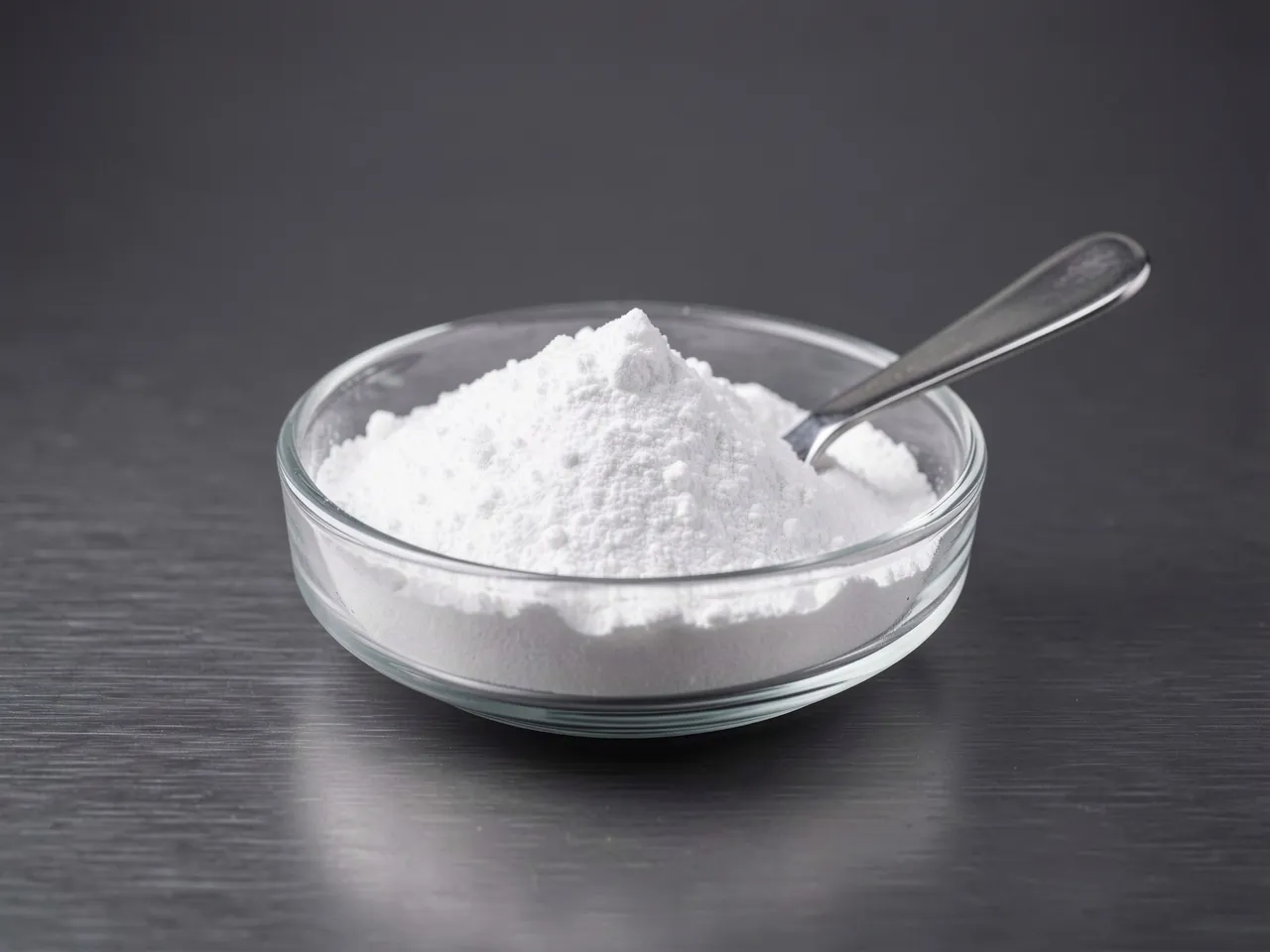
Antimony trioxide (Sb2O3, CAS 1309-64-4) is a fine white oxide powder serving two roles: a flame-retardant synergist and a polycondensation catalyst. In halogenated systems it reacts with the halogen source to form antimony trihalides and oxyhalides in the gas phase, scavenging the H and OH radicals that propagate combustion while promoting a protective char layer. Loading typically runs 2-6 wt% Sb2O3 alongside a halogen donor, tuned to the target UL-94 rating and polymer matrix. As a PET catalyst it accelerates esterification and polycondensation at roughly 200-300 ppm Sb on resin weight. Uses span flame-retardant plastics and textiles, PET resin and fiber, glass and ceramic decolorizing, and pigments and paint. This grade assays Sb2O3 >= 99.5% with As2O3 <= 0.05%, PbO <= 0.05%, and Fe2O3 <= 0.005%; whiteness >= 95% and a controlled 0.3-1.5 micron particle size give consistent dispersion and color hold. Each lot ships with COA and MTC. Multi-regional sourcing supports CIF Marmara delivery, Gebze bonded stock, and 20 MT FCL lots. Send your grade and tonnage for an RFQ.
Technische Spezifikationen
Sb₂O₃
≥ 99.5%
As₂O₃
≤ 0.05%
PbO
≤ 0.05%
Fe₂O₃
≤ 0.005%
Whiteness
≥ 95%
Particle
0.3-1.5 µm
CAS
1309-64-4
Anwendungen
Flame-retardant synergist
PET polymerization catalyst
Glass / ceramic decolorizer
Pigment & paint
Häufig gestellte Fragen
Welchen Sb2O3-Grade und welche Spezifikation sollte ich für meine Anwendung wählen?
Dieser Grade läuft Sb2O3 ≥ 99.5% mit As2O3 ≤ 0.05%, PbO ≤ 0.05%, Fe2O3 ≤ 0.005%, Weißgrad ≥ 95% und einem Partikelband von 0.3-1.5 µm. Das niedrige As/Pb und der hohe Weißgrad eignen sich für Flammschutz-Masterbatch und weiße/hellfarbige Compounds. Für die Anwendung als PET-Polymerisationskatalysator ist der enge Grenzwert Fe2O3 ≤ 0.005% am wichtigsten, da Eisen Gelbstich und Trübung im Harz treibt. Senden Sie uns Endzweck und Farbziel, und wir bestätigen die Eignung.
Wie hoch ist die typische Dosierung oder Zugaberate für Sb2O3?
Als Flammschutz-Synergist wird Sb2O3 normalerweise mit einer Halogenquelle in einem Antimon-zu-Halogen-Gewichtsverhältnis von etwa 1:3 kombiniert, wodurch die Sb2O3-Beladung je nach UL-Ziel und Halogensystem bei etwa 2-6 wt% des Polymers liegt. Als PET-Polykondensationskatalysator wird es weit niedriger dosiert, in der Größenordnung von 200-300 ppm Antimon in der Schmelze. Optimieren Sie gegenüber Ihren eigenen FR-Einstufungs- und IV-/Farbdaten; dies sind Ausgangsbereiche, keine festen Werte.
Wie wird es verpackt, und wie sind Lieferzeit und Mindestbestellmenge?
Standardverpackung sind 25 kg-Mehrlagen-Papiersäcke oder laminierte PE-Säcke, palettiert und schrumpffoliert; Jumbo-Bag- (FIBC-) Optionen sind für Großverbraucher verfügbar. Die Mengen skalieren von LCL-Teilladungen bis zu 20 MT FCL auf vollen Paletten. Wir halten Gebze-Zolllagerbestand, um die Lieferung für Käufer in der Marmararegion zu verkürzen, mit angebotenen CIF-Marmara-Bedingungen. Teilen Sie uns Bestimmungsort, Menge und Verpackungspräferenz mit, und wir bestätigen die aktuelle Lieferzeit und Mindestbestellmenge.
Welche Qualitätsdokumentation und Prüfung stellen Sie bereit?
Jede Charge wird mit einem COA versandt, der den Sb2O3-Gehalt plus die Grenzwerte für As2O3, PbO und Fe2O3, den Weißgrad und die Partikelgröße gegenüber der veröffentlichten Spezifikation ausweist. Der Gehalt wird per Titration verifiziert, Spurenmetalle per ICP/AAS, der Weißgrad per Kolorimeter und die Partikelgröße per Laserbeugung. Wir liefern SDS und die Referenz CAS 1309-64-4 für Zoll und EHS. Ein Dritt-MTC oder eine Prüfung vor Versand in einem anerkannten Labor kann auf Anfrage arrangiert werden.
Gibt es Ersatzstoffe oder alternative Grades, wenn Sb2O3 nicht passt?
Wo regulatorischer oder kostenbedingter Druck Antimon begrenzt, sind halogenfreie FR-Routen wie ATH, Magnesiumhydroxid oder phosphorbasierte Systeme gängige Alternativen, sie benötigen jedoch höhere Beladungen und eine Neuformulierung. Bei PET können Titan- und Germaniumkatalysatoren Antimon für bestimmte Klarheits- oder Lebensmittelkontaktziele ersetzen. Innerhalb von Antimon selbst dient Natriumantimonat für Glas und einige Katalysatoranwendungen. Wir können angrenzende Grades aus der Beschaffung aus mehreren Regionen anbieten, sobald Sie die Einschränkung definieren, die den Wechsel treibt.