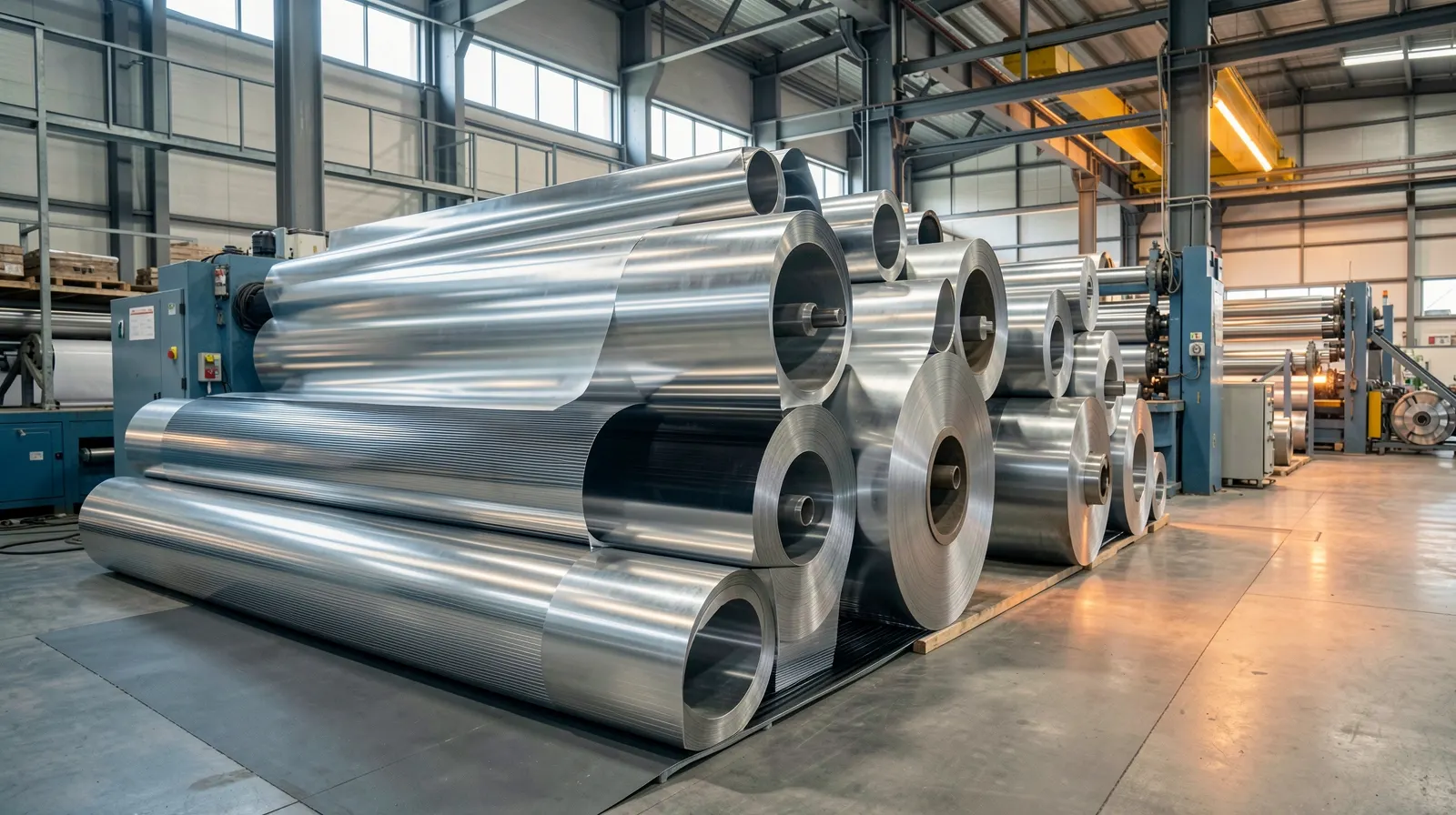
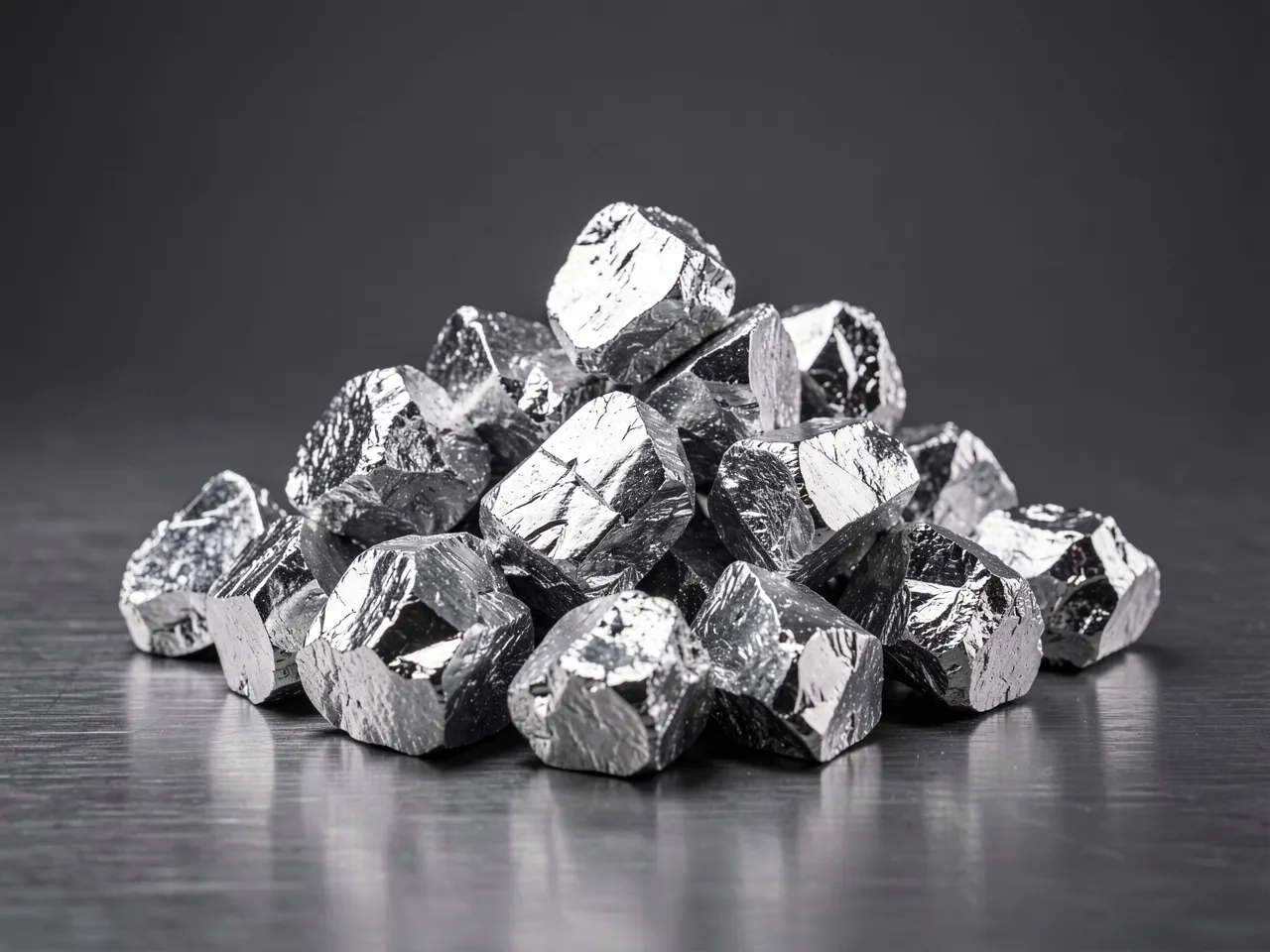
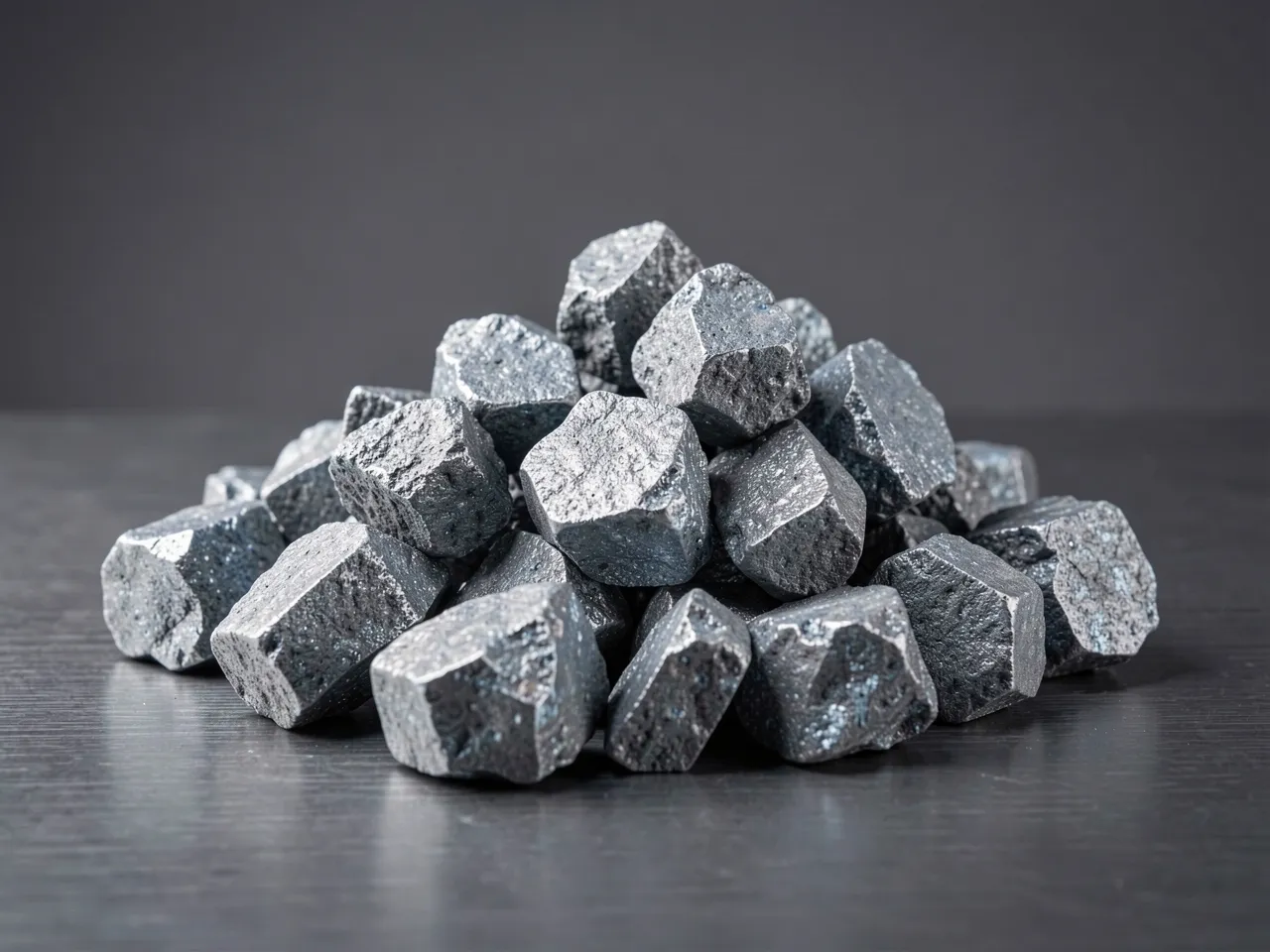
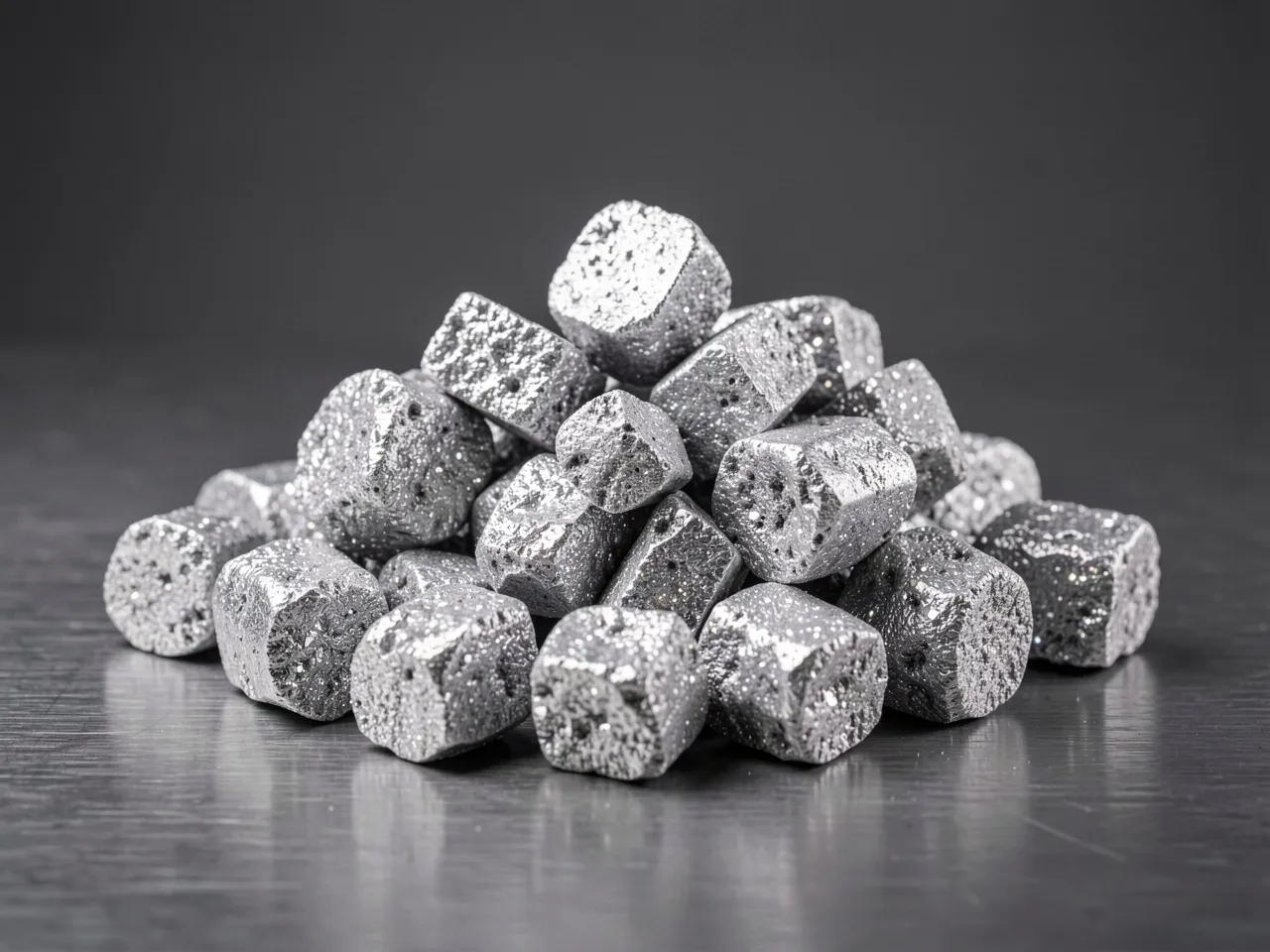
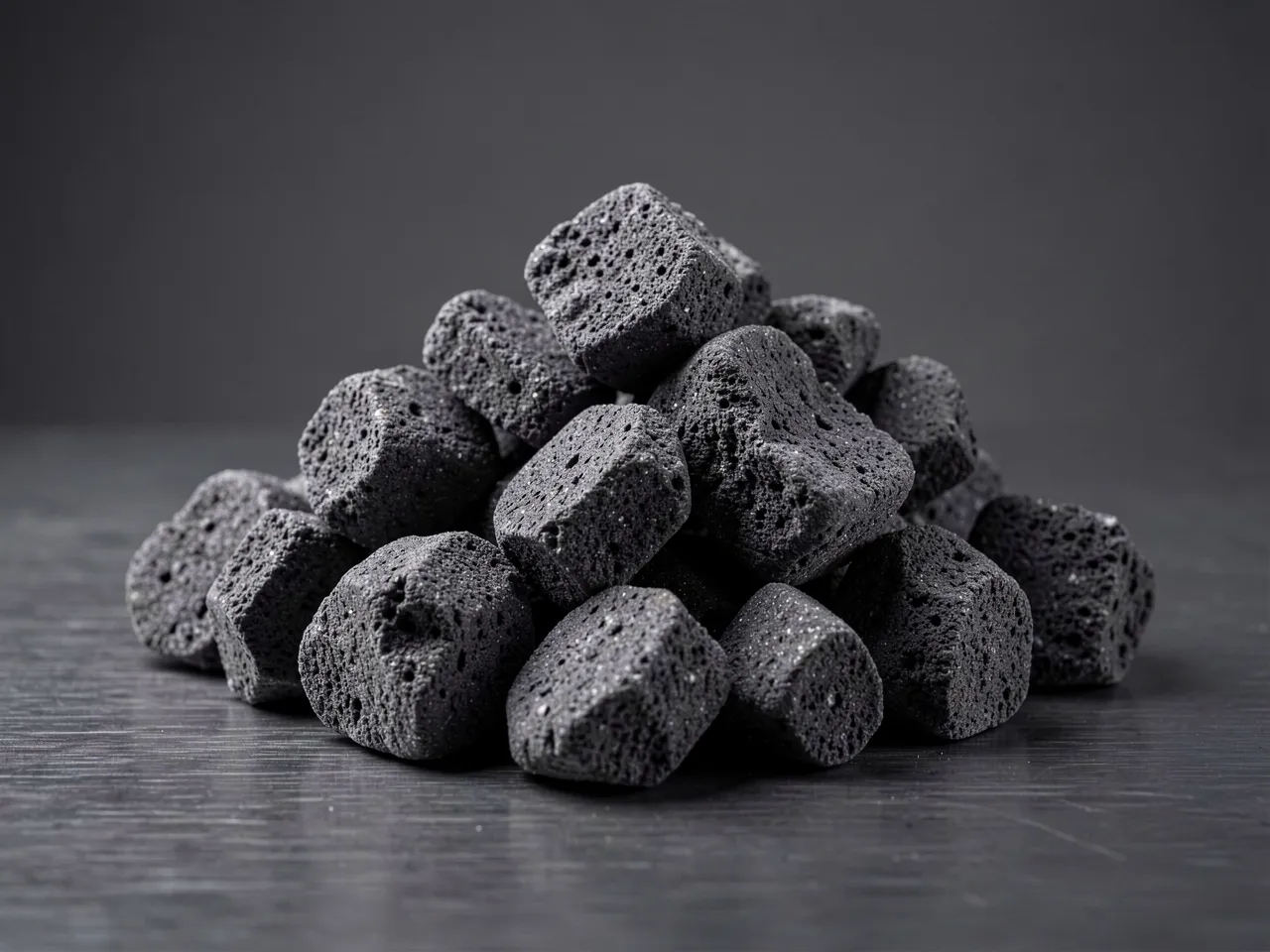
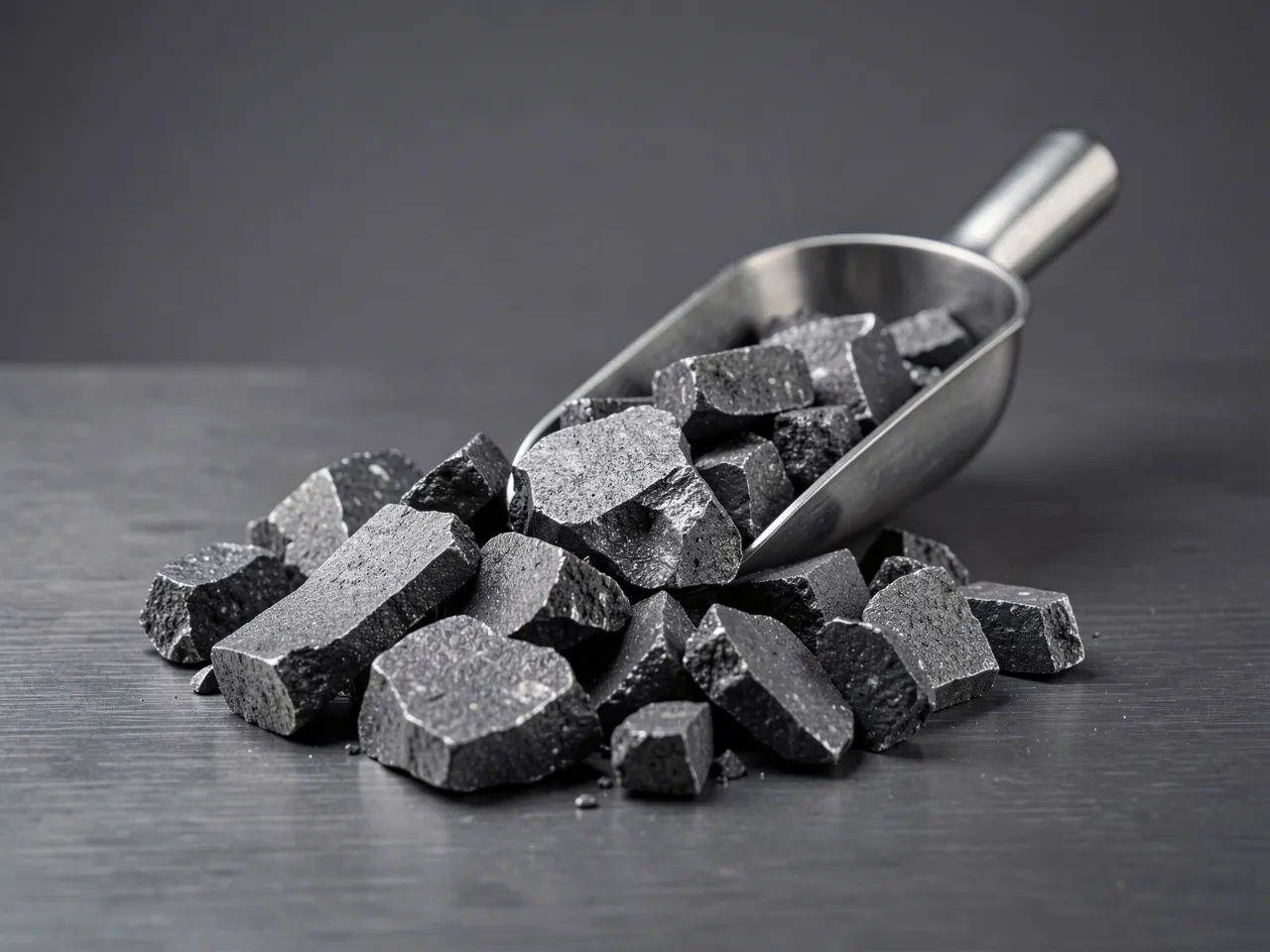
Chromium and molybdenum alloying in 304/316 and alloy steel. HC FeCr (low-carbon, CBAM-documentable grade) + FeMo + FeSi. CBAM-compliant sourcing and embedded-emissions documentation for producers selling into the EU.
Stainless steel earns its corrosion resistance from chromium, not from cleanliness alone. Austenitic grades such as 304 carry 18% Cr / 8% Ni; 316 adds 2-3% Mo to resist pitting in chloride service. Most stainless and alloy steel today is melted in the EAF, then refined through AOD or VOD to strip carbon while protecting chromium from oxidation. Ferroalloy additions enter at defined points: bulk Cr and Mo go in during melt-down and AOD charge balancing, while final FeSi trims dissolved oxygen and adjusts silicon before tapping. Hitting a tight Cr window and a low residual carbon target at the same time is the metallurgical problem these alloys solve.
FeCr is the primary chromium unit for stainless melts. Charge-grade HC FeCr carries higher carbon, so the carbon entering with the chromium is carbon the AOD must later blow out, lengthening the heat and consuming oxygen and argon; where decarburization headroom is tight, MC or LC FeCr shifts that burden off the converter. FeMo delivers molybdenum for 316 and duplex grades, raising pitting resistance equivalent (PREN) without disturbing the nickel balance. FeSi handles deoxidation and silicon adjustment, and supports the silicon-reduction step that recovers chromium from slag during AOD reduction. Matching the chromium and molybdenum carriers to the refining route keeps recovery predictable and avoids late trim additions.
Grade selection turns on carbon ceiling, sizing, and documentation. Specify the FeCr carbon grade against your AOD decarburization capacity; confirm Mo content and oxide/metallic form on FeMo; set FeSi at 75% Si for clean recovery. Every lot ships with a COA and EN 10204 3.1 mill test certificate stating chemistry and size fraction. For producers selling stainless into the EU, CBAM embedded-emissions data on chromium and ferroalloy inputs is increasingly part of the purchase, and that documentation travels with the material.
Supply runs on multi-regional sourcing held as Gebze bonded stock with CIF Marmara delivery. FeCr, FeMo and FeSi can be packaged in one shipment within a single 20 MT FCL, so a stainless melt shop covers its chromium, molybdenum and deoxidation needs from one order. RFQs are quoted with COA and 3.1 certificates issued before dispatch. Where AOD decarburization headroom is tight, MC and LC FeCr are available on request rather than held as standard stock — confirm the carbon ceiling at RFQ. For EU mills we quote CIF to your port of discharge or DAP to your plant, under A.TR with EUR.1 where eligible.
Write with your product, quantity and spec, quote within 4 hours.
Request a Quote