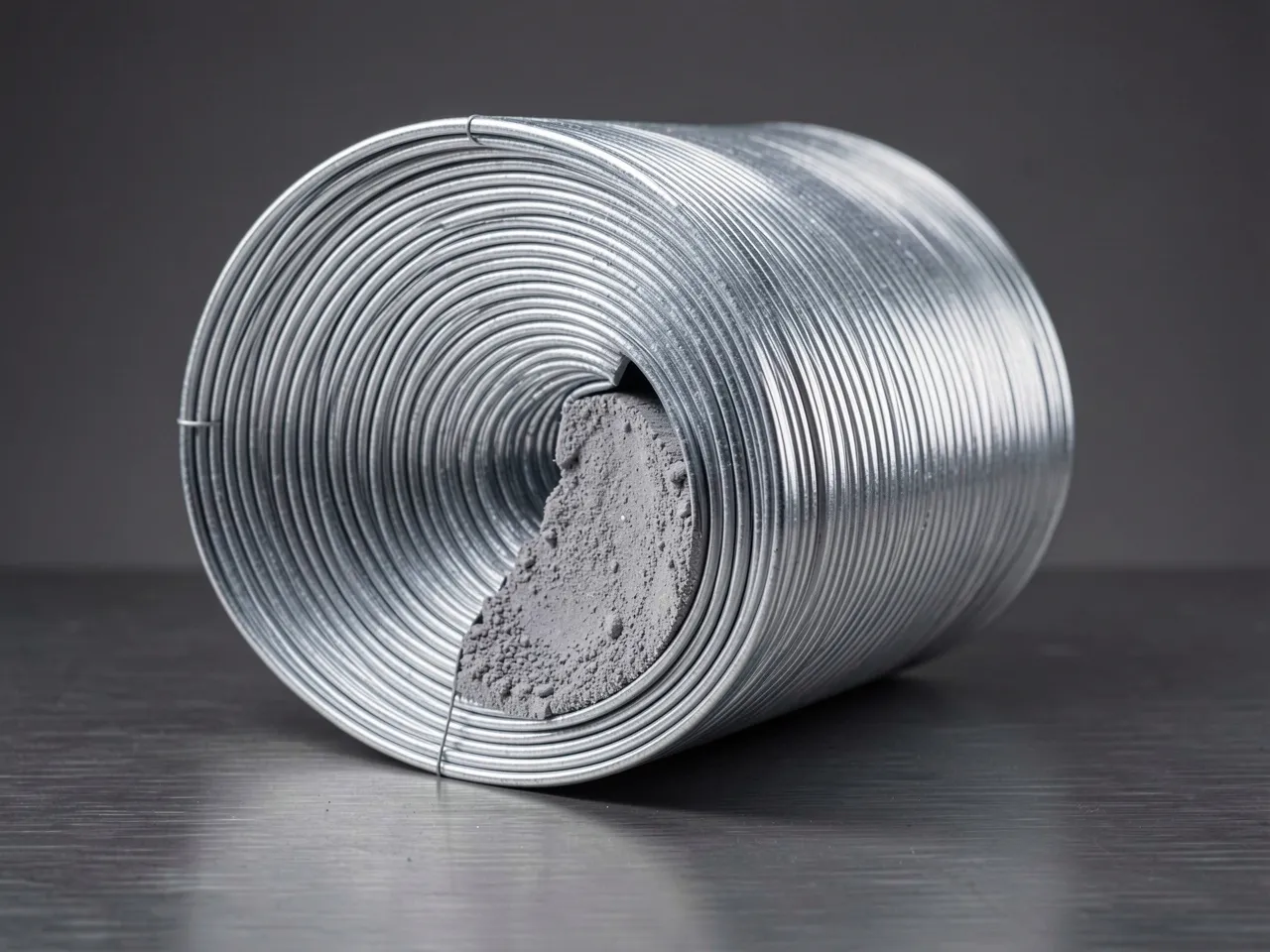
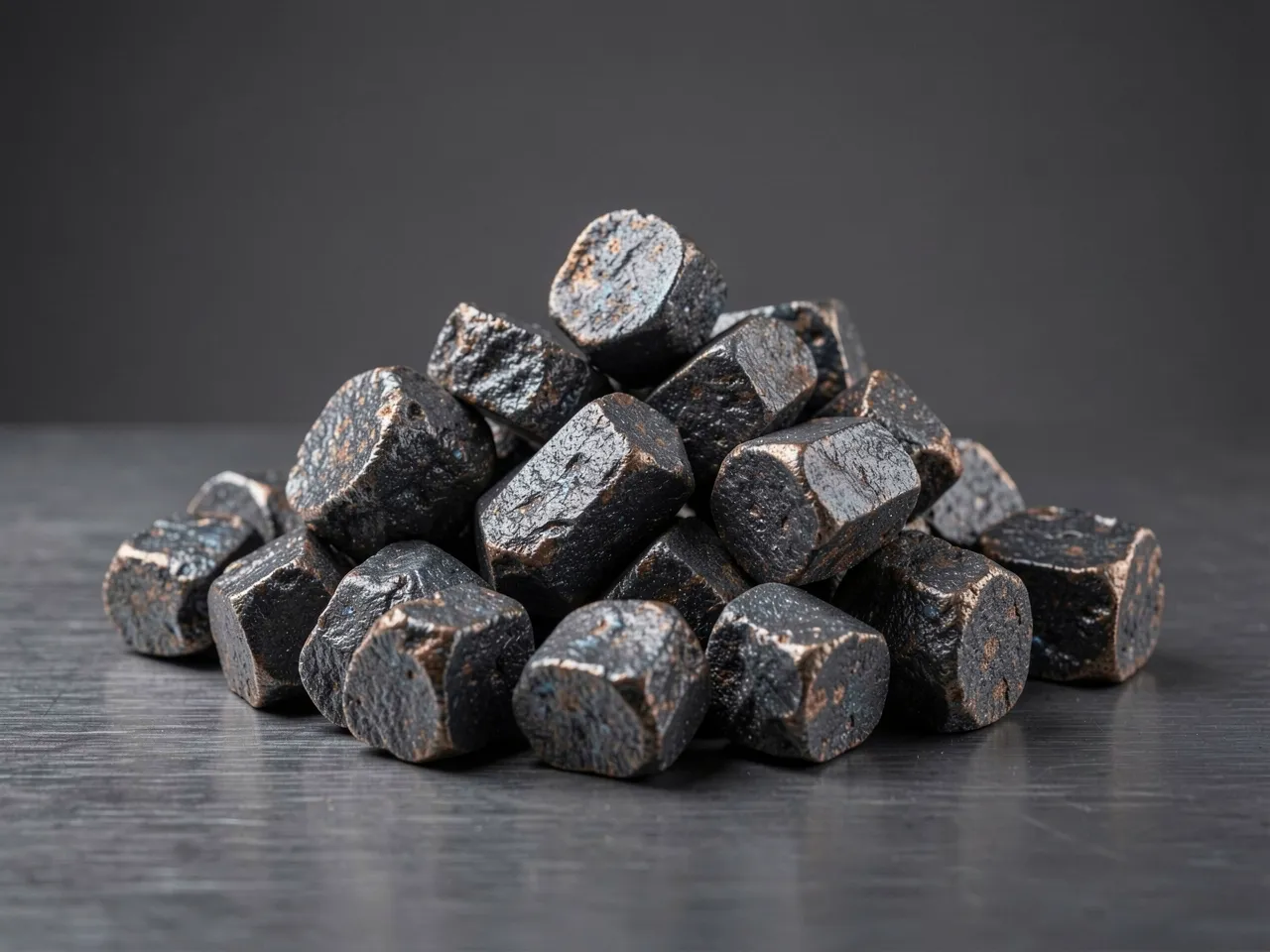
Calcium silicide cored wire is a steel-sheathed wire packed with CaSi powder (Ca 28-32%, Si 55-65%) fed into the ladle for secondary metallurgy. The steel sheath shields the reactive calcium until it reaches bath depth, where higher ferrostatic pressure and controlled feed rate raise calcium recovery well above lump or shot additions made at the surface. Dissolved Ca converts hard, angular alumina (Al2O3) and silica inclusions into low-melting, globular calcium aluminates, preventing nozzle clogging during continuous casting and improving transverse toughness and machinability. This makes it standard practice for Al-killed and Si-killed steels at EAF mills and steel foundries casting clean, calcium-treated grades. Typical addition runs roughly 0.5-2.0 kg Ca per tonne, tuned by feeder speed to the target Ca/S ratio and inclusion chemistry. The 13 mm wire (powder fill ≈ 230 g/m, C ≤ 1.0%, Al ≤ 2.0%) gives consistent fill for repeatable deep-bath release. Each lot ships with COA and MTC under multi-regional sourcing, CIF Marmara or ex Gebze bonded stock, 20 MT FCL. Send your grade and Ca/S target for an RFQ.
Technische Spezifikationen
Ca
28-32%
Si
55-65%
C
≤ 1.0%
Al
≤ 2.0%
Wire Ø
13mm
Powder
≈ 230 g/m
Anwendungen
Ladle calcium treatment
Inclusion modification
Secondary steelmaking
Clean-steel casting
Häufig gestellte Fragen
Wie wähle ich den richtigen CaSi-Fülldraht-Grade für meine Pfannenbehandlung aus?
Stimmen Sie den Draht auf Ihre Stahlchemie und Ihr Einschlussziel ab. Dieser Grade läuft Ca 28-32% und Si 55-65%, mit C ≤ 1.0% und Al ≤ 2.0%, in einer 13mm-Stahlhülle mit ≈ 230 g/m Pulver. CaSi eignet sich für Al-beruhigte Stähle, in denen Sie feste Aluminiumoxid-Einschlüsse in flüssige Calciumaluminate umwandeln. Wo eine Si-Aufnahme unerwünscht ist, fordern Sie stattdessen CaFe- oder Rein-Ca-Draht an; für Stähle mit hohem Si-Gehalt ist CaSi die Standardwahl.
Welche Injektionsrate und Einführgeschwindigkeit sollte ich verwenden?
Die Calciumzugabe zur Einschlussmodifikation zielt typischerweise auf 0.10-0.40 kg Ca pro Tonne, mit einem Ca:S-Verhältnis von etwa 1.5-3 je nach Schwefelgehalt. Rechnen Sie Ihr Ca-Ziel über die Pulverfüllung von ≈ 230 g/m bei 28-32% Ca in eine Drahtlänge um. Führen Sie mit 120-250 m/min ein, damit die Hülle tief in der Pfanne schmilzt und die Ca-Ausbeute gegenüber dem Dampfverlust maximiert wird. Bestätigen Sie die Raten anhand Ihrer Pfannentiefe, Ihres Freibords und Ihrer Rührpraxis.
Wie sind Verpackung, Mindestbestellmenge und Lieferzeit?
Der 13mm-Draht wird auf vertikalen oder horizontalen Spulen versandt, typischerweise 1.5-2.5 MT je Spule, auf Stahlpaletten mit Feuchtigkeitssperre für die Seefracht. Standardsendungen sind 20 MT FCL, wobei LCL (etwa 5 MT) aus dem Gebze-Zolllagerbestand verfügbar ist. Die Lieferzeit hängt vom Spulenformat ab und davon, ob Sie aus dem Lagerbestand oder einer frischen Produktionscharge ziehen. Teilen Sie uns Ihr Jahresvolumen und Ihre Zuführanlagen-Spezifikation mit, und wir bieten Lieferbedingungen CIF Marmara an.
Welche Qualitätsdokumentation und Prüfung liegen dem Draht bei?
Jede Charge wird mit einem COA/MTC versandt, der Ca, Si, C und Al gegenüber dem Fenster 28-32% Ca / 55-65% Si ausweist, dazu Hüllendicke, Draht-Ø und Pulverfüllung (≈ 230 g/m). Die Konstanz der Pulverfüllung bestimmt die Ca-Ausbeute und wird daher je Spule geprüft. Die Chemie wird per ICP-/Nassanalyse verifiziert; fordern Sie eine unabhängige Drittprüfung bei der Verladung an, wenn Ihr QS-System dies erfordert. Die Dokumentation folgt der ISO-9001-Praxis.
Wann sollte ich statt CaSi CaFe- oder Rein-Ca-Draht einsetzen?
Verwenden Sie CaFe- oder massiven/Rein-Ca-Fülldraht, wenn die Si-Aufnahme niedrig bleiben muss, zum Beispiel bei Stählen mit niedrigem Si-Gehalt oder bestimmten Edelstahlgüten, da CaSi 55-65% Si in das Bad einbringt. CaSi bleibt der wirtschaftliche Standard für Al-beruhigte Kohlenstoff- und Baustähle. Für sehr tiefe Pfannen oder hohen ferrostatischen Druck kann eine dickere Hülle oder ein Draht mit kleinerem Ø die Ausbeute steigern. Wir können CaFe-, CaAl- und Rein-Ca-Formate ergänzend liefern.